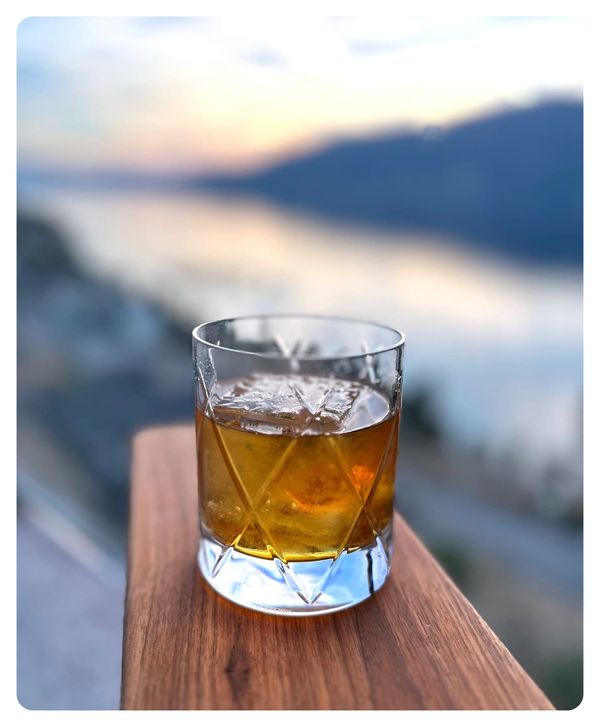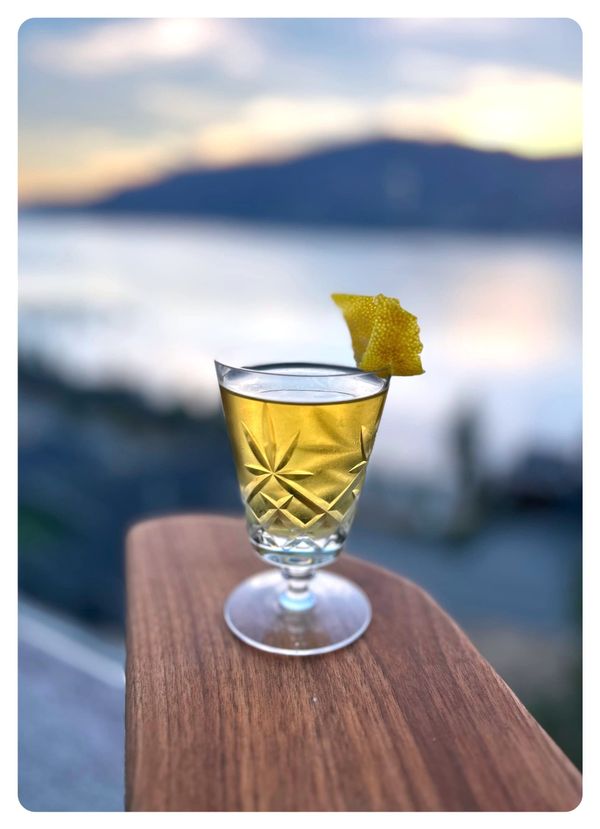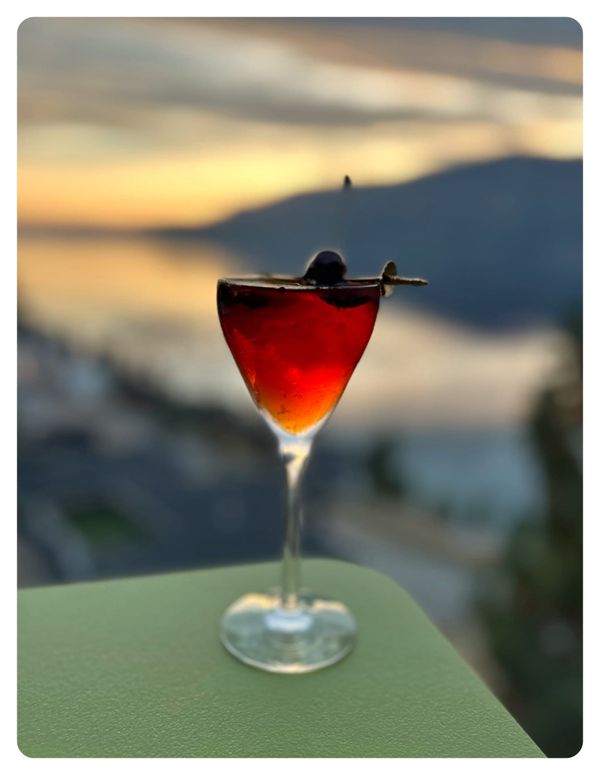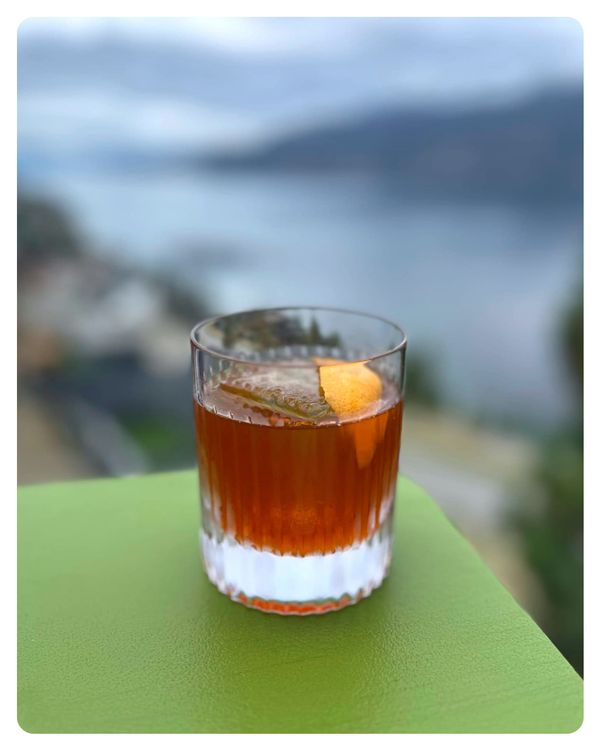
Prize Fighter
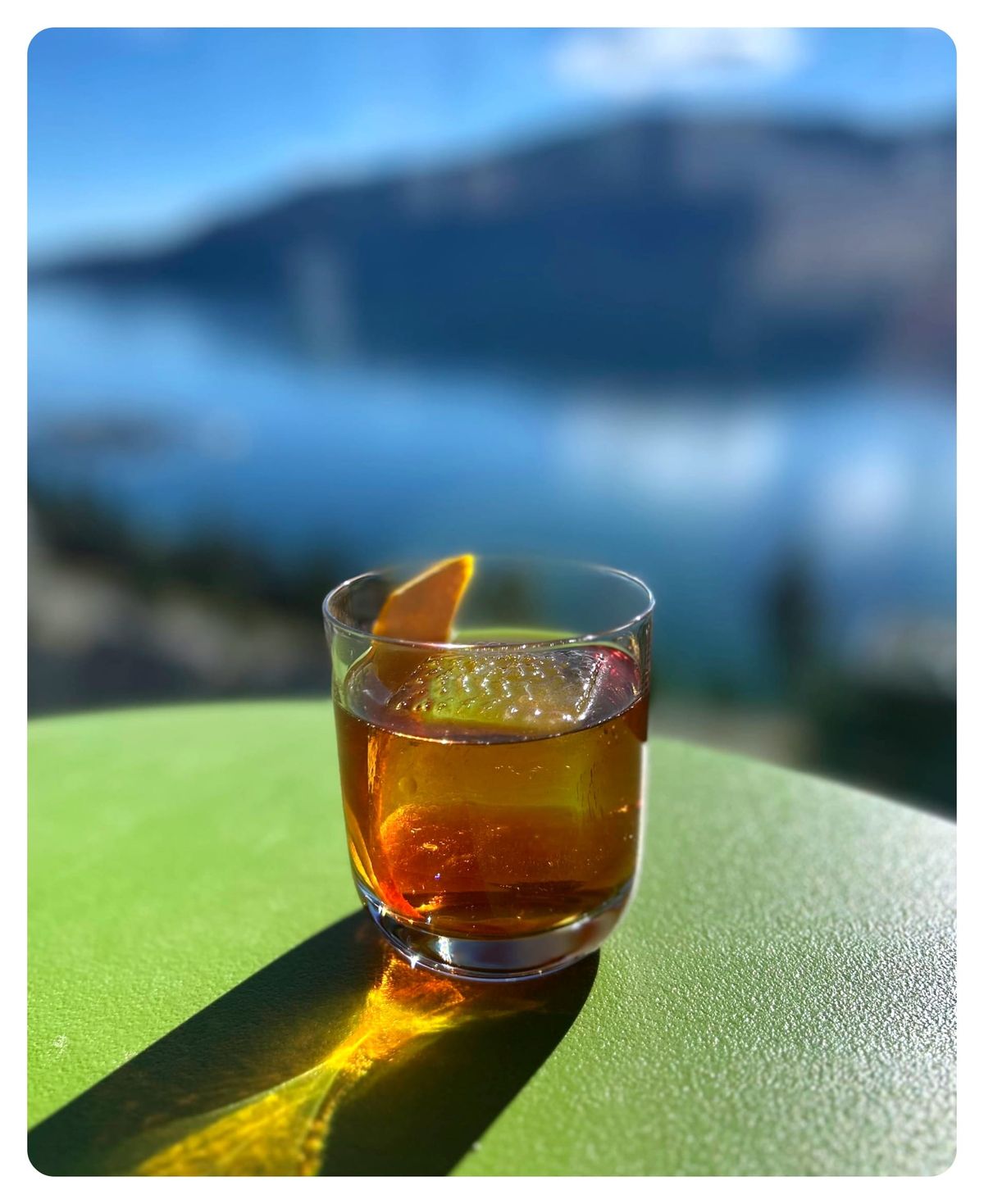
- 1 oz Rye whisky
- 1 oz Mezcal
- ¾ oz Amaro Lucano
- 1⁄4 oz Suze Gentiane Liqueur (I used Salers)
- 3 dps Mole Bitters
- Stir with ice for 20-30 seconds, strain over ice into a chilled Old Fashioned glass
- Spritz and garnish with an orange twist.
Happy Friday, friends!
The World Cup is upon us, and having it in North America this year means one rare, practical gift: matches in our own time zone.
Being in Vancouver, British Columbia, during the week leading up to its first hosted match–and watching firsthand how a city transforms when it prepares to welcome fans from around the world–quietly checked off a bucket-list item I didn’t even know I had.
With all that in mind, let me introduce you to the Prize Fighter.
Not to be confused with Prizefighter No. 1, this Prize Fighter was created at The Berkshire Room in Chicago during the winter of 2016–17. It’s a split‑base cocktail that sets up a clean “two‑corners” narrative: on one side, the sweet, baking‑spice warmth of rye whisky and Amaro Lucano; on the other, the smoky and bitter counterpunch of mezcal and gentian apéritif. Together, those two sides echo the cocktail’s namesake: a prize fighter and the gloves that tell the story of a career spent in the ring.
I’ve used rye whisky and mezcal many times before, but this pairing feels especially apt here.
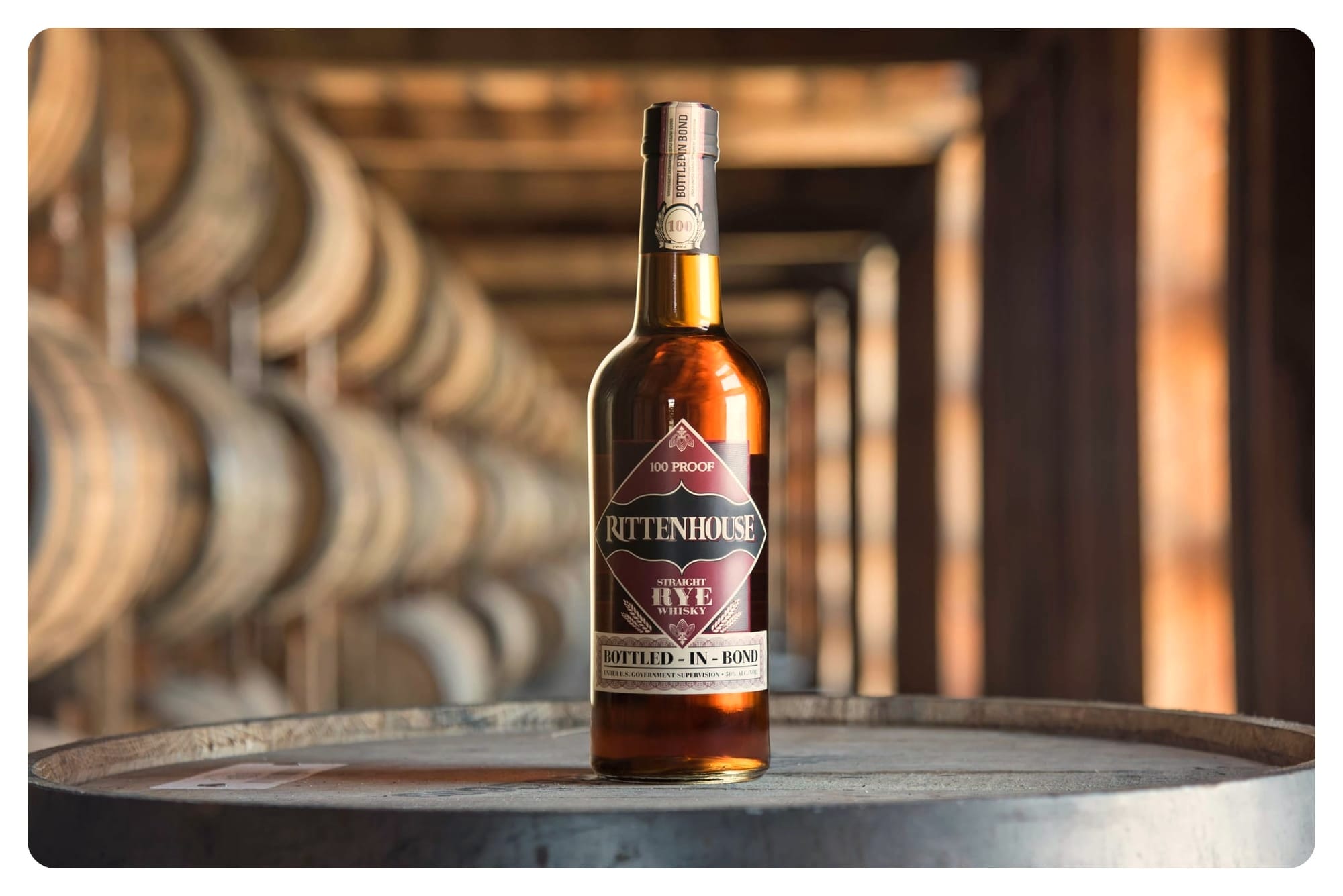
For the rye, I went with Rittenhouse Rye, a Bottled‑in‑Bond whiskey from Heaven Hill. It’s a 51% rye / 49% corn mashbill with a reputation for being both workhorse and thoroughbred. In the glass, you get a robust, spicy profile with notes of cocoa, citrus, cinnamon, nutmeg, and vanilla, finishing with a lingering, almost maple‑like spice. It’s a staple for good reason.
Backing it up is Amaro Lucano, which first appeared on Flavor Notes in La Lombarda. Created in 1894 in Basilicata, it’s a classic Italian amaro built from more than 30 botanicals—wormwood, gentian, clary sage, angelica, bitter orange, and more—resulting in an aromatic yet balanced profile. In this Prize Fighter, it brings bittersweet caramel, gentle herbaceousness, and round, stabilizing sweetness that keeps the drink from tipping too far into the ropes.
In the opposing corner, we have mezcal.
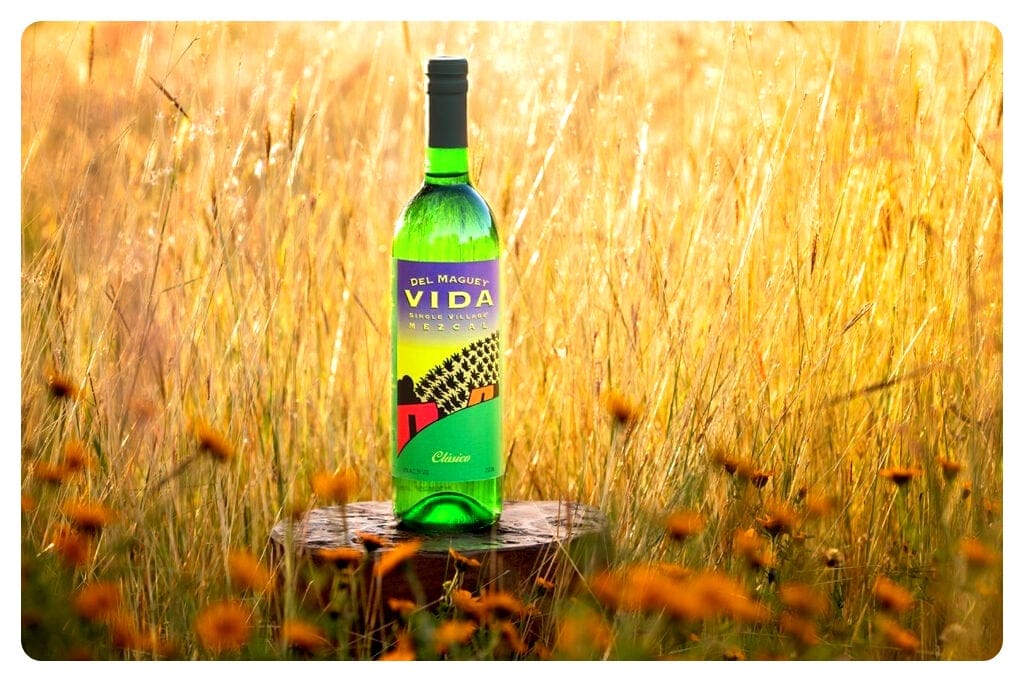
I used Del Maguey Vida Clásico, the default mezcal on nearly every serious cocktail bar shelf. Vida is an organic Espadín mezcal designed with mixing in mind. It’s bright, earthy, and approachable, with notes of sweet roasted agave, ginger, cinnamon, and burnt sandalwood, plus hints of tropical pineapple rind, coppery minerality, and light herbaceousness. It’s smoky, but not punishing.
Standing alongside the mezcal is our gentian apéritif. The original spec calls for Suze, but since I can’t get it easily here, I’m using Salers Gentiane Apéritif, which you might recognize from Vernal Pyre. Like Suze, Salers is a traditional French apéritif built on wild gentian root. It’s earthy, root‑driven, and assertively bitter, with just enough sweetness and a hint of citrus and anise to keep things from going fully medicinal.
Paired with mezcal’s smoke, Salers adds structure and bite—the taste of hard rounds and hard lessons.
To tie everything together, I used mole bitters. They add cocoa, spice, and a subtle earthiness that quietly link the rye’s baking‑spice warmth to the mezcal’s darker edges, making the fight feel like one continuous story instead of two separate bouts.
On the nose, bright orange oils lead, with subtle mezcal smoke just behind, inviting you in. The first sip delivers baking‑spiced leather and caramel from the rye and Amaro Lucano right up front. As the sip moves across the mid‑palate, the sweet notes in the mezcal and Salers surface, pulled forward by that caramel. Then the finish arrives: mezcal smoke and gentian bitterness raise their gloves, completing the picture of the prizefighter’s arc—from fresh leather and bright lights to sweat‑stained, cigar‑smoked gloves hanging in a quiet locker room after one last bell.
All told, this Prize Fighter conjured its namesake vividly for me, and turned out to be the perfect companion to the battles playing out on the pitch in the 2026 World Cup.
As we all know, Canada is a hockey country. It’s in the water.
Unfortunately for me, hockey sits about fourth on my list of favorite professional sports.
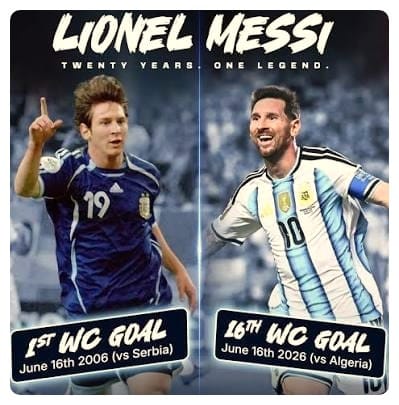
So with the 2026 FIFA World Cup landing in Vancouver and Toronto–and the rest of the matches being played in familiar North American time zones–my attention has been all but monopolized by the Beautiful Game. The TV’s been quietly streaming matches in the background so I can be present for history, like Messi’s hat‑trick against Algeria in Argentina’s opener–exactly 20 years to the day since his first World Cup goal in 2006 at age 18.
While I can’t yet speak to how the NHL finals and Stanley Cup shook out, I can speak about how Team Canada is faring on the world’s biggest stage–and that’s a helpful bridge when chatting football with our new friends in Kelowna.
One recent conversation, from a self‑described soccer layman, focused on the low scores so far: 1–0, 1–1, and so on.
Coming from the US, I’m used to that complaint–especially in a culture steeped in American football. Low‑scoring games are often equated with boredom, lack of offense, or even “a waste of time.” The possibility of a match ending in a draw? Borderline sacrilege.
In Canada, where hockey runs red in Canadian veins, one would think soccer scores wouldn’t be quite so shocking—hockey games typically ring up in similar numerical territory. So the critique wasn’t totally out of left field, but it still made me pause.
My first reaction was that many of the big teams were playing cautiously, saving themselves for later rounds and quietly playing not to lose. That may still be true in some cases, but as more matches played out, the picture grew more nuanced.
Part of it, I think, is that international soccer is at an inflection point: some of the traditional powers are losing their grip while the teams just behind them are finally good enough to knock them off. Italy, once perennial contenders, didn’t even make this World Cup. Portugal and Spain have looked far more mortal than their recent reputations would suggest. Meanwhile, Croatia scared England, and Morocco battled Brazil to a draw. The middle tier is rising.
Another factor is FIFA’s push to broaden representation by bringing in teams who have never appeared at a World Cup. In 2026, Uzbekistan, Jordan, Curaçao, and Cape Verde are all making their debuts. Three of those debuted with losses–but there are important stories inside those match results.
Take Curaçao.
Curaçao is an autonomous constituent country within the Kingdom of the Netherlands, sitting in the southern Caribbean just north of Venezuela. Its national team is the smallest ever to qualify for a World Cup by both population and area, with only about 150,000 people–fewer than live in our new hometown of Kelowna. They’re coached by Dick Advocaat, 78 years old, the oldest coach at this tournament. Curaçao punched its ticket to the World Cup with a hard‑fought 0–0 draw against Jamaica on the last day of CONCACAF qualifying.
So when Curaçao scored its first‑ever World Cup goal against Germany to equalize at 1–1, it was a crowning moment. One ball in the net, a lifetime of validation.
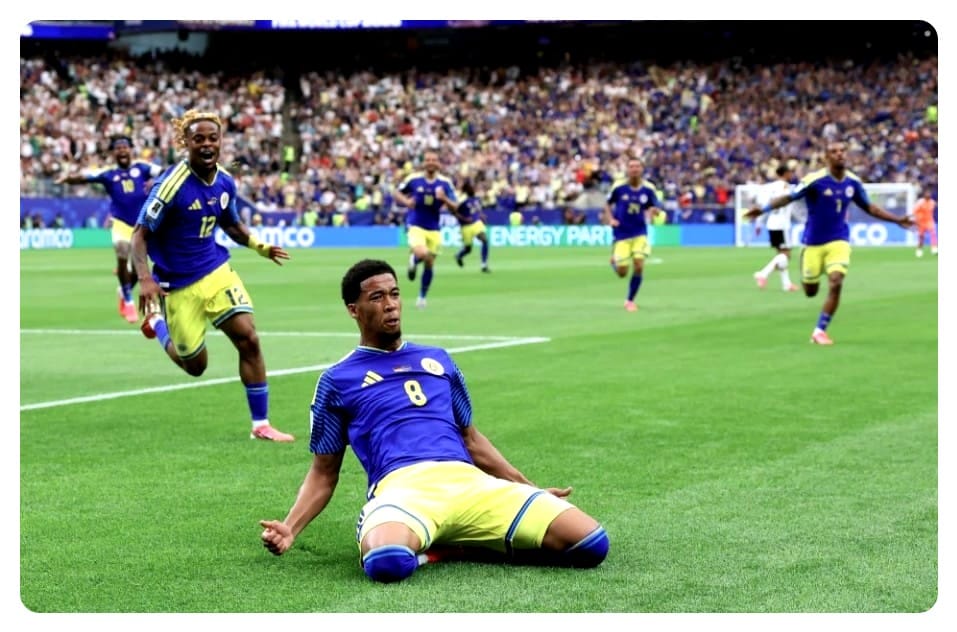
Of course, that goal also woke up the giant. Germany then scored six unanswered, and the match ended 7–1. But that doesn’t erase the significance of that first strike; it just sharpens it.
The fourth debutant, Cape Verde, didn’t lose its opener at all–it fought to a draw.
Against Spain. The 2010 World Cup champions.
Final score: 0–0.
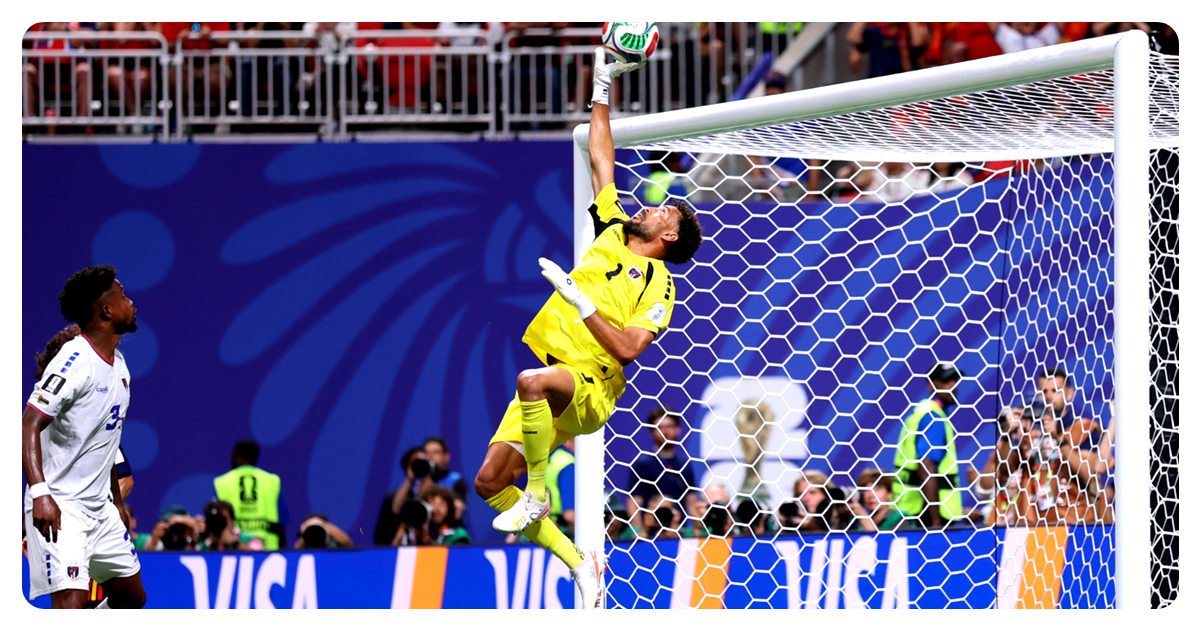
The star of the match was Cape Verde’s goalkeeper, Vozinha, who also happens to be one of the oldest players in the 2026 World Cup at 40. Early in his career he was repeatedly overlooked by scouts for being “too short” and spent his early adulthood playing for local amateur sides while working odd jobs–electrician, bus driver–to support his family. He only made his professional debut at 25, and his club career since then has taken him across leagues in Europe and Africa, a journeyman in the truest sense.
Now, deep into that career, he’s starting for his national team on the biggest stage in football.
Spain dominated the match in every metric except the one that mattered: 74% possession, 27 total shots, and 8 on target. All eight were stopped by Vozinha, who held one of the best sides in the world scoreless.
In the space of 90 minutes, he went from 50,000 Instagram followers to 13 million.
In an era where “AI‑driven efficiencies” are used to rationalize layoffs that disproportionately affect people deep into their careers, Vozinha’s story feels like oxygen. It suggests that deep experience, resilience, and situational intelligence still matter—that they might even be the edge you need when you’re chronologically “past your prime.”
We used to say the goal was to work smarter, not harder.
Now, in some ways, the challenge is to work smarter, not easier. Easy doesn’t outplay your opponent–on the pitch or in the ring. Easy doesn’t stop Spain’s front line for 90 straight minutes. Easy doesn’t hold up when the bell rings for the 12th round.
So I raise this Prize Fighter to Vozinha, and to the prize fighters in all of us–those trying to outlast the current evolutionary moment with patience, persistence, and a refusal to go down without a fight.
Cheers! 🥃🥊⚽