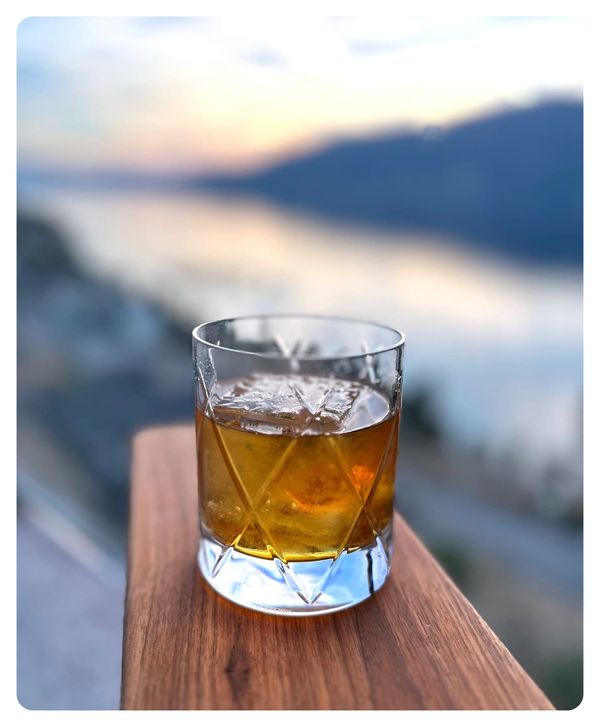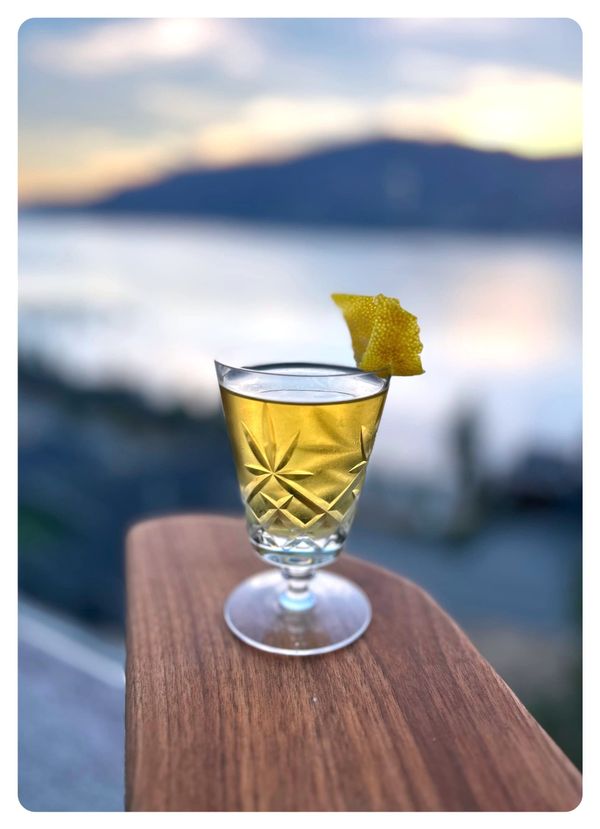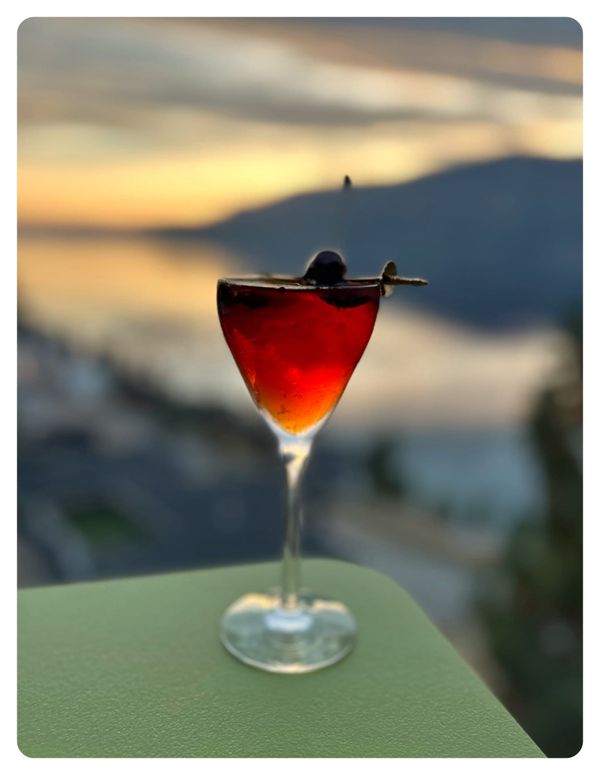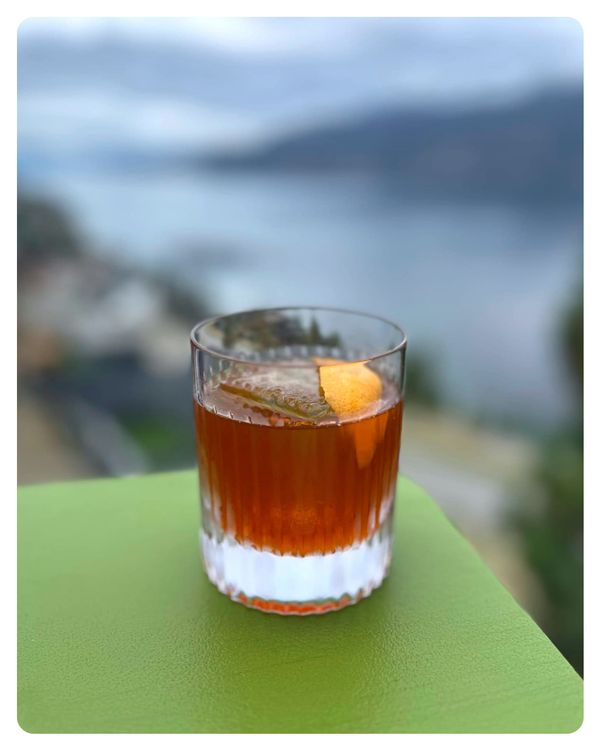
Ninth Wonder
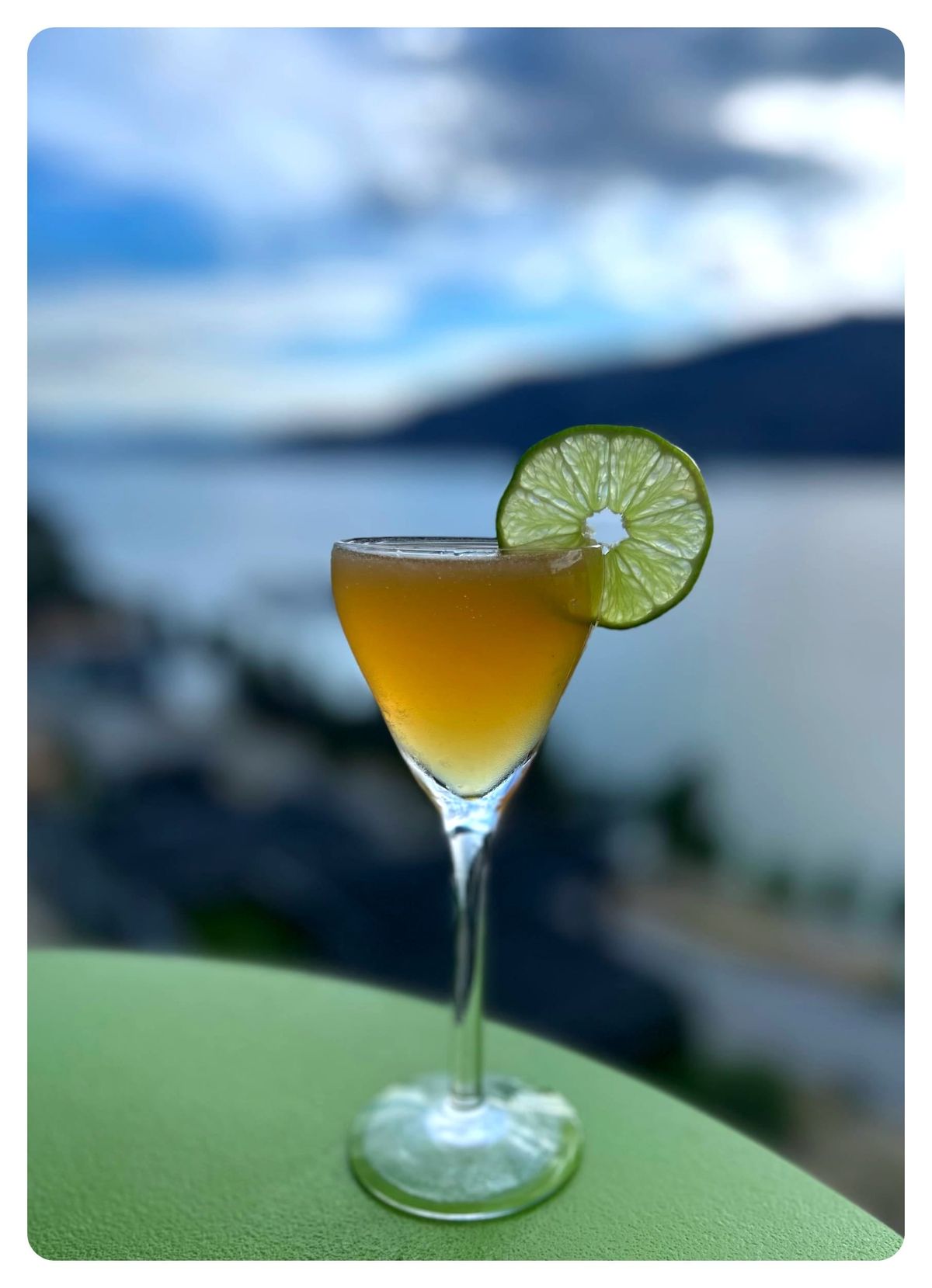
- ¾ oz Blanco Tequila (I used Don Fulano Fuerte)
- ¾ oz White crème de cacao
- ¾ oz Ancho Reyes chile liqueur
- ¾ oz Fresh lime juice
- Shake with ice for 20-30 seconds
- Strain into a chilled Nick and Nora glass
- Garnish with a lime wheel
Happy Friday, friends!
Much like in Portland–where summer never really started until the Fourth of July–Kelowna’s summer seems to begin in earnest with Canada Day on July 1. And when I think about summer cocktails, my mind goes first to a Margarita.
But I rarely do things the easy way, so this week I’m pouring the Ninth Wonder–a Margarita’s boozier, simpler, yet more complex cousin.
The Ninth Wonder follows the equal‑parts sour form that traces back to the Detroit Athletic Club in the 1920s and the Last Word cocktail. The Last Word’s recipe wasn’t widely recorded until Ted Saucier published it in Bottoms Up in 1951, but once it reemerged, everything changed.
The structure is relatively simple:
- ¾ oz base spirit
- ¾ oz modifier
- ¾ oz sweetener
- ¾ oz citrus
Four ingredients, equal parts. Clean, repeatable, and endlessly adaptable. And like fashion, cocktail recipes are cyclical: if you wait long enough, what’s old becomes new again.
In 2007, Phil Ward of Death & Co. in New York riffed on the Last Word and created the Final Ward–swapping gin for rye and the lime juice for lemon. That tweak came right as the modern cocktail renaissance was taking off and helped spark a whole wave of equal‑parts sours:
- Paper Plane (2008)
- Division Bell (Phil Ward again, 2009)
- Naked & Famous (2011)
- And many more
The Ninth Wonder is another entry in that lineage. It was created by Erick Castro, known for running the programs at Bourbon & Branch and Rickhouse in San Francisco and for earning a “World’s Best Cocktail Menu” nomination in 2009. Beyond this drink, he’s also behind modern classics like Kentucky Buck, Piña Verde, and Iron Ranger.
Relative to the original Last Word structure, the Ninth Wonder swaps the pieces as follows:
- Base spirit: blanco tequila
- Modifier: Ancho Reyes
- Sweetener: white crème de cacao
- Citrus: lime juice (keeping the Margarita DNA intact)
For the tequila, I used Don Fulano Fuerte Blanco so the agave wouldn’t get lost behind the lime and Ancho Reyes. You might remember it from the Raging Bull earlier this year. As a “fuerte” tequila, it runs at a higher ABV, but more importantly, its vegetal agave notes, citrus zest, cinnamon, and minerality remain central in whatever cocktail you put it in.
Ancho Reyes is new to Flavor Notes, but not new to me.
Long before I started deep‑diving into cocktails, I was making fresh salsas for friends and parties. Guacamole, roasted chile salsas, mango mashes–that was my jam. My guac has achieved “international” notoriety–which in my case means the U.S. east and west coasts, plus now British Columbia.
So when I discovered Ancho Reyes, it was inevitable that it would become a permanent resident of my bar.
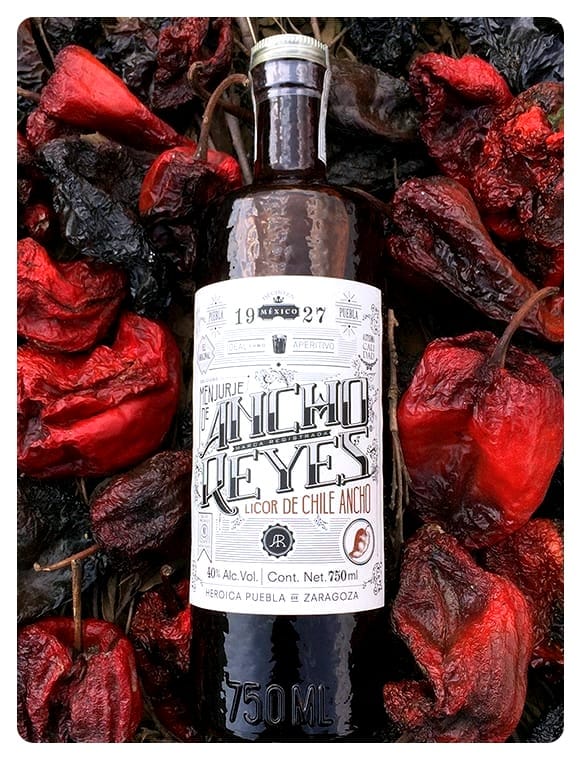
Ancho Reyes is a 40% ABV Mexican liqueur built from sun‑dried ancho chiles steeped in sugarcane spirit. The original red expression is based on a 1927 recipe from Puebla and offers notes of caramel, cocoa, cinnamon, and lingering smoky heat. It adds depth to cocktails like Margaritas and Palomas, which makes it a natural fit for the Ninth Wonder.
The sweetener here is white crème de cacao. I used a Bols expression, though any respectable crème de cacao will work. My one suggestion is to choose one with enough presence to stand up to Ancho Reyes and lime–something like Giffard would be ideal. The Bols I used was a bit shy, so I gave it a boost with a single dash of Bittermens Xocolatl Mole bitters. To be honest, that was a happy accident: the mole bitters added chocolate depth and helped balance the sharp lime tartness.
Set the lime wheel aside and let the aromas do their work: hints of all four ingredients present themselves on the nose. On the first sip, lime arrives first, surrounded by subtle agave and chile notes from the Don Fulano and Ancho Reyes, while the chocolate and agave sweetness stay just behind. As the sip moves across the palate, gentle cocoa and agave partner with the ever‑present citrus, reminding you of a more layered margarita you haven’t met before. The back palate is flushed with the spice of Ancho Reyes, making sure the best note is saved for last.
If you’re spice‑averse, you may tense up and wonder if your mouth will be on fire for the rest of the evening. Don’t worry. The chile heat dissipates before the next sip, leaving you ready for another round.
The meeting of chile and chocolate is a pleasant reminder of one of my favorite Mexican dishes, Mole Poblano–which, when done properly from scratch, is an all‑day cooking endeavor. Fortunately, the Ninth Wonder is a worthy companion for that kind of patient work.
Celebrating Canada Day with friends and family this year felt different.
Last year, I was physically in Canada for July 1, but I was still very much “in transit”–more spectator than participant. I was too new to fully grasp what the occasion meant for my own story.
In twelve months, my immigration journey has moved a long way.
I’ve written previously about my Canadian Work Permit being approved (see Darkness on the Edge of Town), then applying for and receiving my BC driver’s license (Three Dots and a Dash). This week brought another milestone: word that my enrollment in British Columbia’s Medical Services Plan (MSP) is complete.
I’m still awaiting my BC Services Card–my physical key to accessing the healthcare system–to arrive by mail. But I’ve already crossed a threshold: I can stop paying for traveler’s insurance as my primary safety net.
Next up is applying for my Social Insurance Number (SIN), Canada’s equivalent to the U.S. Social Security number, which I’ll use for any Canadian employment. The application is straightforward: a digital copy of my Work Permit, my new BC license, and a short form. Bureaucracy rarely moves fast, but occasionally it moves smoothly.
All of this adds up to something simple and powerful: progress.
This Canada Day, I’m not just watching fireworks over the lake. I’m feeling a genuine sense of gratitude for each step of this process–however incremental it’s felt at times.
And there is a lot to be grateful for here.
On a national level:
- Canada’s leadership is, at the moment, leaning hard into affordable housing, cost‑of‑living relief, clean energy expansion, and international trade, while also aiming to keep federal spending growth in check.
- At the same time, there’s a visible effort to stay connected to the country’s cultural heartbeat: showing up for the Canadian Men’s National Team at the World Cup, joining Pride celebrations in Toronto, flipping pancakes at local community events. “Policy and presence” seems to be the goal.
On the football front:
- Vancouver has been named the top FIFA World Cup 2026 host city in rankings that consider transit, walkability, climate, and affordability.
- The Canadian Men’s National Team has reached the Round of 16 for the first time in history, with a 6–0 win over Qatar (including a Jonathan David hat trick) and a gritty 1–0 Round of 32 victory against South Africa.
Even as I carry real grief about leaving behind my life, friends, and extended family in the U.S., I’m deeply grateful for how Canada has welcomed us into its wide maple‑leaf embrace.
For a long time, I watched the U.S. trying–and often struggling–to hold up the torch for a prosperous liberal democracy. Lately, it feels like Canada has picked that torch up and started running with it in its own way: not by copying, but by iterating.
My last year here has reminded me how it feels to aspire again.
In honor of this Canada Day, I raise the Ninth Wonder to Canada: to its leadership, its national team, and to all the Canadians I’ve met–and have yet to meet. The world truly needs more Canada, so it’s encouraging to see Canada leaning into that role.
Cheers! 🍸🍁⚽