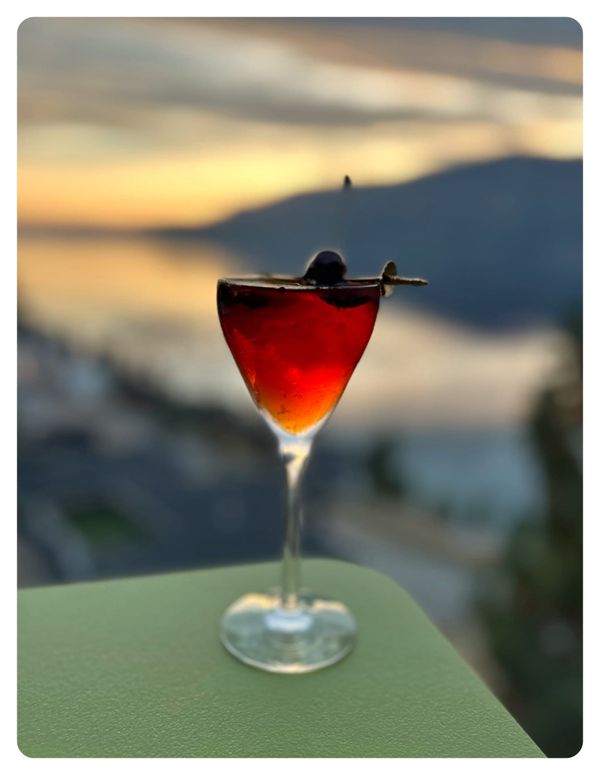
Darkness on the Edge of Town

- 1 oz Smith & Cross Rum
- 1 oz Cognac
- 1 oz Carpano Antica Vermouth
- 1 bsp Bénédictine
- 2 dsh Angostura Bitters
- 2 dsh Peychaud's Bitters
- Stir with ice for 20-30 seconds.
- Strain over a large rock into an Old Fashioned glass
Happy Friday, friends!
Two events this week gave me cause to celebrate, so I went looking for something both robust and a little ethereal to help me ring in the moment.
When I think robust in the spirits world, I think big Jamaican rum–Smith & Cross in particular. So I pulled my well‑worn Smith & Cross Cocktail Book off the shelf and started flipping through.
I alighted on a drink with a name that stopped me in my tracks: Darkness on the Edge of Town.
As a Bruce Springsteen fan, I was hooked before I even read the spec. A little digging revealed that the cocktail was created by Al Sotack of Franklin Mortgage & Investment Co. in Philadelphia, and yes—it was named after Springsteen’s 1978 album, even if the story behind why has been lost to the fog of bar lore.
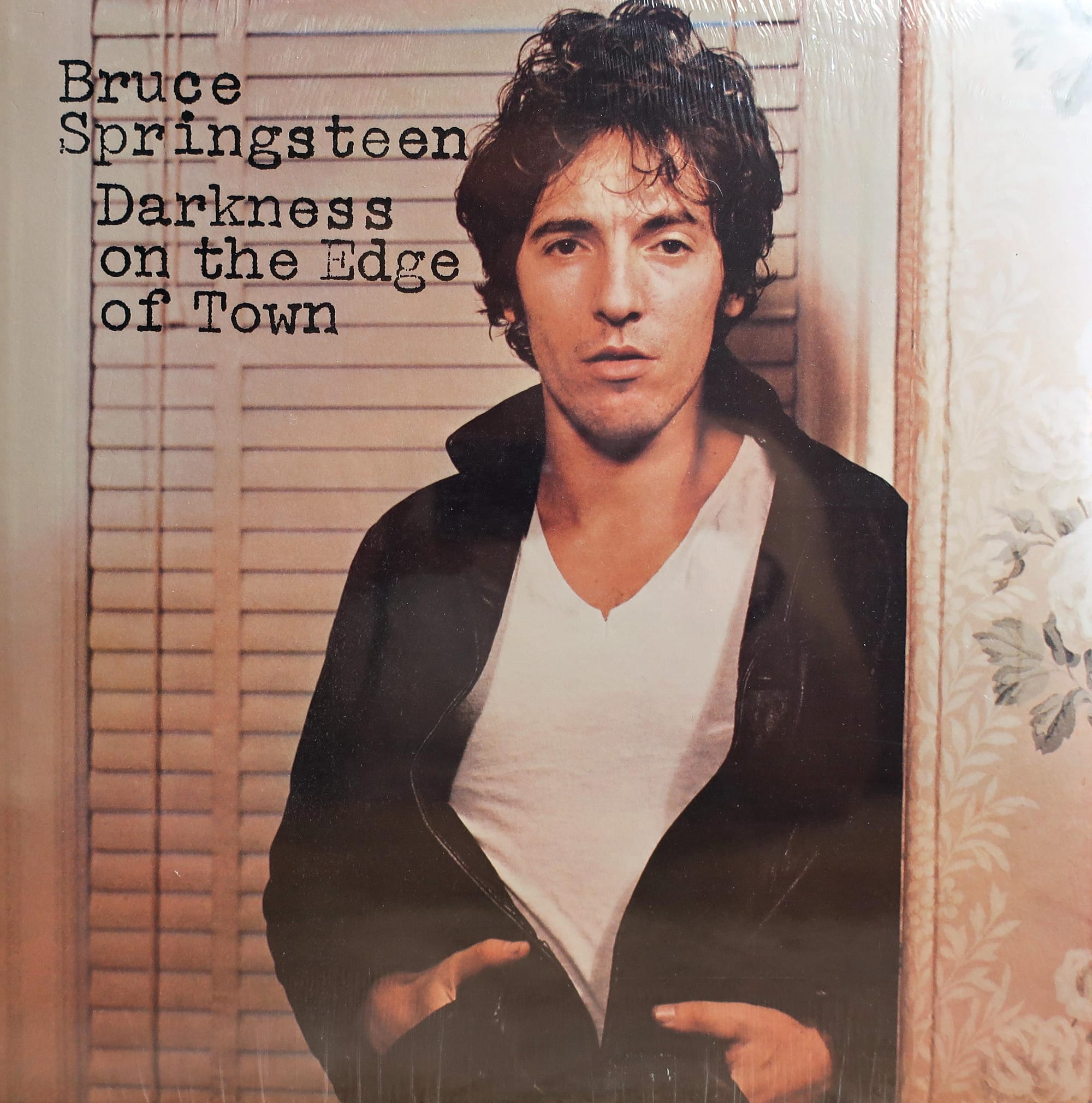
Springsteen has described Darkness on the Edge of Town as a kind of reckoning with the adult world: a turn from the youthful escape of Born to Run toward the harsh realities of blue‑collar life, creative doubt, and personal struggle. It’s an album of characters standing at the edge of something–facing loneliness, disappointment, and the hard work of survival.
It’s about the crucible where people are rebuilt, if they’re lucky. The loneliness of starting over. The hope of emerging into something new.
After my first sip of this cocktail, I was on board.
No surprise there. Darkness on the Edge of Town clearly takes a lot of inspiration from one of my favorite New Orleans drinks, the Vieux Carré–essentially a split‑base Manhattan. But instead of splitting the base with rye, this one splits with aged Jamaican rum–specifically Smith & Cross Navy Strength Jamaican Rum.
You might remember Smith & Cross from the Professional, where it stepped in for the sweet vermouth in a Negroni variation, or from the Doubloon and Urban Songbird on Flavor Notes. Smith & Cross is a high‑proof, high‑ester, pot‑still Jamaican rum–famously funky–with notes of overripe banana, caramelized pineapple, molasses, and tropical fruit. Those big flavors partner beautifully with the sweet grape notes of the cognac and vermouth.
For the cognac, I’m using Château Montifaud VSOP, which I’ve also used in the Elixir de Longue Vie. It’s a fruit‑forward, floral cognac, with vine flowers, pear, and apricot in the mix and a very smooth texture.
Carpano Antica Formula brings its own distinct personality: deep red‑amber color and a famously vanilla‑forward profile, with cocoa, dried fruits (raisins, figs), orange peel, and warm baking spices like cinnamon and clove.
Even with just these three equal‑parts ingredients, you have a serious cornucopia of flavor. Then the spec adds a barspoon of Bénédictine, layering in honeyed sweetness and herbal complexity. Finally, Angostura and Peychaud’s bitters sharpen and frame everything, making this cocktail every bit as complex as its name suggests.
There’s no garnish specified, so the initial aromas are spirit‑driven: the rum funk and the fruit from the cognac and vermouth lead the way, and they bode well for the first sip. On the front of the palate, the inherent sweetness of the ingredients steps forward–herbal honey from the Bénédictine, dried red fruit from the cognac and vermouth, deep molasses from the rum. As the sip moves across the palate, more mature notes emerge: caramelized pineapple, baking spice from barrel aging, and the bitters’ clove and allspice edge. The tannin and spice hang on during the finish, reminding you of the glorious grape at the core of this sultry, spirit‑forward drink.
Despite the days stretching longer and the light getting warmer, Darkness on the Edge of Town casts a contemplative shadow over your journey before delivering you to your own promised land.
We started this week with a different kind of celebration: May 4th. Specifically, May the Fourth Be With You, that annual day when we celebrate both the legacy of the Star Wars franchise and the idea of the Force, that quasi‑spiritual concept behind the narrative that grants its wielders–and their adversaries–extraordinary powers.
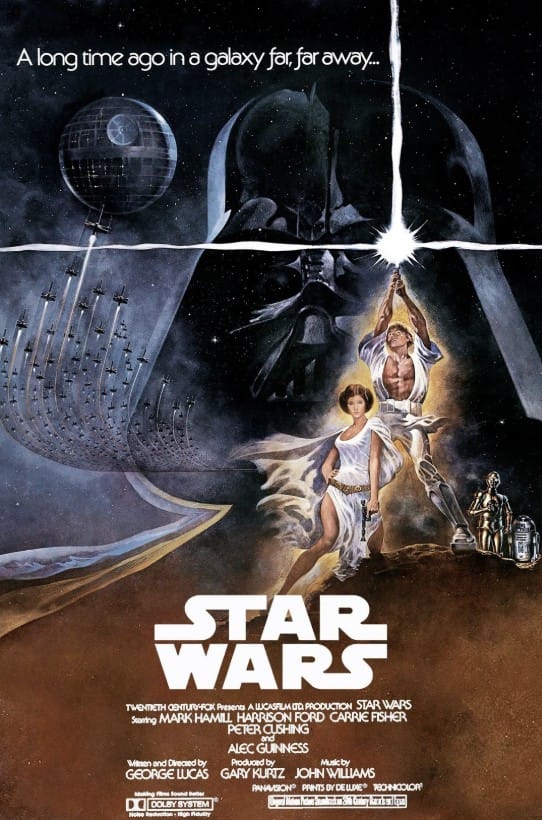
On May 25, 1977, I had just turned six, and I remember being taken to see Star Wars in the theater. Growing up in Irvine, California, our local cinematic temple at the time was in nearby Newport Beach, in a community called Fashion Island. The iconic Edwards Big Newport—often simply called “Big Newport”–was famous for its massive single‑screen auditorium, with seating for roughly 1,350 people.
For that brazen space saga, every one of those 1,350 seats had a person attached. The line snaked around the theater–a sight my six‑year‑old self had never seen before.
I was hooked that day, and I’ve been a fan ever since.
What I didn’t know until recently was the quiet, formative role Canada played in shaping the spiritual core of Star Wars–specifically, the Force.
One of the YouTubers I discovered after moving to Kelowna is Tod Maffin from Nanaimo on Vancouver Island. In response to the current U.S. political climate, he set out to give American expats–especially those working in healthcare–a roadmap for moving to Canada, where their experience could fast‑track them to permanent residency.
His videos are always educational, sometimes cheeky, and fiercely Canadian.
This May 4th, he posted a video about a Canadian experimental film created in 1963 at the National Film Board of Canada (NFB) by filmmaker Arthur Lipsett, titled 21‑87. It’s a nine‑minute short, spliced together from scrap footage in the NFB editing rooms, with an audio conversation between AI pioneer Warren McCulloch and NFB cinematographer Roman Kroitor woven through it.
In the film, McCulloch argues that humans are essentially complex machines. Kroitor pushes back, saying:
“Many people feel that in the contemplation of nature and in communication with other living things, they become aware of some kind of… Force or something behind this apparent mask which we see in front of us.”
If that sounds familiar, it should. George Lucas has cited 21‑87 as a major influence, and Kroitor’s phrasing helped inspire the concept of the Force in Star Wars.
It’s no surprise to me that the Force was seeded by a force of nature like Canada. Nature here is not a background extra; it’s a speaking role. As I write this, Kelowna is under a wind warning, with gusts up to 70 km/h, even though it’s a bright, sunny day outside. Weather in northern climates is something you negotiate with, not something you ignore.
Canadians understand this intuitively: if you don’t take the environment into account in your day‑to‑day movements, the environment has many ways to remind you who’s actually in charge.
So thank you, Canada, for giving George Lucas the spiritual skeleton key he needed to wrap around a Campbell‑inspired hero’s journey, and helping birth one of the greatest film and media franchises of all time.
And thank you, Canada, for something a bit more personal: delivering my Canadian Work Permit today. (Way to bury the lede, Helsel.) With this in hand, I feel like I’ve stepped out of my own darkness on the edge of town, and the job market for Customer Insights, Competitive Intelligence, Win‑Loss, and Market Research might not know what hit it.
Get a load of this force of nature.
With May the Fourth now behind us, and my Work Permit fresh in hand, I raise this Darkness on the Edge of Town to toast Canada–and its role in giving us all a galaxy far, far away to fire our imaginations, while nudging us to consider what’s really possible in our own corner of the universe.
Cheers! 🍁🌠📜