Urban Songbird
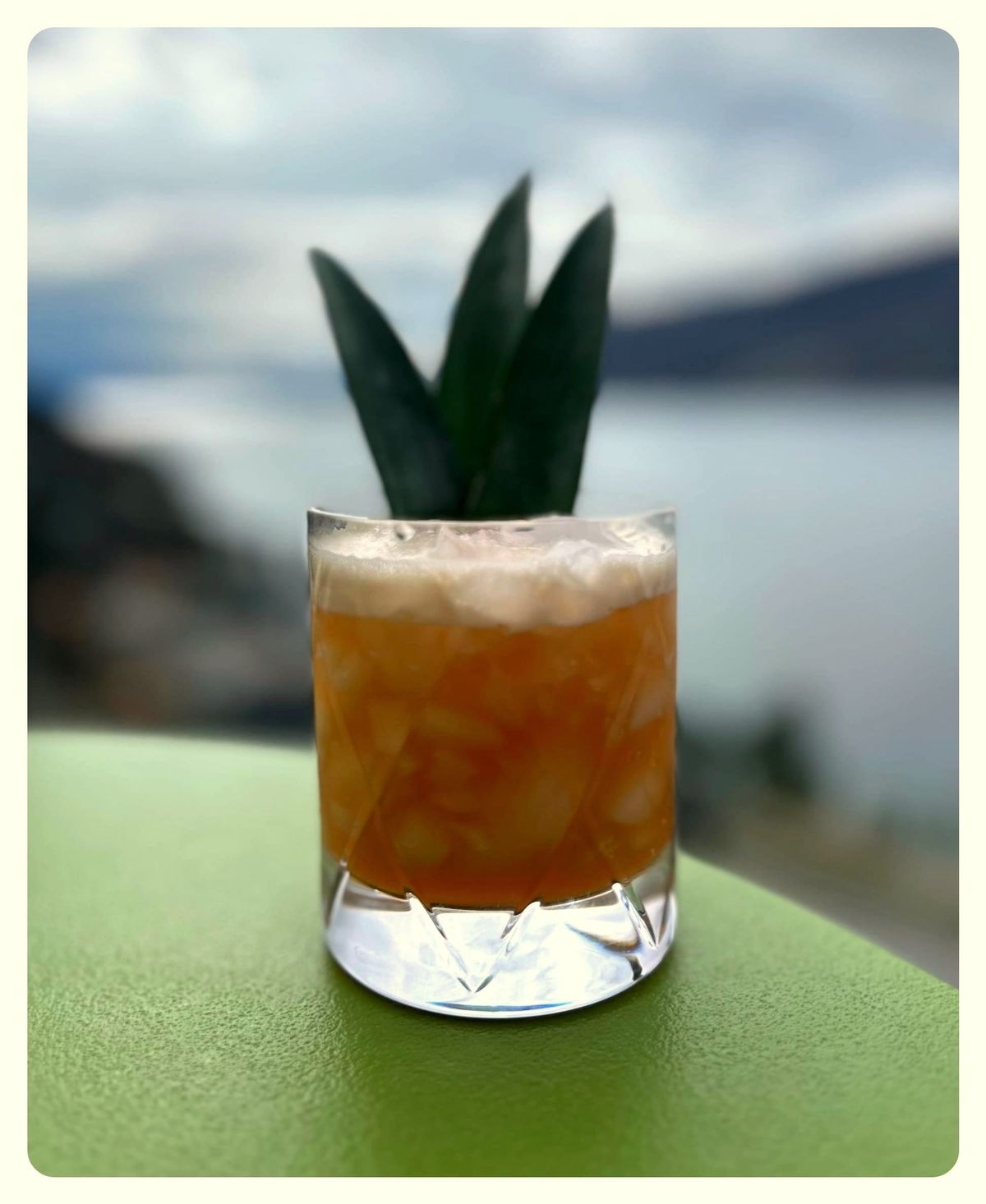
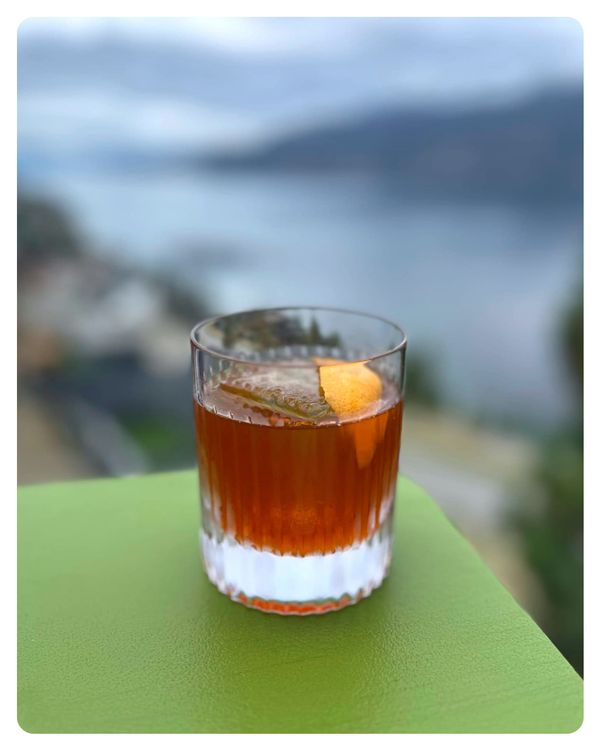
- 1 1⁄2 oz Aged Jamaican Rum
- 1⁄2 oz Aged Jamaican Navy Rum
- 1 1⁄2 oz Pineapple juice
- 1⁄2 oz Lemon juice
- ½ oz Aperol
- Bsp Rich demerara syrup
- Shake ingredients in ice for 20-30 seconds, strain into an old-fashioned glass filled with crushed ice
- Garnish with a pineapple frond
Happy Friday, friends!
Spring has sprung in the Okanagan.
Despite a night full of snow last weekend, temperatures have climbed to 15℃ this week. We’re being woken up by birdsong in the mornings and boats are beginning to re-inhabit the marinas.
As I’ve shared previously, I lead the Cocktails & Spirits Tasting program for the Kelowna Newcomers Club. And in a bit of scheduling serendipity, the weather decided to cooperate perfectly with our rum tasting this week.
And when I think of rum–especially in warmer weather–I invariably think of tiki cocktails.
Tiki is practically its own cottage industry within cocktail culture. And yet, it’s a style I haven’t previously shared here on Flavor Notes.
In mutual agreement with our tour guide for the evening, we landed on the Urban Songbird as the cocktail to close out the tasting–a drink I now bring to you.
The Urban Songbird, as the name suggests, is a riff on a tiki classic: the Jungle Bird.
The Jungle Bird was created in the early 1970s at the Kuala Lumpur Hilton, originally served as a welcome drink for arriving guests. It didn’t see wider publication until 1989, when it appeared in The New American Bartender’s Guide by John J. Poister–after which it earned its place as a tiki staple.

The Urban Songbird, by comparison, was created by Alex Eiler and published during the pandemic in CBC Quarantinis: Cocktails to Make at Home (With What You Have Around) –a fundraiser supporting Columbus, Ohio bars and bartenders during shutdowns.
Like so many cocktails I’ve explored, this one came to me via J. E. Clapham’s That’s Amaro.
This cocktail pivots from the original Jungle Bird in two meaningful ways.
First, it moves away from the blackstrap rum + Campari backbone of the Jungle Bird. Instead, it leans into aged Jamaican rum, which brings a more rounded, mellow profile while still delivering that unmistakable Jamaican funk.
A small measure of navy-strength Jamaican rum reinforces that funk, ensuring it remains the focal point of the drink.
At home, I’d typically reach for something like Appleton Estate (Signature or age-stated) alongside Smith & Cross. But for our event, we used Equiano and Worthy Park Overproof, both new to me–and both excellent.
Second, the Urban Songbird dials back bitterness by swapping Campari for Aperol.
We’ve talked about Aperol before in the Waterproof Watch and My Favorite Things. Here, it contributes a lighter, orange-forward sweetness that integrates more seamlessly with the fruit elements while still adding structure and a touch of bitterness.
On the nose, the combination of pineapple and Jamaican rum funk provides an immediate invitation.
The first sip opens with pineapple sweetness, lifted by lemon juice and lightly structured by Aperol across the front palate. As the drink moves into the mid-palate, the Jamaican rum asserts itself–molasses richness weaving into the fruit while the signature funk stands apart.
The result is both refreshing and complex, with each sip inviting the next.
Whether you’re a seasoned tiki enthusiast or new to the category, the Urban Songbird offers a welcoming introduction to the interplay of tropical fruit and Jamaican rum character.
These tasting events for the club serve multiple purposes for me.
First, they provide an opportunity to build relationships within the local spirits community. Whether working with bars, restaurants, or distilleries, I’ve found everyone to be generous with their time and deeply engaged in what they do.
Second, they allow me to design and deliver curated experiences–something that taps directly into both my passion for spirits and my professional instincts as a market researcher. At its core, my career has been about crafting narratives from data to guide decisions. These events aren’t all that different–just without the slide decks.
And third, they present stretch opportunities–moments where I need to step beyond my comfort zone, take a leap with a new partner, and trust the process.
Anything done by rote bores me to tears. So I actively seek out these moments. Because more often than not, when you do, the universe rewards you with outcomes you couldn’t have planned.
That was certainly the case Wednesday night at ARC Liquor’s tasting room. Our presenter came from the Kelowna Scotch & Fine Spirits Society (KSFSS), and food was provided by Curated Kelowna. All three partners were firing on all cylinders.
ARC Liquor went above and beyond as hosts–providing the space, spirits, glassware, ice, and setup.
Andrew Braun of KSFSS delivered a deeply knowledgeable presentation, covering the history of rum, the distilleries represented, production methods, and the nuances of each bottle.
And the charcuterie and veggie boards from Curated were a huge hit–helping, not insignificantly, to balance the ABV of the spirits we were tasting.
The goal of the evening was to showcase the breadth of the rum category—a spectrum defined by raw materials, geography, production methods, and history.
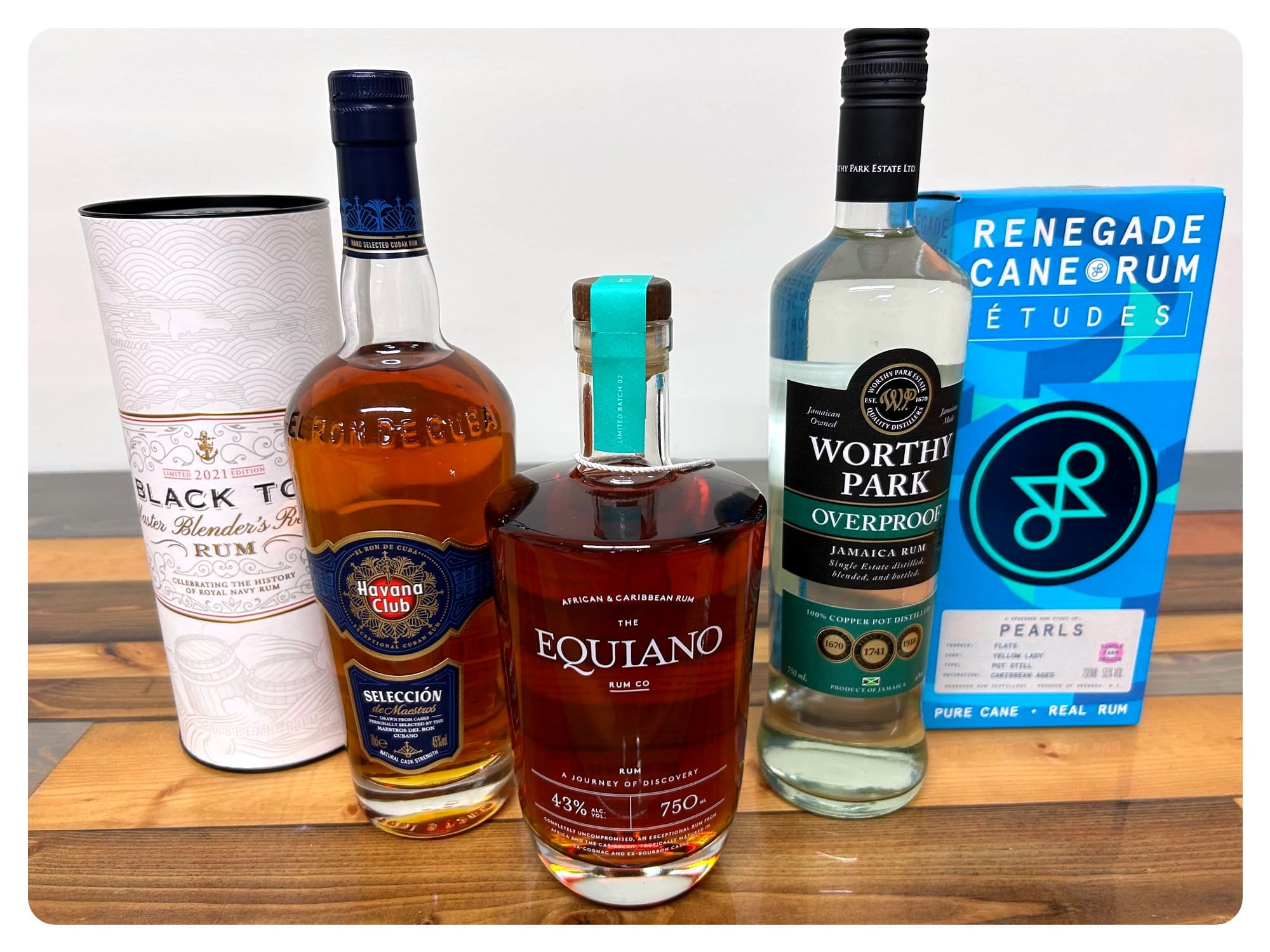
Our lineup included:
Havana Club Selección de Maestros – a smooth, Spanish-style Cuban rum (distinct from the Puerto Rican version available in the U.S.).
Equiano – a blend spanning Mauritius and Barbados, aged separately and married into a remarkably balanced spirit.
Renegade Etudes: Pearls – a terroir-driven cane juice rum, offering a distinctly different profile from molasses-based rums.
Black Tot Master Blender’s Reserve – a premium, perpetual blend honoring the legacy of the British Royal Navy’s rum ration, and its discontinuation on Black Tot Day in 1970.
Worthy Park Overproof – a bold, 63% ABV Jamaican rum, unapologetically intense and full of character.
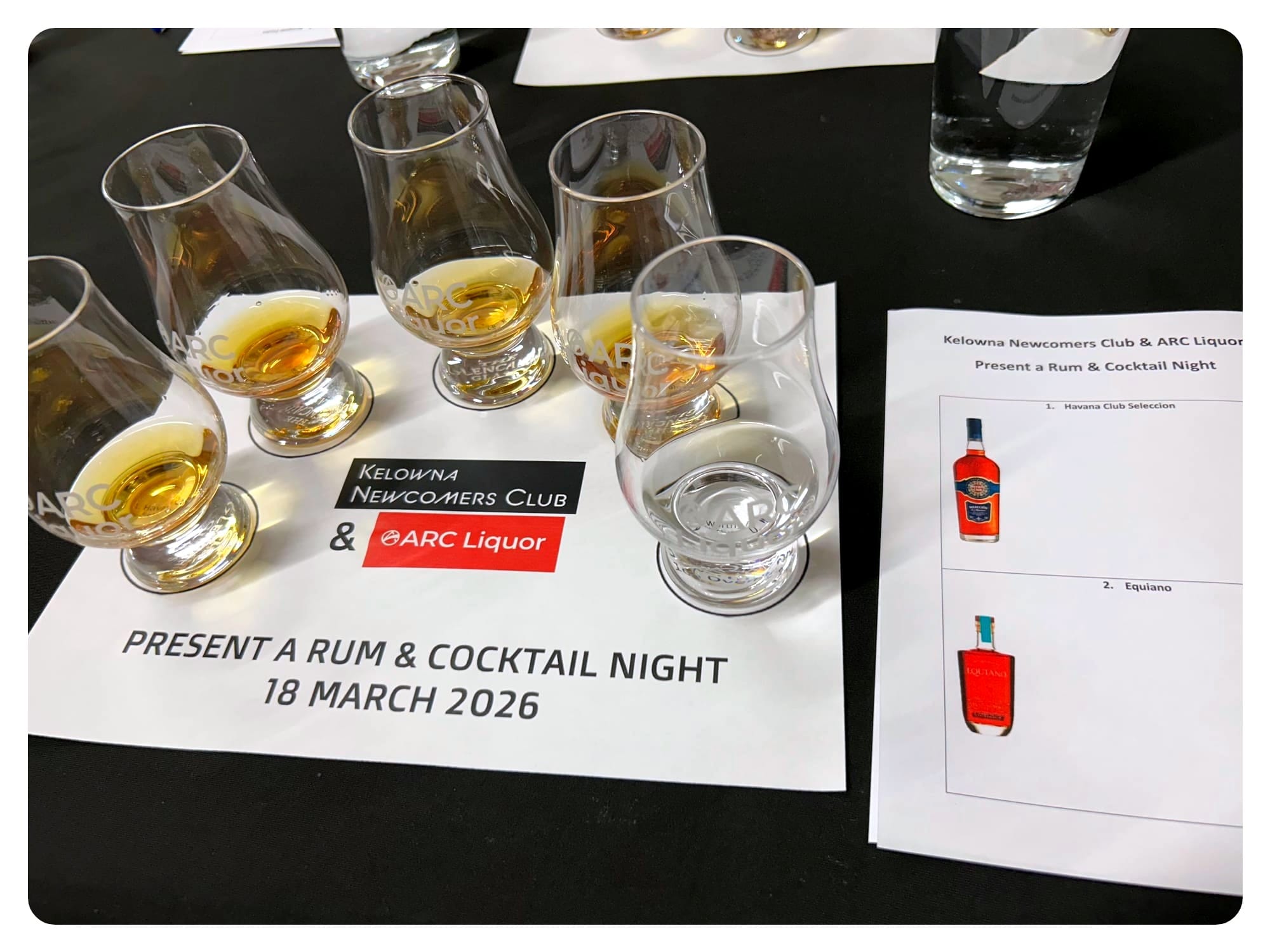
Preferences varied across the group. Some gravitated toward the smoothness of Havana Club, others toward Equiano’s balance, while a few took inspiration from Black Tot and began blending their own combinations from remaining pours–claiming, of course, to have improved upon everything.
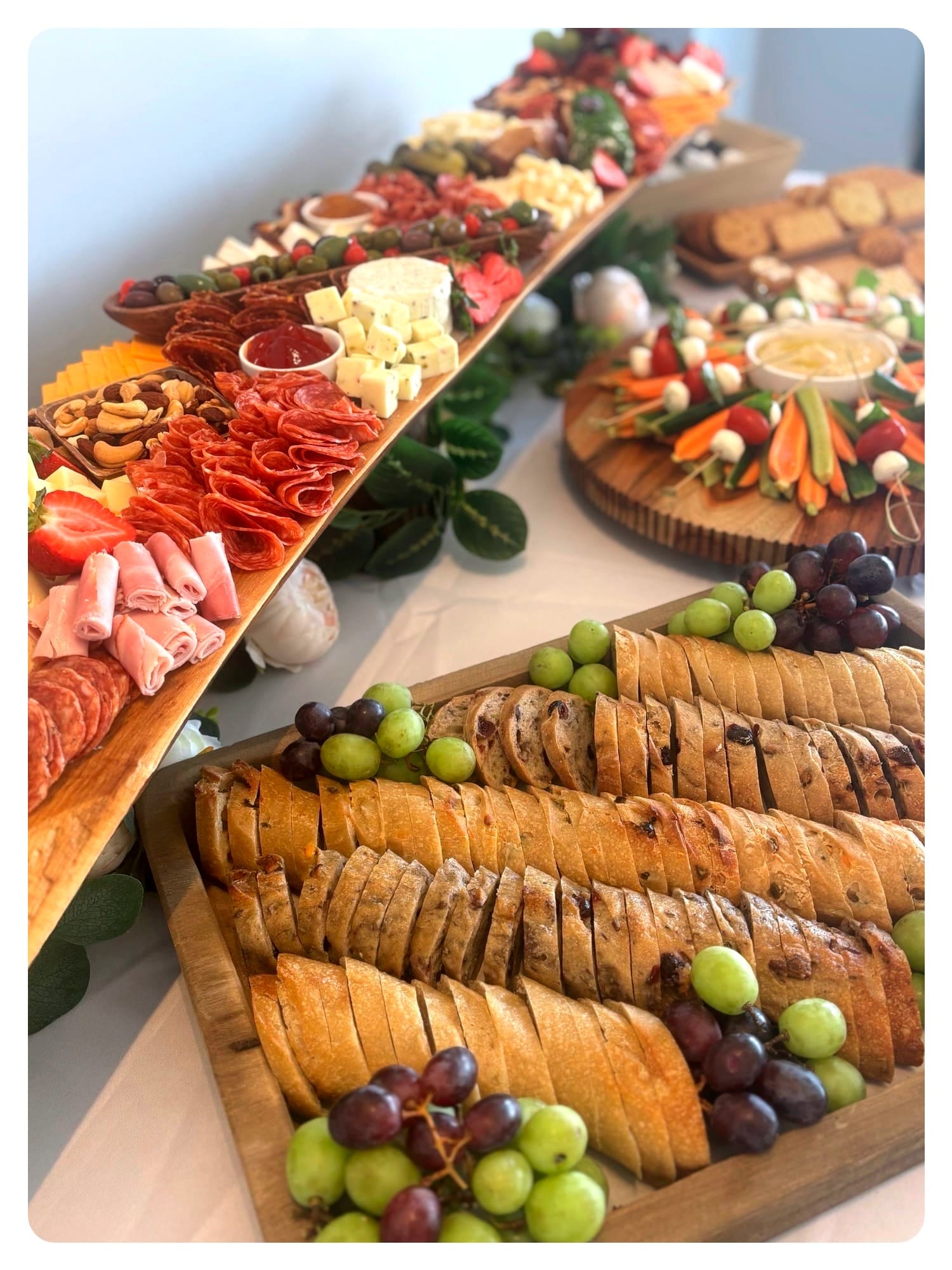
After the tasting, we transitioned to food, conversation, and—finally—the cocktail.
With Urban Songbirds in hand, members moved about the room: meeting new people, reconnecting with friends, and continuing conversations sparked during the tasting.
And for me, that’s when it all comes together.
That moment when you can step back, watch it unfold, and realize the experience has landed.
That the partners delivered above and beyond.
That the room is buzzing.
That it worked.
Gratitude. Euphoria.
Wherever you find yourself delivering value to your own community, I raise an Urban Songbird to you–your effort, your creativity, and your willingness to take the leap.
Keep your eye on the prize, and don’t forget to enjoy the ride along the way.
Cheers! 🥃😉🎢