Elixir De Longue Vie
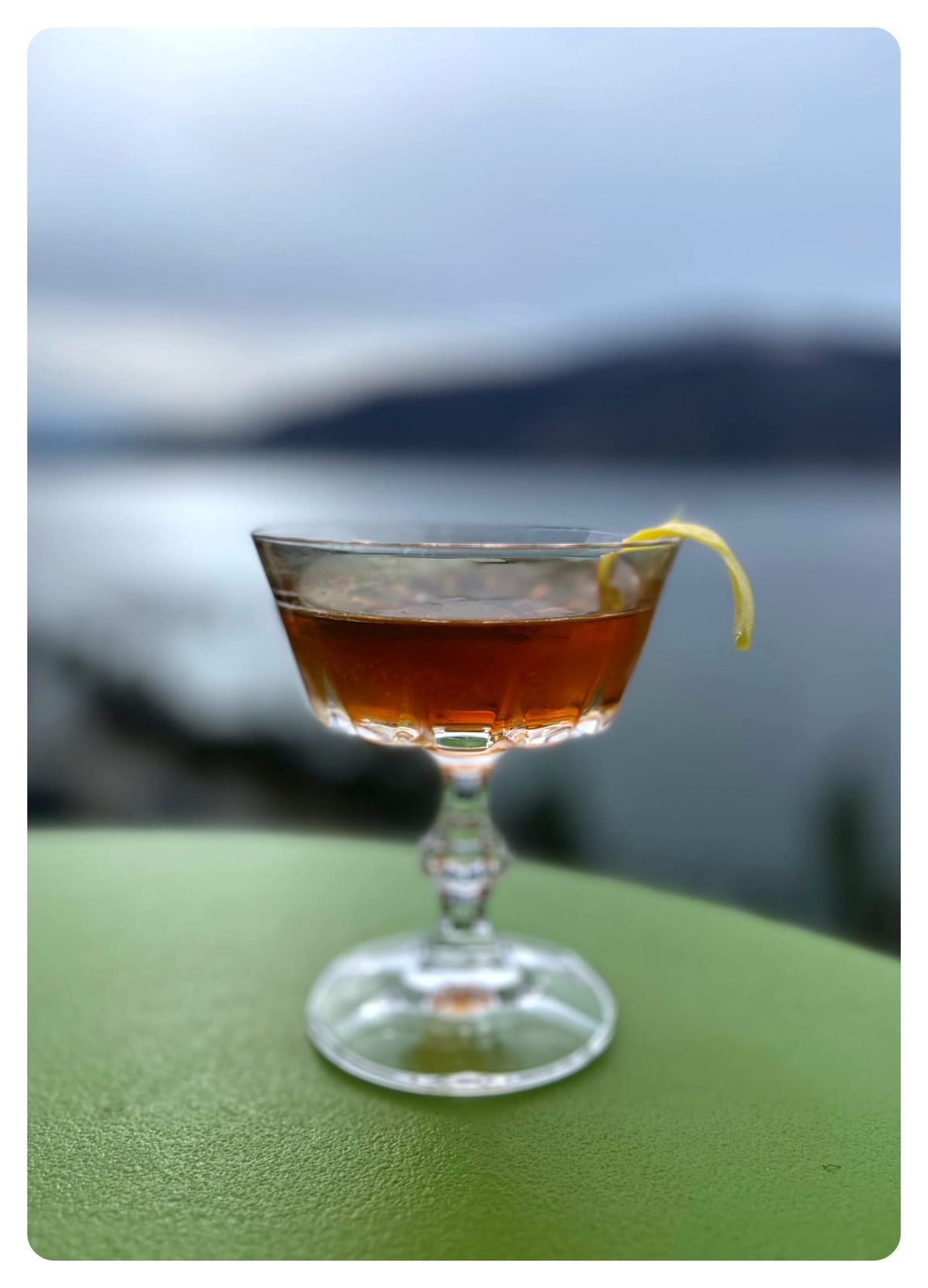
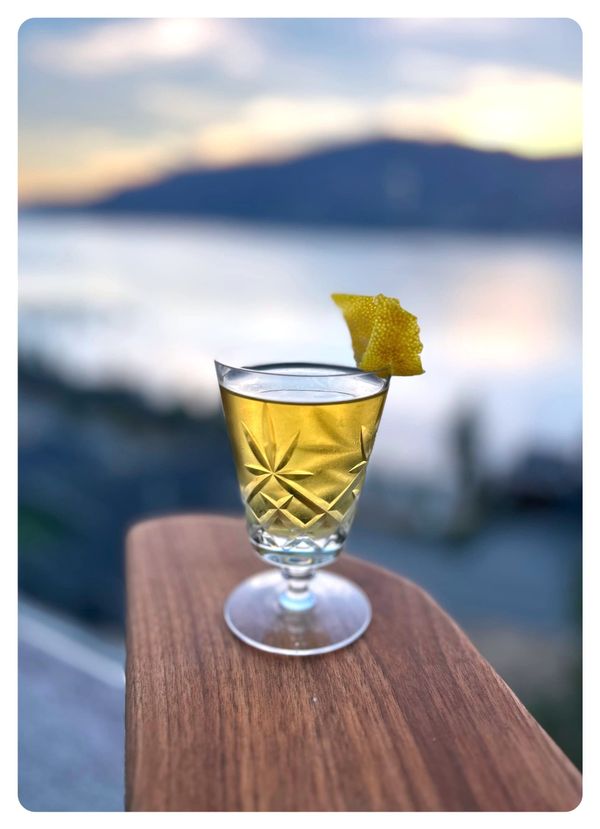
- 1 1⁄3 oz Cognac
- 1⁄2 oz Giffard Crème de Châtaigne
- 1⁄2 oz Pineau des Charentes blanc
- 1⁄6 oz Yellow Chartreuse
- 2 Dsh Lemon Bitters
- Stir ingredients in ice for 20-30 seconds, strain into a refrigerated coupe
- Garnish with a lemon twist
Happy Friday, friends!
Last week I shared the Old Friend, largely because I had old friends visiting from Portland for the weekend. We had a great time making memories while working our way through the list of “must-do’s” I’d assembled from friends and the internet.
Over the course of the weekend I gained a new appreciation for saunas followed by cold plunges in 5℃ lake water, exquisitely designed wine-paired meals, and clever reinterpretations of classic cocktails—like a beautifully packaged whiskey sour.
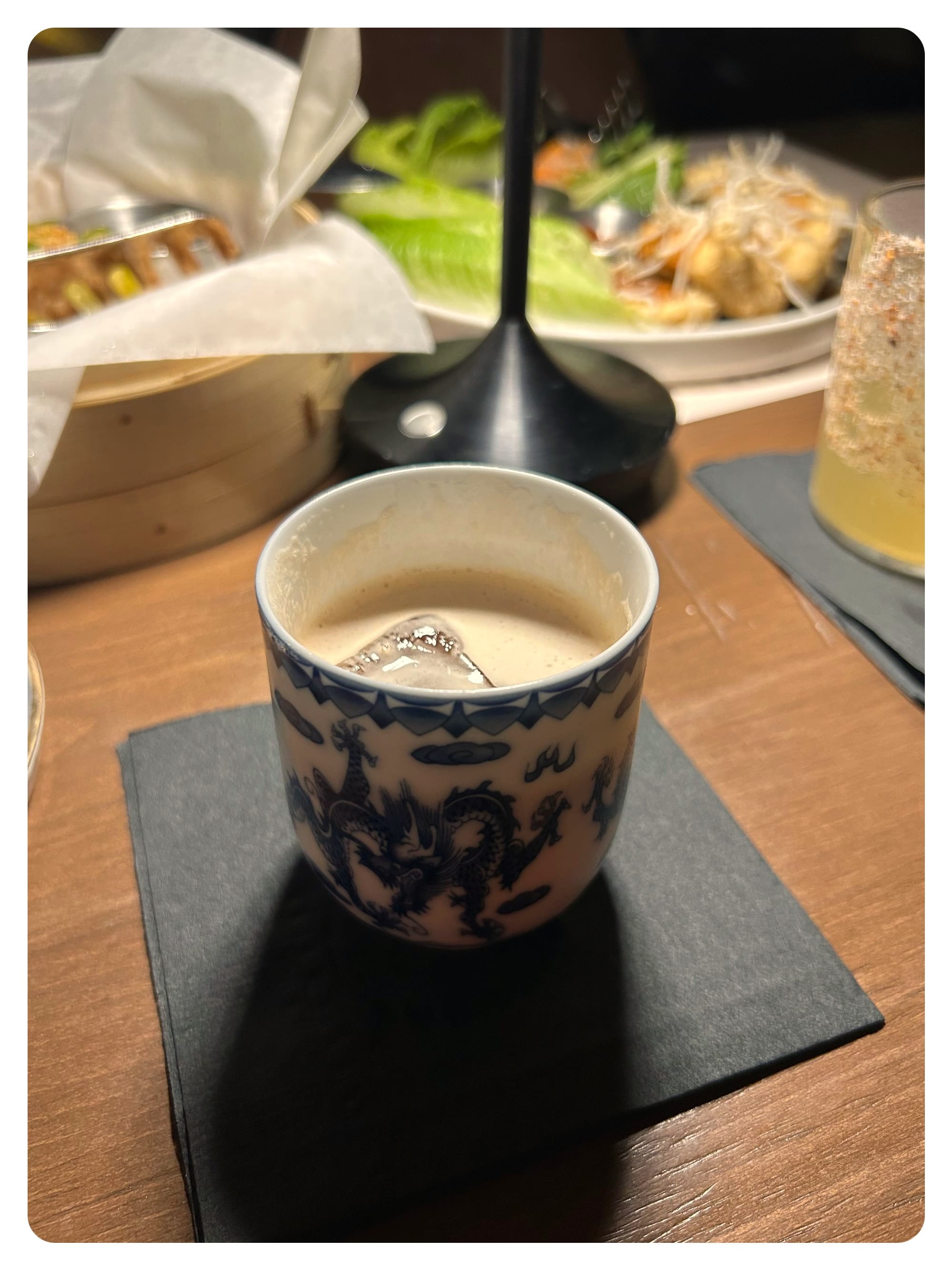
But the weekend actually started on Friday afternoon on a much different path—one that highlighted the value of memories made, geographies explored, and lives well-lived.
To that experience, I offer the Elixir De Longue Vie.
The literal translation is Elixir of Long Life. But I prefer to think of it as the Elixir of a Life Well-Lived.
This cocktail has a lot going for it—especially for someone like me who’s always experimenting with new ingredients.
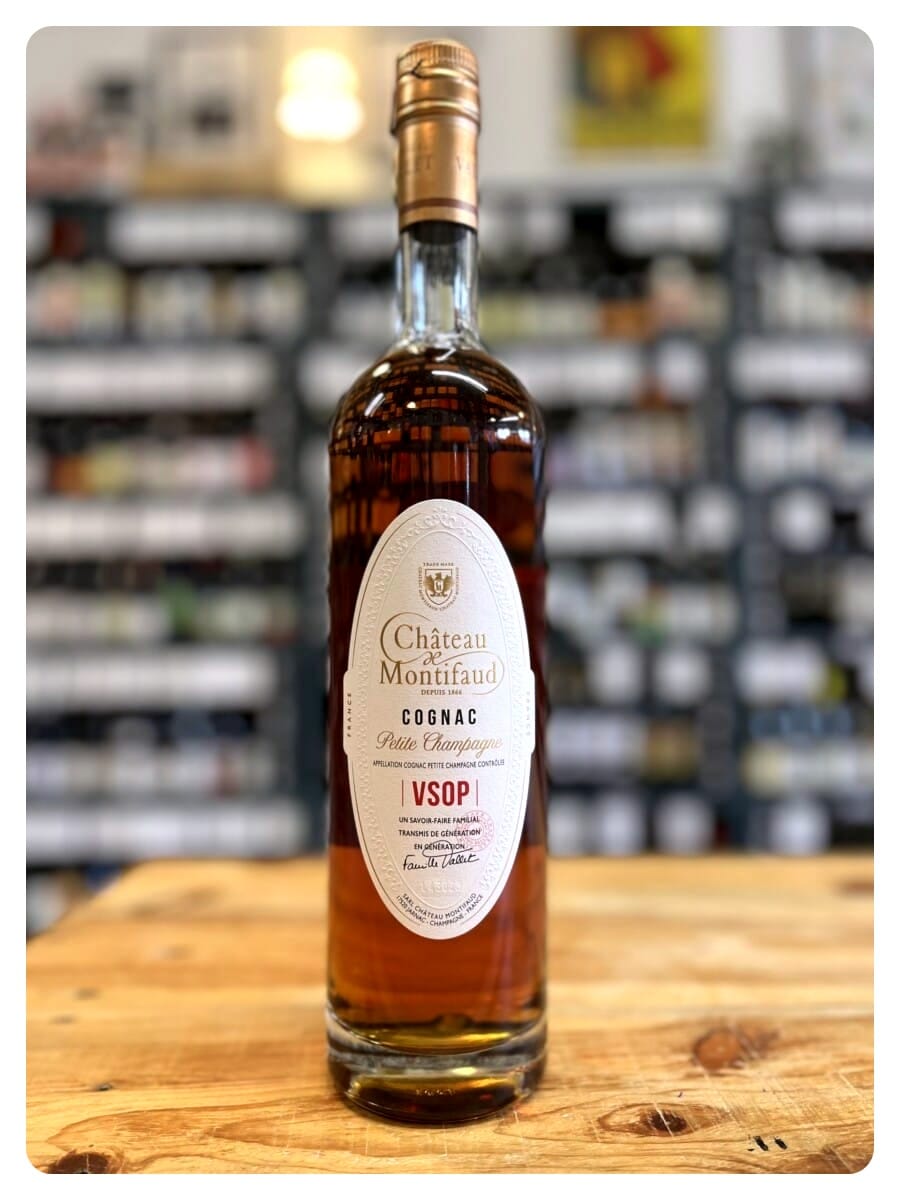
It starts with a base of Cognac, a category I’m still early in my educational journey with. I’ve used Hennessy and Pierre Ferrand in the past, but I’ll admit I’m also price-sensitive. And many VS Cognacs strike me as a little dry for cocktails. Conversely, I’ve discovered a few European brandies that feel more accessible and cocktail-friendly. I’m still searching for a personal favorite–but when I find it, you’ll hear about it here.
For this recipe I’m using an affordable Château de Montifaud VSOP, known for its excellent balance between barrel notes–vanilla, honey, spice–and its fruit and floral character of pear and apricot. The result is round, smooth, and mellow–exactly the kind of foundation this cocktail needs.
For someone who studied Spanish rather than French, I had to look up what châtaigne means–and please don’t ask me to pronounce it.
It means chestnut.
And try as I might, I couldn’t find Crème de Châtaigne anywhere locally. Thankfully, Google came to the rescue. Suggested substitutes included:
Nocino (walnut liqueur) – but a bit too bitter
Frangelico (hazelnut liqueur) – but a bit too sweet
So I landed on a compromise: splitting the ½ ounce into ¼ ounce of each. The result preserves the nutty complexity without pushing too far in either direction.
Yellow Chartreuse first appeared on the channel with the La Lombarda. Produced by Carthusian monks using a secret recipe of 130 botanicals, it brings notes of anise, citrus, saffron, and honeyed spice. Even in small quantities, it adds remarkable depth.
For bitters, I turned to a local producer: Born to Shake. Their lemon bitters contribute bright notes of lemon peel, lemongrass, coriander, and elderflower–lifting this otherwise grape-driven ambrosia into something a little more vivid.
The final ingredient–and the newest to me–is a mistelle called Pineau des Charentes.
Recently I’ve been seeing Pineau show up more frequently in cocktail recipes on Instagram as a substitute for other grape-based modifiers like vermouth, sherry, or even sweet brandy when a drink calls for a richer grape expression.
Bear with me as I share a little of the research I did on this fascinating ingredient.
Pineau des Charentes originates in western France, in the same region that produces Cognac. According to legend, it was discovered in the late 1500s when a winemaker accidentally poured fresh grape must into a barrel already containing Cognac eau-de-vie. When the barrel was opened years later, they discovered something remarkable: the high-proof Cognac had halted fermentation, preserving the natural sweetness of the grape juice while allowing the mixture to mature in oak.
The result was something entirely new.
Pineau is produced in both white and red styles, using grape varieties such as Ugni Blanc, Colombard, Sémillon, Folle Blanche, and Sauvignon Blanc for whites, and Merlot, Cabernet Sauvignon, Cabernet Franc, and Malbec for reds. This recipe calls for a blanc Pineau.
In 1945, Pineau des Charentes became France’s first fortified wine granted AOC status, with strict regulations governing its production.
Despite being born in Cognac country, Pineau spent centuries living in Cognac’s shadow, largely consumed locally and never quite aligning with the dry wine trends that dominated the 20th century. But today the category is experiencing a quiet revival. Roughly 10 million bottles are produced annually, with nearly a quarter exported—thanks in large part to modern cocktail culture and a growing interest in lower-ABV spirits.
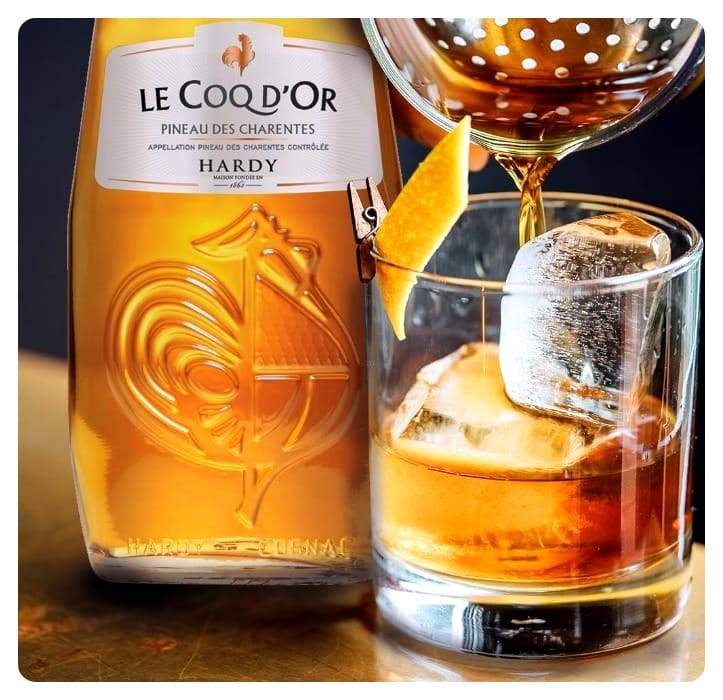
For this Elixir De Longue Vie, I’m using Le Coq d’Or Pineau des Charentes Blanc, which delivers honeyed notes of stewed apple, crystallized ginger, quince, and baking spice.
On the nose, bright lemon oils float above the faint grape-barrel notes of the Cognac.
The first sip opens with the sweetness of the Pineau and nut liqueurs across the front of the palate. As the drink settles into the mid-palate, the structure of the Cognac and the herbal complexity of Yellow Chartreuse begin to emerge.
Finally, the bitters and nutty undertones appear on the back palate before the whole experience gently replays itself in the finish–like a highlight reel of memories reminding you of a life well-lived.
The Elixir De Longue Vie is bright, subtly complex, and contemplative. In its own way, it stands as a metaphor for a life well-lived: approaching our passions–and even our obstacles–with the bright curiosity of youth may be the best way to interrupt nature’s quiet inertia of aging in place.
The inspiration for this cocktail came from attending a celebration of life last Friday.
It was someone I didn’t know particularly well–though I’d met him a few times. But he was closely connected to my wife’s family through the medical laboratory where he, my sister-in-law, and my father-in-law worked together for nearly thirty years.
Spend that much time with the same colleagues and their families inevitably become intertwined. In that sense, the gathering felt very much like a family celebration.
Several people spoke about their relationships with him–his passions developed across nearly eight decades of life, his love of travel, and his deep devotion to his extended family. The speeches were followed by a slideshow of photographs chronicling his journey.
And it was quite a journey.
New Zealand appeared, the place where he met his wife early in adulthood. Vancouver appeared, where they started their life together before eventually settling in Kelowna. His home province of Nova Scotia appeared as well. And then there were the travel photos. So many travel photos.
For me, the experience became something of a walk down memory lane through my wife’s family history, back when her parents were still with us.
“Pops” and “Nanu,” as the grandchildren called them.
Seeing my father-in-law in so many of the images reminded me of the joy of visiting him when we’d make the trek north from Portland during holidays and summer vacations: boating days on the lake, lunches at the local yacht club, and the ritual afternoon gin and tonic–his always without ice.
He was also the first person who encouraged my own entrepreneurial experiment, offering the initial investment that helped me launch Distill Research, for which–despite its failure–I’m eternally grateful.
His was unquestionably a life well-lived.
He grew up in Bristol, England, one of three brothers, eventually earning his M.D. and beginning a career in pathology. After marrying and starting a family, they set out for new opportunities in British Columbia.
Their journey–from steamship across the Atlantic to a 1960s Volkswagen bus driven across Canada–has become family legend.
Ultimately he landed in Kelowna, where he co-founded a medical laboratory that eventually expanded to 15 locations across the Okanagan Valley.
At the celebration of life, several former colleagues spoke about working with both men. Both were deeply respected. One retired colleague even pulled my wife aside and told her that her father was the best manager she had ever worked for–a legacy that clearly lives on in how my wife approaches leadership and people management today.
Now that we’ve relocated to my wife’s hometown, it struck me during that gathering just how much I miss benefitting from my father-in-law’s presence–especially now that we’re here.
So tonight, with an Elixir De Longue Vie in hand, I raise a glass to both men and the lives they lived so well.
To their journeys.
To their accomplishments.
To the lessons they taught us and the gifts they gave us.
And to the hope that we might live our own lives in ways worthy of the examples they set.
Cheers! 🍸🦉🛣️