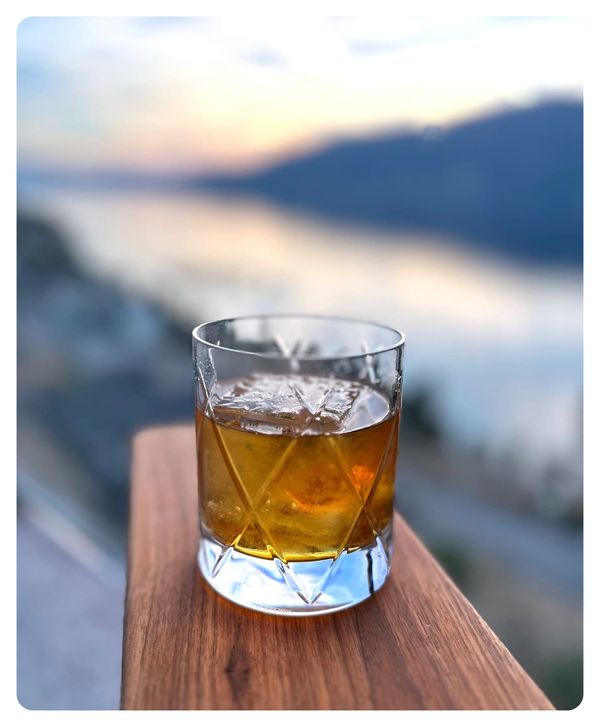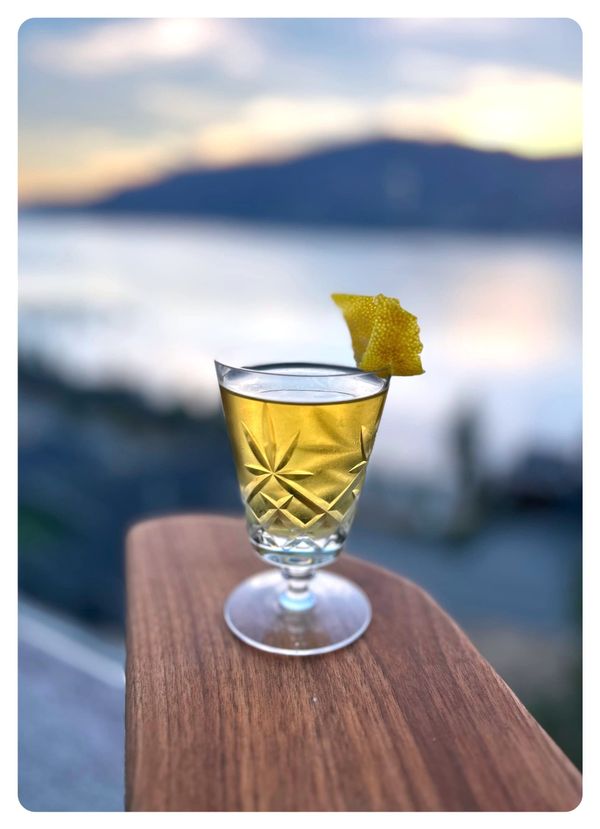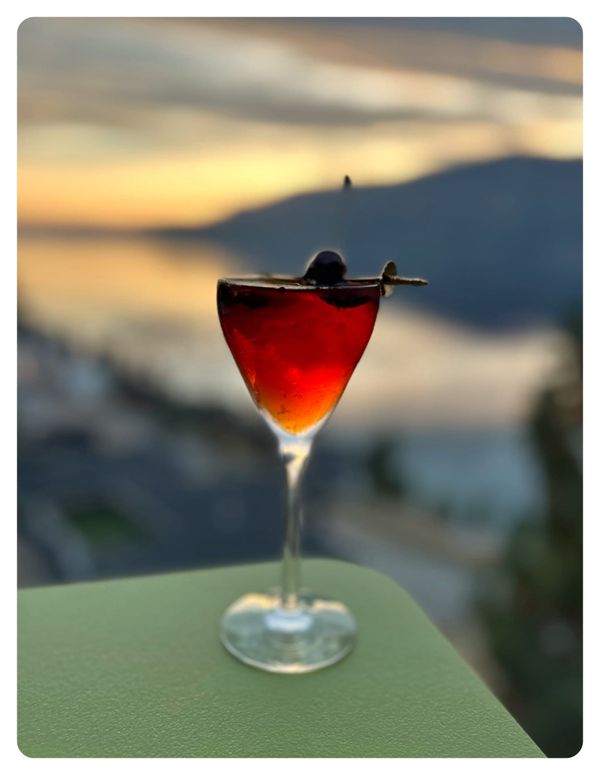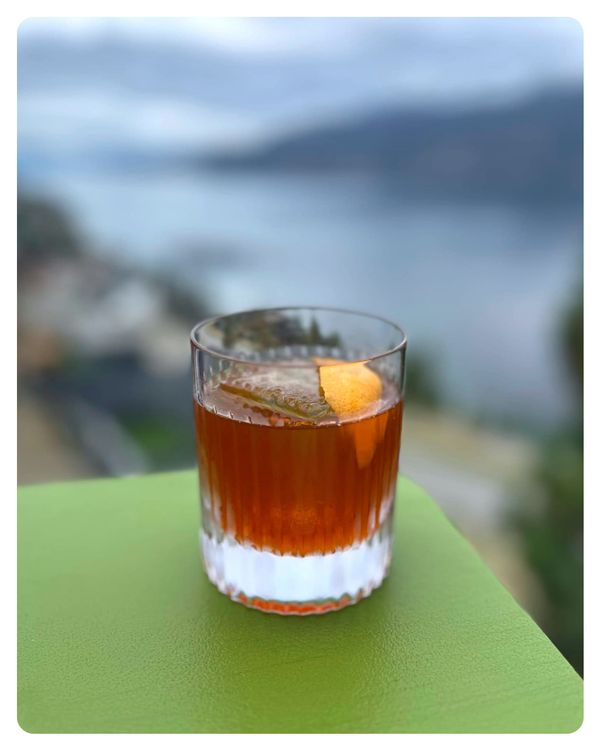
Smoke Show
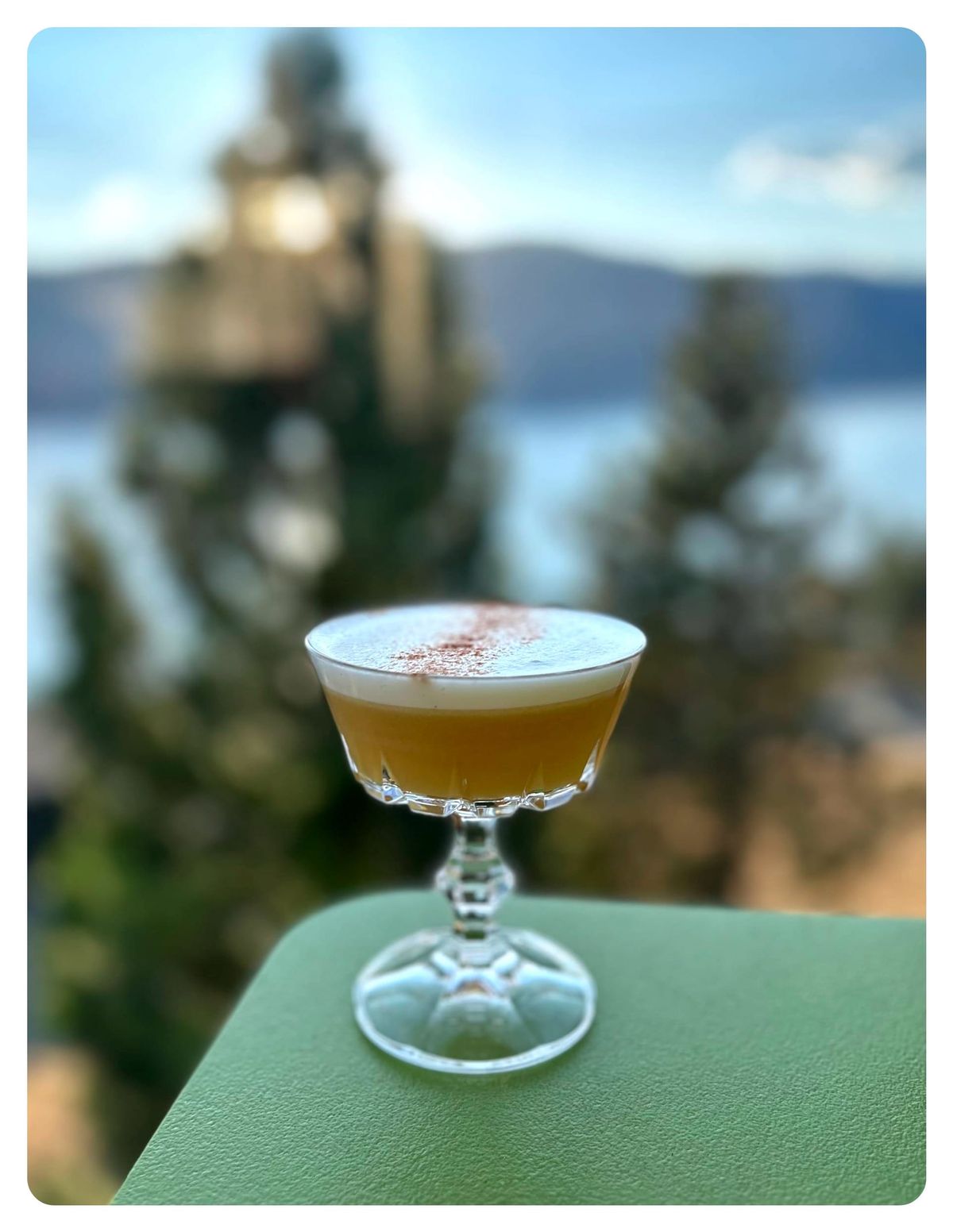
- 1⅔ oz Del Maguey Vida Clásico Mezcal
- ¼ oz Cynar Amaro
- ¼ oz Green Chartreuse
- ½ oz Fresh lemon juice
- ⅓ oz ‘Rich’ sugar syrup (2:1)
- ½ oz Egg white or vegan cocktail foamer (Better’s Bitters)
- Dry shake in a shaker for 20-30 seconds
- Shake over a rock of ice for 20-30 seconds more
- Strain in a chilled coupe
- Garnish with freshly grated cinnamon
Happy Friday, friends!
This week, I have smoke on the brain.
With little wind, oppressive heat, and a steady succession of fires around us–the Bradley Creek fire north of us near Vernon, the Quilpituk Creek fire closer to home but across the lake, and then last Friday’s Bald Range fire–much of the Central Okanagan has been living under a lid of smoke.
The Bald Range fire forced the evacuation of more than 20,000 people across Summerland, Peachland, and nearby communities, including my wife’s nephew and his family. Suddenly, this was not merely a news item, a smoke map, or a vaguely ominous orange sky. It was family deciding where to go, what to grab, how long they might be away, and whether there would be a home to return to.
So, in an admittedly on-the-nose moment, welcome to the Smoke Show.
I liked this drink immediately because it checks several of my favorite boxes: mezcal, an egg-white sour structure, an amaro, and Green Chartreuse. On paper, it sounds almost aggressively complicated. In the glass, though, it is surprisingly graceful.
The Smoke Show was created by Liz Martinez while she was working at The Purple Pig in Chicago. It is a smoky, vegetal, herbal, lemony cocktail that somehow manages to showcase mezcal’s signature character while preventing that smoke from becoming the whole story.
That feels appropriate for the Okanagan right now.
Mezcal has appeared on Flavor Notes a few times already–most notably in the Prize Fighter and Fumosa Rosa–but it remains one of my favorite ways to build smoke into a cocktail without actually setting anything on fire.
For this Smoke Show, I used Del Maguey Vida Clásico, the dependable bartender’s mezcal. Mezcal differs from tequila not necessarily because of the agave itself, but because of production: agave hearts are often roasted in underground pits before fermentation and distillation. That roasting process gives mezcal its unmistakable earth, char, ash, and roasted-agave character.
It is the star of this show.
The supporting cast is equally important, though.
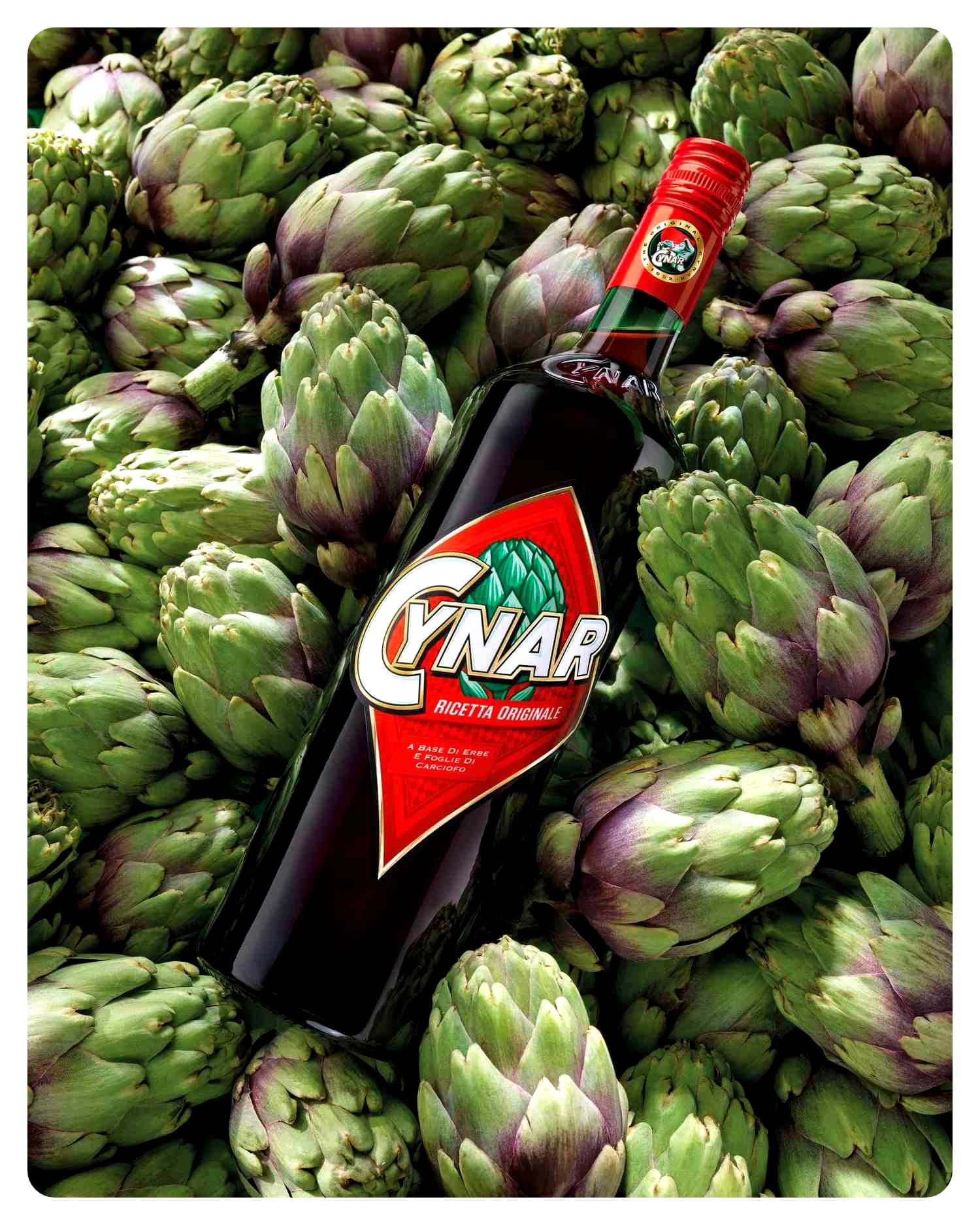
Cynar and mezcal are one of those pairings that feel inevitable once you taste them together. Mezcal’s earthiness and smoke meet Cynar’s bittersweet, vegetal, slightly funky artichoke profile. The result is savory, dark, and deeply grounded without becoming heavy.
Then there is Green Chartreuse.
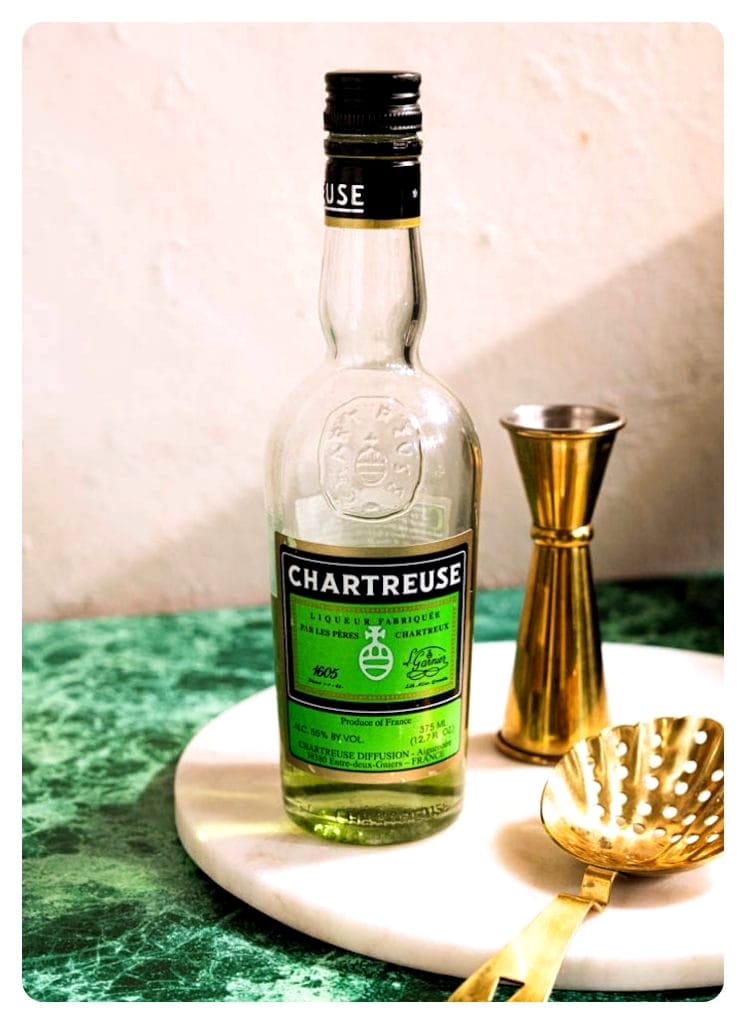
The Chartreuse brings alpine herbs, roots, spice, and brightness to the party. Its mineral-herbal intensity meets the agave and Cynar exactly where they live. The three ingredients form a rather improbable ménage à trois–earth, mountain, and smoke; Mexican agave, French monastic herbs, and Italian amaro–all finding common ground in one glass.
The lemon, syrup, and foam are not merely support staff. They give the drink its architecture. They soften the edges, bring lift, and keep no one ingredient from hijacking the conversation.
The festive cinnamon garnish leads on the nose, briefly promising something warmer and friendlier than what follows. The first sip brings lemon and mezcal: bright acidity wrapped around a smoky, earthy core. As the drink moves across the mid-palate, the herbal lift of Green Chartreuse aligns with the vegetal depths of the mezcal and Cynar. At the back, mezcal’s smoke lingers–not unlike a cigarette butt left smouldering–but it is finally Cynar’s bitter herbs and artichoke notes that loom tallest. The foam settles the whole experience, giving the drink a soft, composed finish despite all its darker ingredients.
The Smoke Show is not a cocktail that lets you forget the smoke. It is a cocktail that makes room for it, gives it context, and reminds you that smoke is only one note in a much larger composition.
When a wildfire threatens the Okanagan, the valley’s geography becomes personal very quickly.
A road closure is no longer an inconvenience; it is a question of whether your family can get out. A red shape on a map is no longer abstract; it is a ridge line you recognize. A midnight evacuation is not just a warning sent to someone else’s phone. It is a question of where people will sleep, what they will carry, and whether their community will still be there in the morning.
The Bald Range wildfire has done that at a scale almost difficult to comprehend.
It triggered the evacuation of all of Summerland–roughly 12,000 residents, including my wife’s nephew and his family–along with thousands more in and around Peachland and neighboring areas. More than 20,000 people were ordered from their homes as the fire grew explosively, severed routes, threatened structures, and turned an ordinary August night into an emergency measured in minutes.
As of this writing, Bald Range has burned approximately 19,149 hectares, or 191.5 square kilometres. That is roughly one and two-thirds the land area of the City of Vancouver, the current home of our daughter.
And yet, as frightening as this has been, I have also been moved by the scale and competence of the response.
British Columbia has responded with urgency, professionalism, ingenuity, and that deeply Canadian instinct that, in a crisis, people take care of one another.
As of this week, the Bald Range response includes 193 wildfire firefighters, including 100 reinforcements from Mexico; 147 structure-protection personnel; 36 pieces of heavy equipment; 14 helicopters; and a 30-person incident-command team coordinating the enormous and shifting operation. Crews have been building and reinforcing control lines on the southern and northern flanks of the fire. Helicopters have moved people out of danger, supported suppression work, helped with reconnaissance, and, in the earliest hours, evacuated residents and recreationists who had been trapped behind the advancing perimeter.
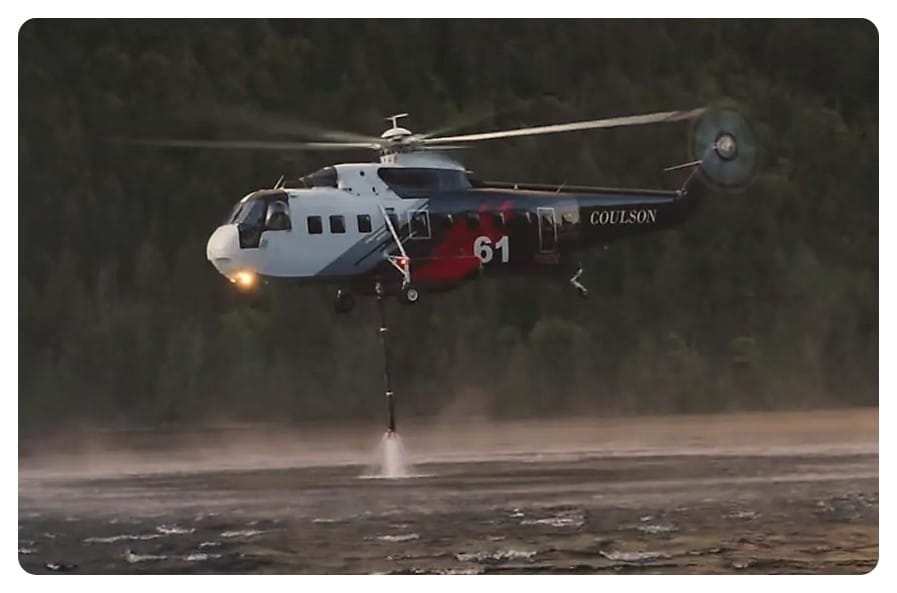
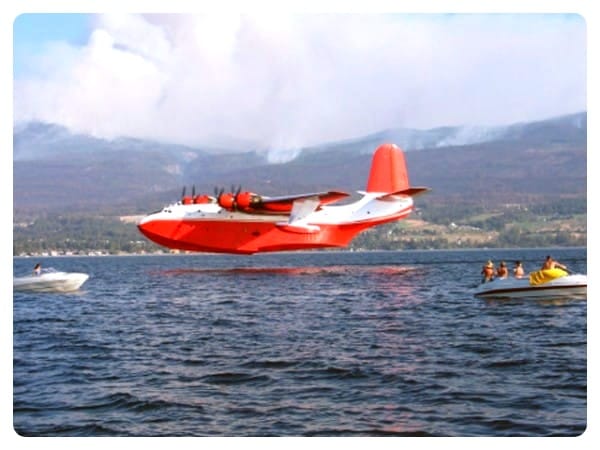
Airtankers have also been part of the response, dropping fire retardant along the eastern flank. Water-scooping aircraft–often called skimmers or water bombers–can refill by skimming suitable lakes and waterways, then return to cool hotspots and reduce flame intensity. But they depend on safe visibility and flying conditions, which thick smoke and extreme fire behavior can make impossible.
This is not a response built on one tool or one hero.
It is firefighters on the ground reading fuels, wind, terrain, and the behavior of an evolving fire. It is heavy machinery cutting control lines through punishing country. It is structure-protection crews giving homes and neighborhoods the best possible chance. It is pilots moving water, retardant, people, equipment, and hope. It is emergency planners coordinating a vast, living puzzle in real time.
And it is international cooperation.
Alberta has sent hundreds of personnel to strengthen B.C.’s wider wildfire response. Mexico has sent highly experienced crews, including the 100 firefighters now assigned to Bald Range. Canada’s mutual-aid system also allows provinces to share personnel, pumps, hoses, aircraft, equipment, and expertise when a season exceeds any single jurisdiction’s capacity.
The help has not stopped at the fire line.
When Summerland’s evacuation order came shortly after midnight, Penticton stepped into its role as host community. The City activated its Emergency Operations Centre and worked alongside the province, Emergency Support Services, the Regional District, Interior Health, animal-response organizations, and local partners to receive evacuees.
The Penticton Trade and Convention Centre became the primary reception centre, helping people register for Emergency Support Services, get reliable information, and connect with accommodations. The provincial state of emergency allowed more than 1,000 hotel rooms to be block-booked across Penticton, Kelowna, and West Kelowna. Penticton Community Centre opened showers, washrooms, and a children’s play area. Animal Lifeline Emergency Response Team resources were available for pets, while farmers and livestock owners could access specialized support. Families looking for evacuated seniors also had a dedicated Interior Health call line.
That is the part of this story I want to hold onto: not only the smoke, ash, and embers at their worst, but the glow of response.
The builder in me sees an immense amount of work ahead. But the grateful British Columbian immigrant sees a province, a country, and international partners showing up with helicopters, hoses, heavy machinery, hotel rooms, pet care, phone lines, open doors, and practiced hands.
So I raise this Smoke Show to the firefighters, structure-protection crews, emergency workers, pilots, volunteers, host communities, and international partners facing Bald Range together.
May they have the resources, rest, weather, and luck they need.
Cheers to them, one and all. 🧑🚒🍁🚁