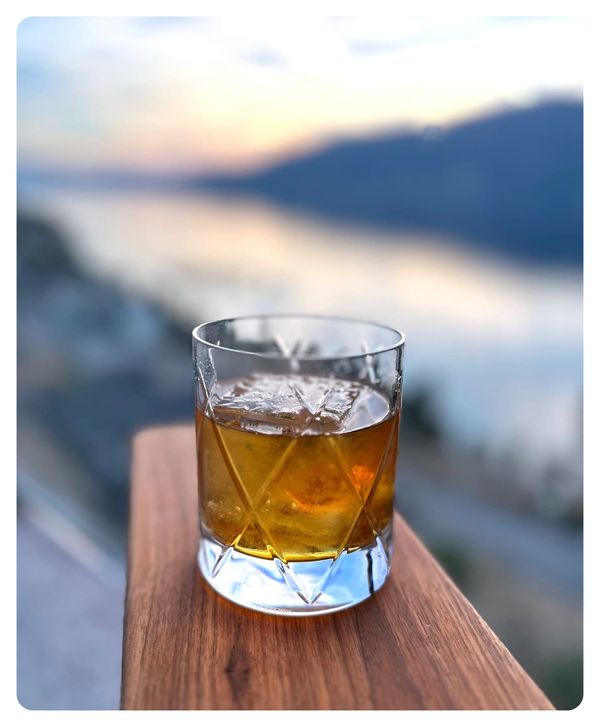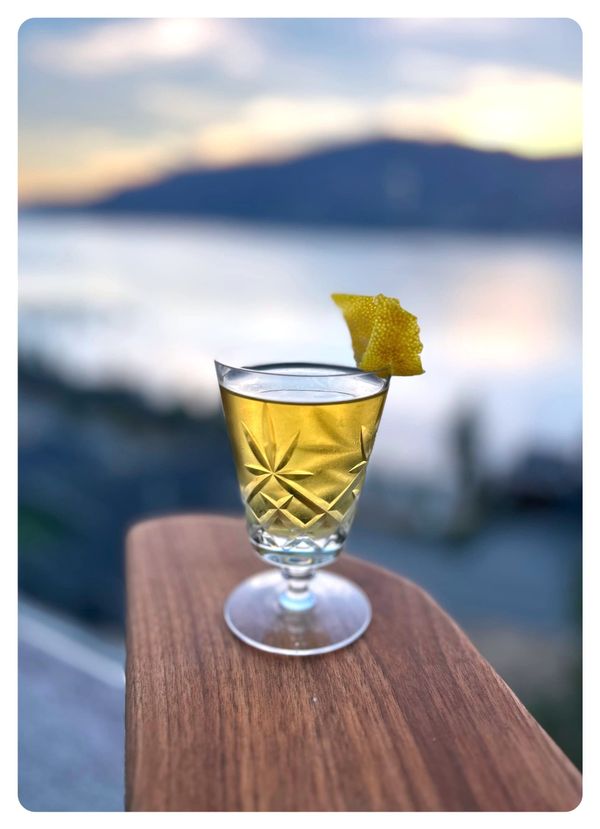
Boreal Fashioned
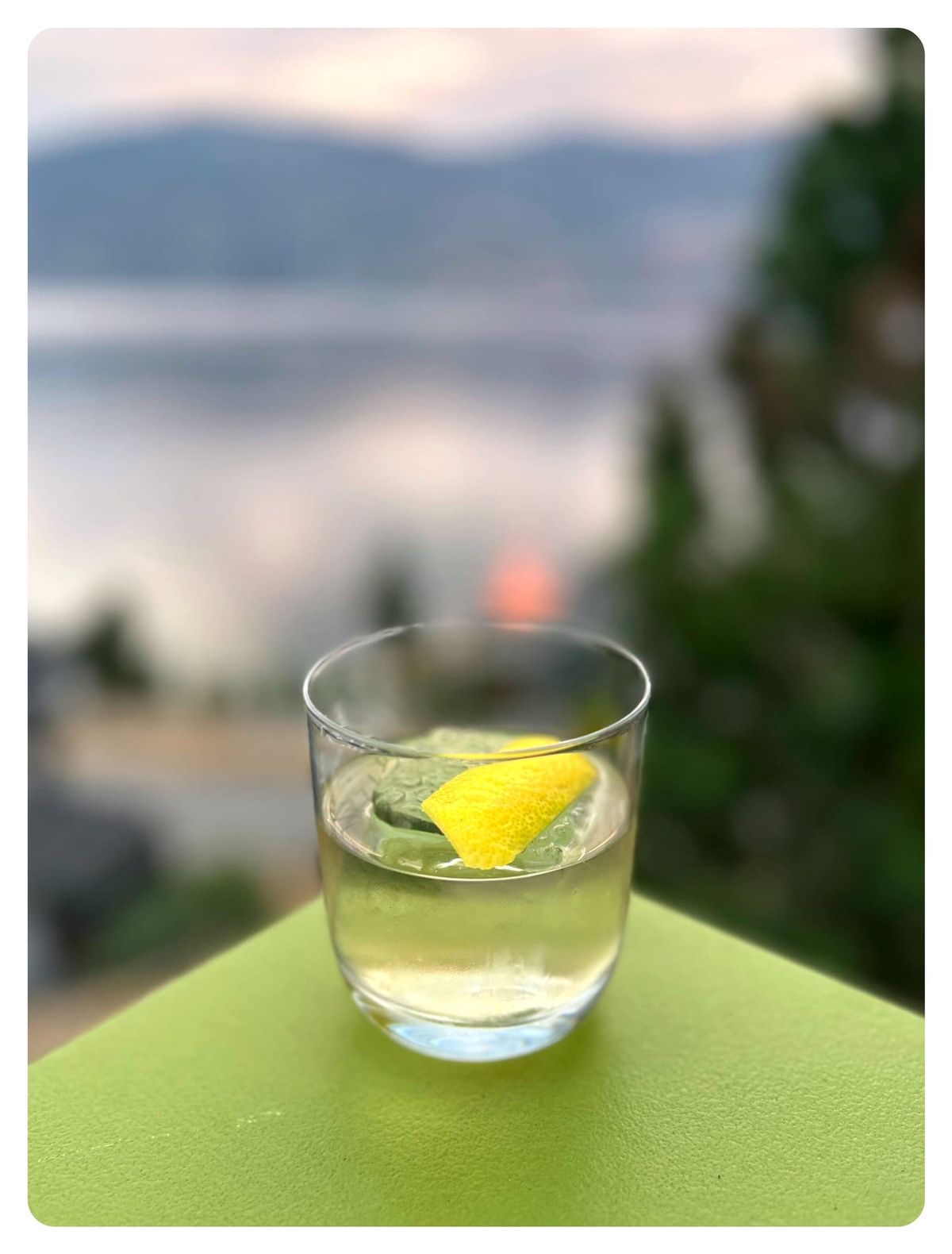
- 2 oz Aquavit
- 1⁄2 oz Rhubarb Liqueur
- 2 dsh Rhubarb bitters
- Stir over ice for 20-30 seconds
- Strain over a rock of ice into a chilled old fashioned glass
- Express a lemon peel over the drink and garnish with it.
Happy Friday, friends!
What a week it has been.
Both of my countries are now at war.
Not the kind involving tanks, missiles, or soldiers, thankfully. But still: a trade war. The kind of conflict that moves through supply chains, raises prices, threatens jobs, and turns people who have spent decades doing business together into bargaining chips.
“What is it good for?”
“Absolutely nothing.”
“Say it again.”
So this week, I wanted to share a cocktail that reflects the elbows-up thinking Canadians have brought to this moment: a drink that feels rugged, northern, stubborn, tart, botanical, and entirely unwilling to be pushed around.
And, as it turns out, two videos from two of my favorite YouTube bartenders landed in the same week and sent me down the path.
Leandro DiMonriva of The Educated Barfly made a rye-whiskey counterpart to Jeffrey Morgenthaler’s Bourbon Renewal. The fruited sour got me wondering whether there might be a local fruit liqueur worth putting to work.
Meanwhile, Anders Erickson released a video featuring two takes on the Elder Fashioned: clear Old Fashioned-style drinks that use elderflower liqueur as the sweetening component. One version was associated with Phil Ward of Death & Co. and used Plymouth Gin as the base.
As someone who loves a classic whiskey Old Fashioned, but who is always intrigued by a novel pivot, I was hooked by this clear Old Fashioned riff.
So, with those inspirations in hand, may I introduce the Boreal Fashioned.
I went looking for a northern fruit–or at least something that could play the role. Naturally, I ended up at Okanagan Spirits.
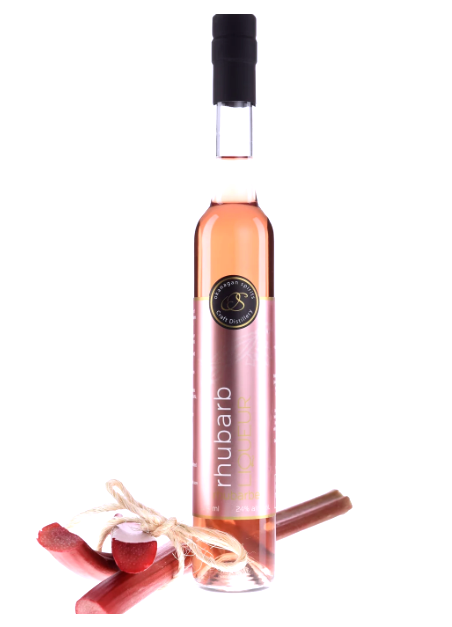
I had already used their Haskap Liqueur in Gord’s Bramble, so I ruled that out. Fortunately, they had a bottle I had not seen elsewhere: Okanagan Spirits Rhubarb Liqueur.
Rhubarb feels like it has always belonged in northern gardens, pies, preserves, and childhood kitchens. But its story started much farther east.
For centuries, rhubarb root was prized in Asia as a medicinal ingredient and travelled west as a valuable trade good. It reached Europe along the Silk Road well before Europeans treated the stalks as food. It was only in the 18th century–when sugar became more accessible–that cooks in Britain and northern Europe started to embrace rhubarb’s aggressively tart stalks in pies, tarts, jams, and compotes.
That transformation makes perfect sense. Rhubarb is tart, cool-climate-friendly, and almost combative in its raw form. Sugar does not erase that sharpness; it gives it somewhere to go.
It also thrives where winters are real, which helps explain why it became so at home across Canada and the northern United States.
Okanagan Spirits’ Rhubarb Liqueur captures that garden-stalk brightness in a much more cocktail-friendly package. It tastes like sweetened, gently cooked rhubarb, with a crisp acidity and enough tartness to keep it from becoming dessert in a glass. The distillery itself describes it as reminiscent of Grandma’s rhubarb-pie filling, and honestly, that is a hard description to improve upon.
As the base spirit, my initial instinct was gin. Gin and rhubarb have a long, logical relationship. But I found that the gin botanicals did not highlight the rhubarb as cleanly as I wanted.
So I pivoted north.
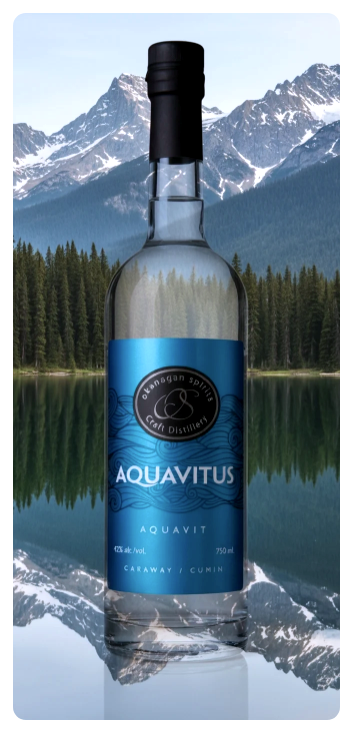
Aquavit is a Nordic spirit traditionally flavored with caraway and dill. Okanagan Spirits’ Aquavitus is their Canadian take on that northern classic: caraway and dill at the center, with anise, fennel, coriander, and juniper rounding out a bright, aromatic profile.
Aquavit is not new to Flavor Notes. It starred in Robert Hess’s Trident, an exquisite equal-parts cocktail that helped convince me this spirit deserves far more attention than it gets.
Aquavit feels geographically right here. It belongs to cold weather, salt air, preserved foods, long winters, and people who know how to make something beautiful out of ingredients that can survive a hard climate.
Rhubarb and aquavit meet in exactly that space.
The lemon oil on the nose draws you in before the first sip delivers a big, unmistakable caraway note from the Aquavitus. Then rhubarb arrives–not loudly, but confidently–with a lightly salty, sweet-and-savoury vegetal tartness. The rhubarb bitters amplify that character rather than redirect it. On the back palate, anise and warm spice recombine with the bitters to leave a long, complex finish.
It is clear, cold, aromatic, tart, and oddly comforting.
This is probably a cocktail better suited to the crisp edges of winter. But a brewing cold war is close enough.
Tariff wars are, like most wars, a wickedly stupid way to waste resources.
Whether the cost is paid in the lives of GIs or in the dollars of farmers, manufacturers, exporters, consumers, and workers, conflict is almost never the efficient answer. Tariffs raise barriers around economies, interrupt supply chains built over generations, and create collateral damage in places far from the negotiating table.
But I am getting ahead of myself.
The current breakdown needs to be understood in the context of CUSMA, the Canada–United States–Mexico Agreement, known in the United States as USMCA. It took effect in 2020 and was meant to preserve largely tariff-free North American trade, establish rules for resolving disputes, and give businesses confidence that the continent’s deeply integrated supply chains would remain predictable.
Remember NAFTA from our college years?
I wrote my senior thesis in 1994 about Japanese just-in-time manufacturing and the way tightly coordinated supply chains were helping Japan run circles around North American industry. Thirty-plus years later, the core lesson still holds: predictability matters. Partnerships matter. Trust matters.
A trade agreement can establish rules. It cannot create confidence if one party changes the terms whenever leverage appears.
In August, Washington announced 50% tariffs on roughly C$28 billion of Canadian exports. The products affected range from steel, dairy, appliances, agricultural equipment, pulp and paper, and electronics to more culturally pointed items such as beer, clothing, and hockey equipment.
In the final days before the deadline, Canadian and U.S. negotiators appeared close to an agreement that could have reduced pressure on steel, aluminum, and autos. But Prime Minister Mark Carney concluded that the American offer required Canada to give up too much for too little durable benefit.
The late demands reportedly went beyond ordinary commercial bargaining. They touched Canadian auto policy, culture and French-language protections, and Canada’s future ability to strike trade agreements with other countries. Ottawa viewed those terms as incompatible with an equal economic partnership and with Canada’s ability to diversify its trade relationships.
So Canada walked away.
Carney suspended negotiations, called the team home, and committed Canada to matching the tariffs dollar-for-dollar, with Canadian countermeasures scheduled to begin September 8.
I do not celebrate escalation. Nobody who understands what tariffs do to workers, communities, and family budgets should celebrate escalation.
But I do understand the posture.
The failure of these negotiations illustrates the difference between the formal machinery of CUSMA and the political trust required to make a treaty work. A treaty can define processes. It cannot guarantee reliability when one party signs agreements in pencil.
That distinction touches something larger for me.
I have been thinking a great deal about the social contract. John Locke’s tradition rests on the idea that legitimate authority requires consent, reciprocal obligation, and limits on arbitrary power. In the United States, my old home, trust in institutions has been eroding for a long time. Representation has too often become a permanent career path and a vehicle for enrichment rather than public service. Political performance has too often displaced governing. And the temptation to prize dominance over obligation has become difficult to ignore.
I see pieces of that history in myself, too.
I am the American in our household who is sometimes willing to bend a rule for convenience. My Canadian spouse is the person who reminds me that rules matter because, without them, it is hard to build a society that is fair for anyone.
She makes me strive to be better every day.
Canada’s response to this trade breakdown represents a different instinct: that government should protect workers, industries, regions, and social cohesion from shocks they did not create. Federal-provincial coordination, targeted support, and reciprocal tariffs are not just policy tools. They communicate a value: economic security is a public responsibility, not simply the result of who had the most leverage at a given moment.
The message is both practical and symbolic.
Canada will trade broadly. Canada will trade constructively. Canada will honor partnerships that honor it in return.
But Canada will not trade away its sovereignty, its culture, or its capacity to protect its people.
That is not merely an “elbows up” slogan.
It is a posture worth raising a glass to.
So with this Boreal Fashioned–a northern spirit, a northern stalk, a Canadian distillery, and a sharp but balanced finish–I toast Prime Minister Carney, the Canadian government, and the stubbornly decent idea that countries can stand up for themselves without abandoning the values that make them worth defending.
May Canada continue to represent the best of the True North.
Cheers! 🥃🍁❄️