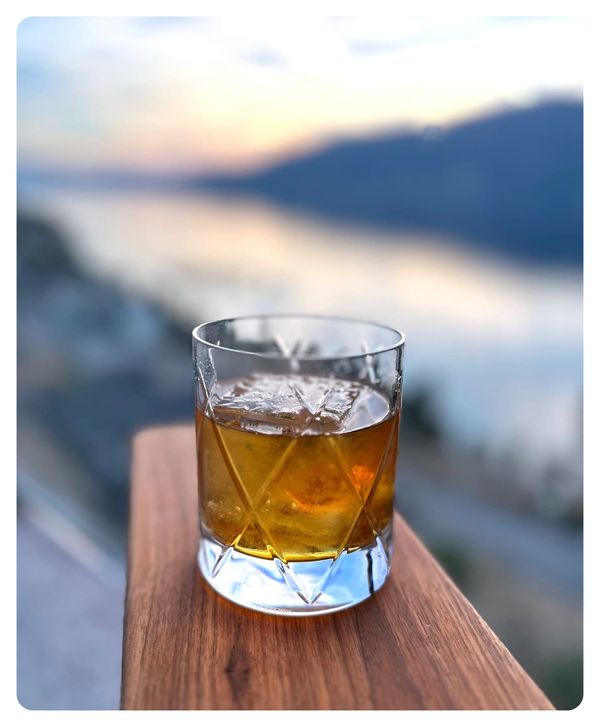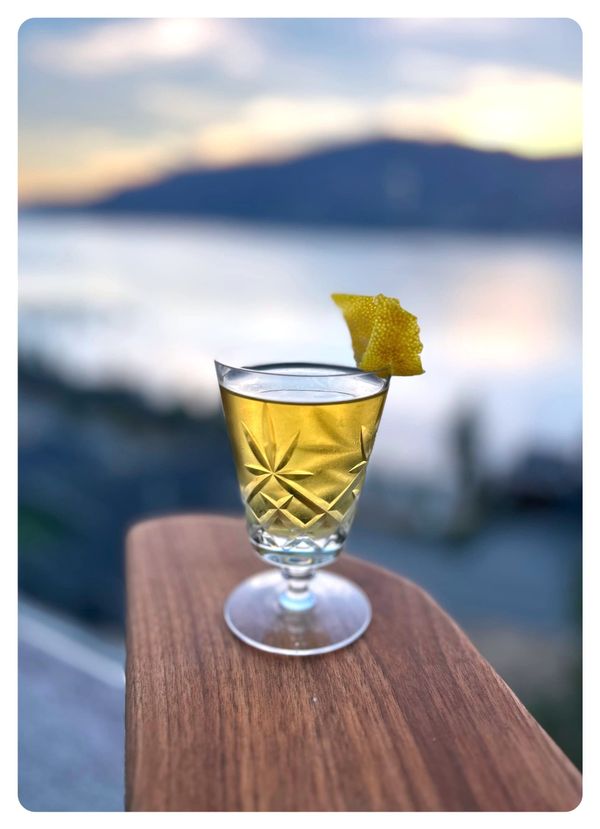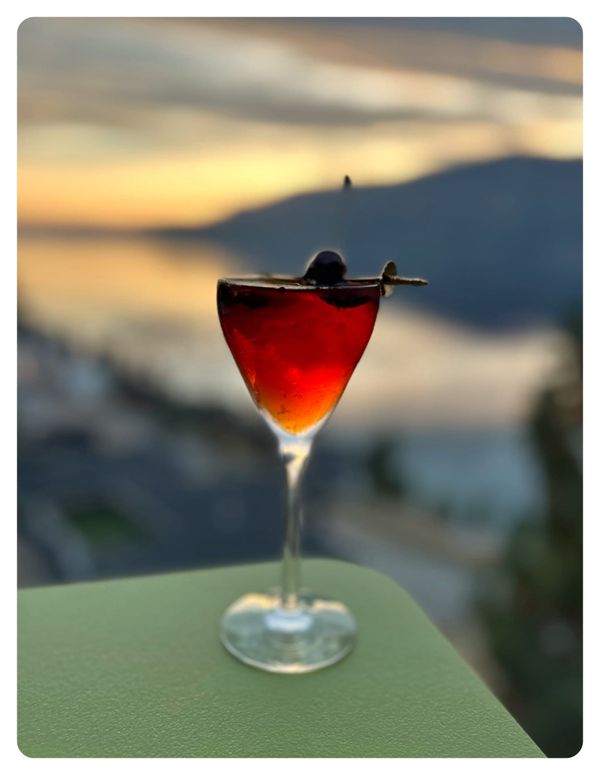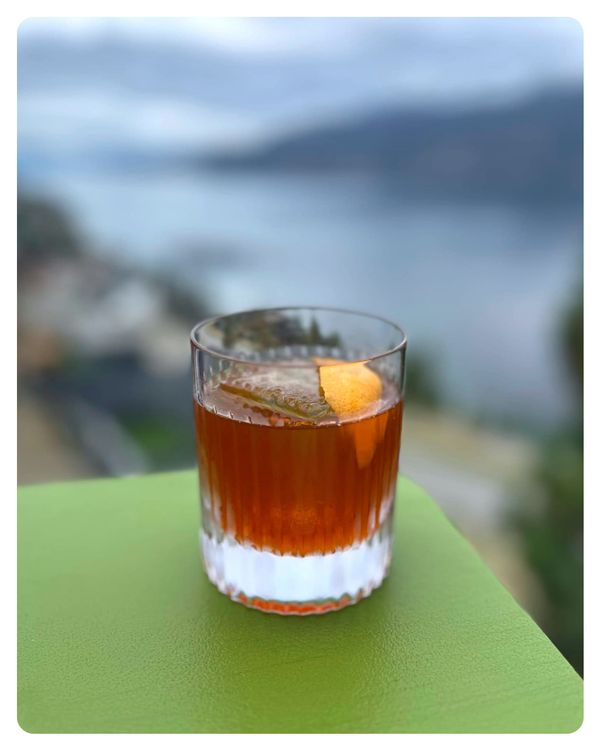
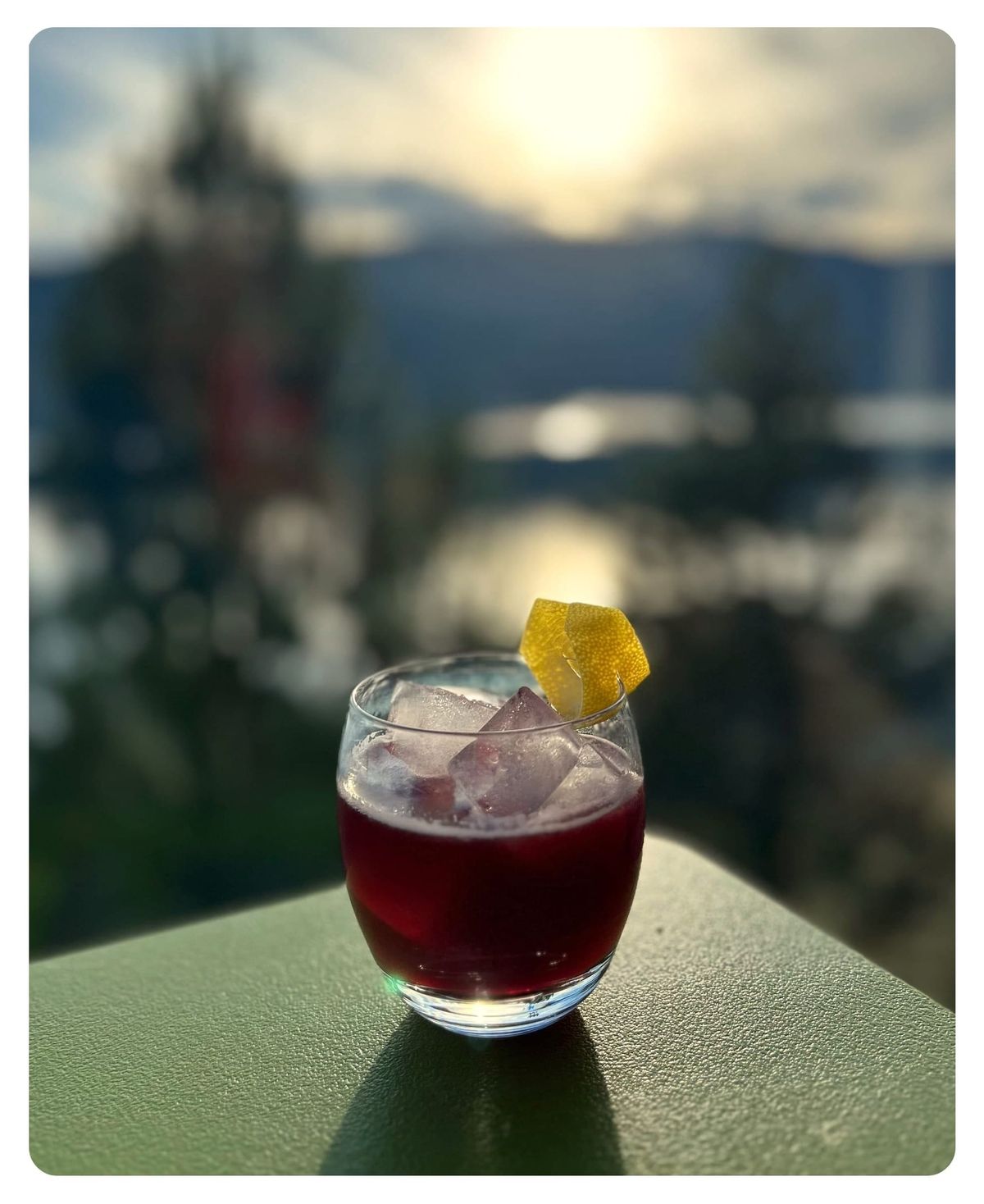
Gord's Bramble
- 2 oz Okanagan Spirits Midnight Maduro Whisky
- ¾ oz Fresh lemon juice
- ½ oz Haskap liqueur
- 1⁄2 oz Honey syrup (2 parts honey to 1 water by weight)
- 1 dash Cardamom Bitters (Boker Bitters)
- Shake with ice for 20-30 seconds, strain over ice into a chilled Old Fashioned glass
- Spritz and garnish with lemon peel.
Happy Friday, friends!
In honor of the recent wave of recognition Kelowna has earned—more on that in the second half of this post—I wanted to build a cocktail that feels like it actually comes from here. Something that represents the agriculture, food, and beverage ecosystem of the Okanagan, instead of just passing through it.
I call it Gord’s Bramble, in honor of all the Canadian Gordons who’ve come before.
When I think of the Okanagan in liquid form, I think of our friends at Okanagan Spirits Craft Distillery, and their “from here, made here” approach. We last talked about them with the Fintry Old Fashioned, after the Kelowna Newcomers Club visited during our Cocktails & Spirits Tasting series. They hold the distinction of being Western Canada’s original craft distillery, making internationally awarded Canadian spirits from 100% B.C. grain and fruit in Vernon and Kelowna since 2004.
And when I think of native foods of the land in this region, my mind goes immediately to the haskap berry–also known as blue honeysuckle. Like wild blueberries, huckleberries, and saskatoons, haskap grows naturally along the boreal forests across much of western Canada and the Maritimes. My first introduction to it was actually through Haskap Liqueur from Okanagan Spirits, discovered early in our visits to my wife’s family in Kelowna over holidays and summer vacations. Its sweet‑tart balance is reminiscent of cranberry–but not quite as intense–and it’s been a favorite ever since.
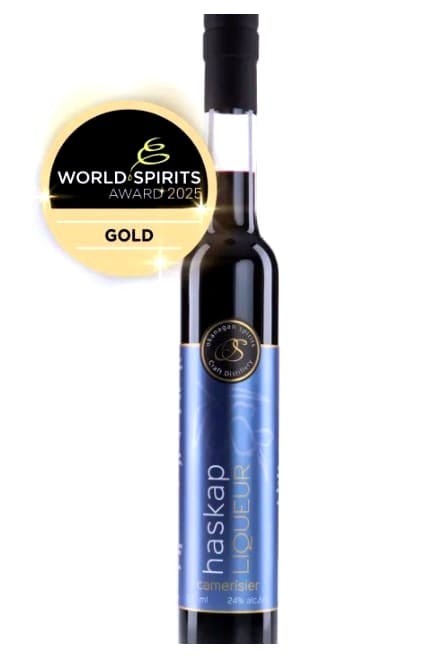
The word haskap comes from the Ainu people of northern Japan, who traditionally prized the fruit as an “elixir of life” for its antioxidant content. Today, haskap is also cultivated commercially–especially in the Okanagan, where several dozen acres are now under cultivation across boutique, organic, and mid‑sized farms. It’s a berry that feels both ancient and very current.
So I knew this cocktail needed to start with haskap.
On one of my most recent visits to Okanagan Spirits, I tasted—and immediately bought—a bottle of The Gentleman’s Flavor Midnight Maduro Cigar Whisky. My first impression was that they’d somehow cracked the code on a peated‑style whisky without leaving the valley. Burnt caramel harmonizes with warm, spicy gingersnap cookie; the corn sweetness is tempered by notes of apricot and minerality. Then there’s that subtle, lingering smokiness that convinced me it needed a place in my home bar.
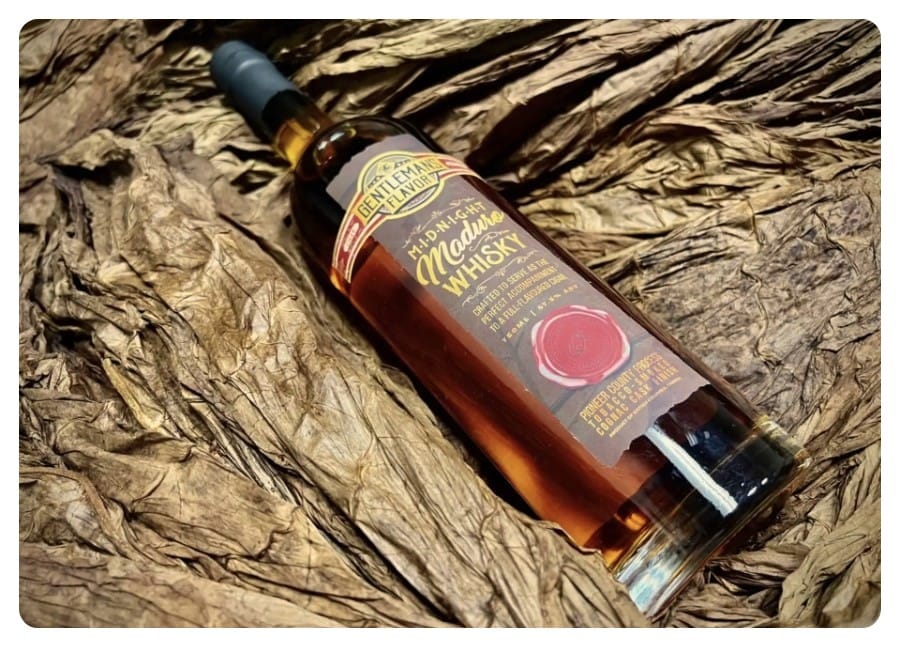
The whisky is a collaboration with Gentleman’s Flavor, a Canadian lifestyle platform dedicated to cigars, whisky, and mixology. The bottling itself blends four finished whiskies from Okanagan Spirits’ portfolio: two bourbon‑style whiskies, a rye, and a single malt, all distilled from grains grown just down the road from their Vernon distillery.
Besides being a great local “Scotch‑adjacent” option, the gentle smoke also evokes something very real: the summer wildfire threat that hangs over the Okanagan each year. If Gord’s Bramble was going to be honest about this place, it needed that note too.
With the whisky and haskap liqueur locked in, the choice of sweetener was obvious: honey syrup. Southeast Kelowna is dotted with apiaries nestled among orchards, and honey is very much part of the valley’s flavor profile.
To tie everything together, I reached for a Boker’s‑style aromatic bitters to echo the baking spices in the whisky. In my case, that’s Ms. Better’s Bitters Batch 42 Aromatic, a B.C. option made in Vancouver. Batch 42 layers a warm, sweet mulled fruit base with pink peppercorn, cinnamon, clove, and nutmeg. The brand wears a memorable motto: MS. BETTERS IS A BAD ASS BITCH. It felt appropriate.

On the nose, bright lemon leads the way, followed by a hint of berry and spice. The first sip lands with a one‑two punch of tartness–fresh lemon juice and haskap liqueur hitting the front of the palate together. As that sharpness settles, the smoke of the Midnight Maduro, the gentle sweetness of the honey, and the baking spices from the bitters expand across the mid‑palate, reminding you there’s a lot more going on here than its purple hue suggests. On the finish, lemon and haskap return with a subtle bitterness, nudging you toward the next sip.
Sometimes the magic comes not from a single star ingredient, but from the way a region’s strange little cornucopia happens to converge in the glass–becoming something greater than the sum of its parts. That’s what Gord’s Bramble feels like to me.
As I sip this Gord’s Bramble and consider the week that’s been, I keep thinking back to our most recent Cocktails & Spirits Tasting event with the Kelowna Newcomers Club. This time, we gathered at Kin & Folk for a lineup of cocktails and small plates. Kin & Folk was recently named to OpenTable’s Canada Top 100 Outdoor Dining list–and after the evening we had, that comes as no surprise.
The experience was phenomenal.
Kin & Folk’s recognition is just one more in a quick succession of local accolades that Kelowna’s food scene has collected lately.
Most recently, National Geographic included Kelowna in its list of the Top 15 places for food right now. They highlight the region’s 800 farms and roughly 40 wineries, but what really stands out is the way they spotlight multiculturalism and Indigenous roots, especially here on the traditional territory of the syilx/Okanagan people.
They point, for instance, to Little Straw Vineyards, where lauded viticulturist Karnail Singh Sidhu continues the legacy begun by the Slamka family. At the winery’s new Tula Restaurant, chef Bhawna Tandon pays homage to her Indian roots with dishes like cedar‑smoked tandoori salmon infused with Okanagan honey and apple cider vinegar. It’s a perfect snapshot of what makes this region distinct: land, migration, tradition, and innovation all on one plate.
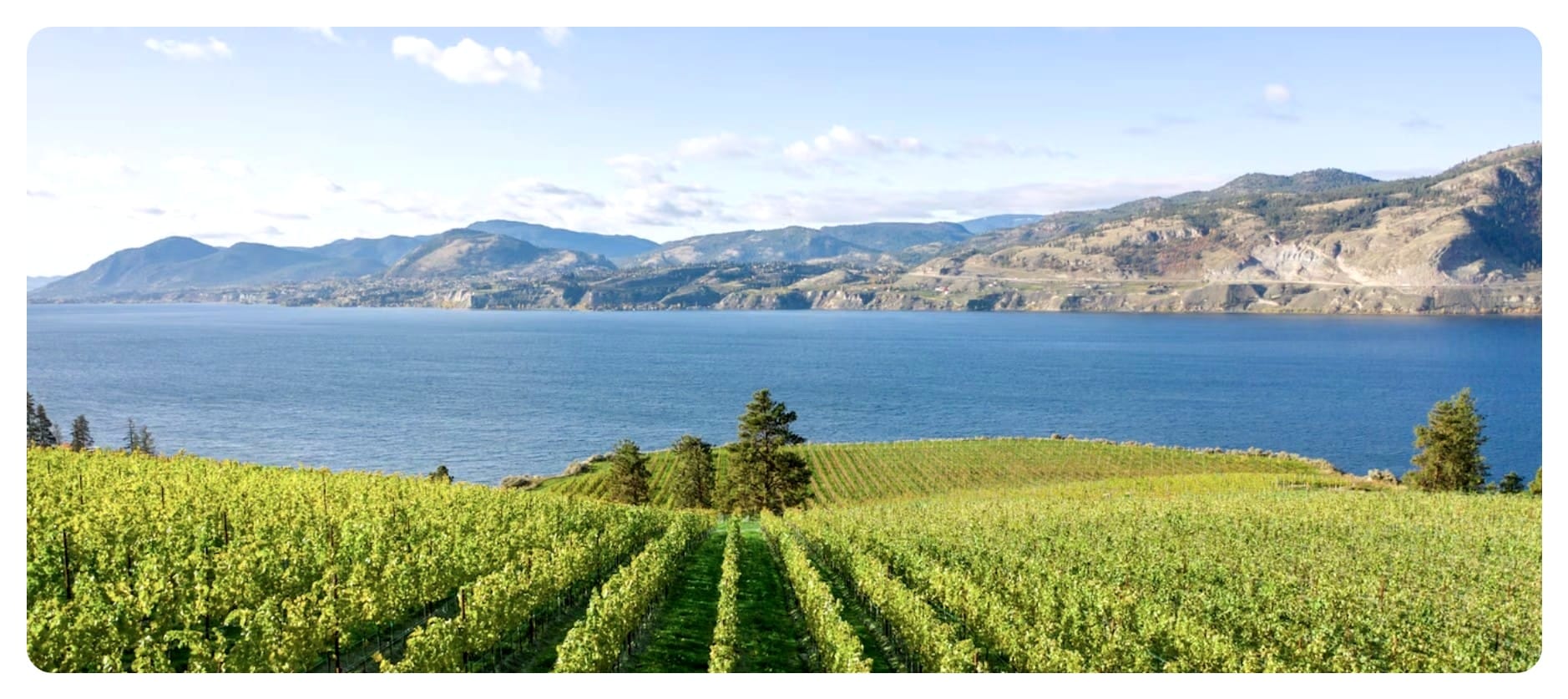
The U.S.‑based food media outlet Eater–which I leaned on heavily for recommendations back in my Portland days–published its own list of the best places to eat in the world in 2026, and Kelowna made that list too. In their write‑up, they call out:
- The Restaurant at Mission Hill
- Home Block at CedarCreek
- Young concepts like Wildling
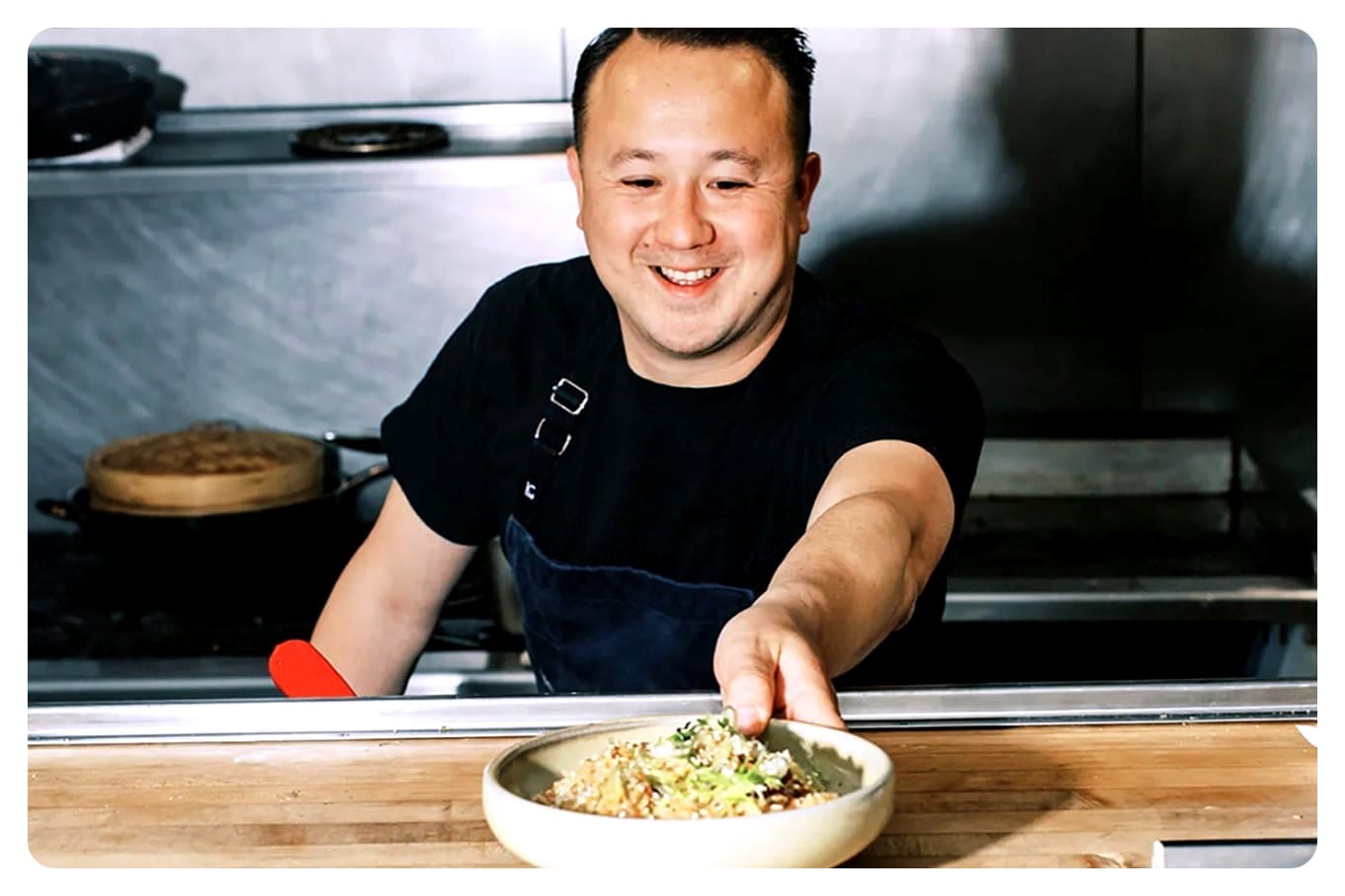
- And a nod to Kin & Folk, via a photo of co‑owner Zachary Chan
Their summary line is telling:
“Kelowna is smack‑dab in the farm‑to‑table heartland.”
What impressed them was the density of high‑quality restaurants and tasting rooms relative to the city’s size, and how tightly wine, produce, and dining are woven into a single visitor experience. Coming from Eater, this is restaurant‑world validation–a signal to chefs, sommeliers, and food‑motivated travelers that Kelowna belongs on their lists.
But the spark that lit this cascade of attention came a little earlier. In late 2025, UNESCO named Kelowna Canada’s first UNESCO Creative City of Gastronomy, joining a small group of global food cities that includes San Antonio and Mérida. The designation sits within the UNESCO Creative Cities Network, which highlights places that use culture and creativity as engines of sustainable development.
Sustainability is not a decorative add‑on here; it’s core to the recognition, and it runs directly through the leadership and knowledge of the syilx/Okanagan people–their traditional land teachings, food knowledge systems, and long‑standing commitment to environmental stewardship.
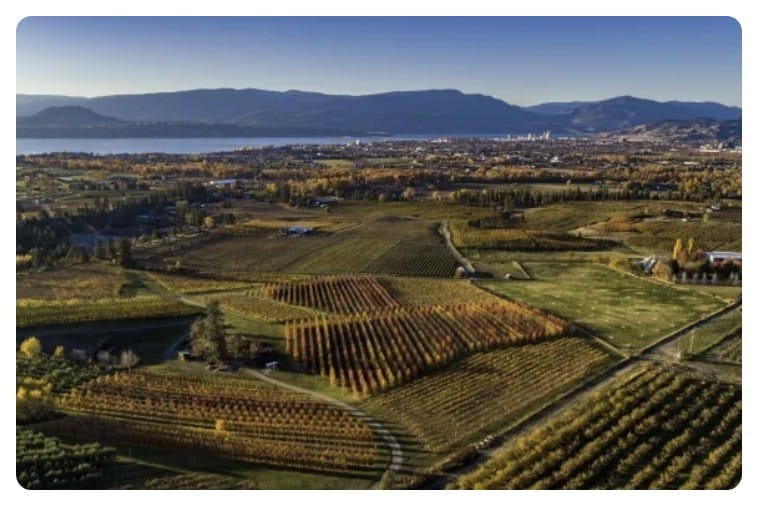
The Syilx‑informed vision for food here focuses on expanding access to healthy, locally grown foods, strengthening collaboration between small‑scale farmers, Indigenous communities, and culinary innovators, and building resilient food systems that reduce waste and support community well‑being. UNESCO explicitly frames gastronomy as a tool for local development and ties Kelowna’s designation to the UN Sustainable Development Goals.
What UNESCO recognizes, then, is not just a collection of good restaurants. It’s the whole ecosystem: orchards and farms, wineries, craft beverage producers, restaurants, culinary schools, Indigenous knowledge keepers, and food‑focused events all working together.
Kelowna mayor Tom Dyas has described it as global validation of something locals have felt for years: that Kelowna is a “world‑class centre for agriculture, culinary arts, and beverages.”
Taken together, these recognitions–UNESCO, National Geographic, Eater, and lists like OpenTable’s–tell a coherent story:
- Kelowna is no longer just “nice wine country.” It’s a fully fledged food city where agriculture + beverages + restaurants form one unified identity.
- Indigenous stewardship and immigrant histories are central, not incidental. They’re the root system, not the garnish.
- Kelowna is being positioned as a model for sustainable, region‑driven food development, not just another stop on the global “hot restaurant” circuit.
Globally, Kelowna is now understood as a wine‑anchored, farm‑driven, chef‑forward region, serious enough for international food travelers and interesting enough for global media to keep watching.
For distilleries and cocktail bars, this raises both the ceiling and the bar.
- Spirits as an expression of place. Producers like Okanagan Spirits can tell the same story as wineries: local grain, local fruit, local botanicals, local water–and explicit respect for Okanagan and syilx food cultures in their products and tasting‑room narratives.
- Cocktails as culinary experiences. Bars that lean into local spirits, seasonal produce, and collaborations with wineries are clearly part of Kelowna’s gastronomy ecosystem–not just its nightlife.
- Destination cocktail venues. With OpenTable already shining a light on winery restaurants, it’s not hard to imagine future lists–including Canada Top 100s or even global bar rankings–looking harder at Kelowna’s cocktail and spirits scene.
In that spirit, I raise this Gord’s Bramble to all the Okanagan’s cocktail and spirits professionals–past, present, and emerging–excited for what’s ahead while I buckle up for the ride. Here in the Okanagan, the future looks bright for us hedonistic bon vivants.
Watch this space.
Cheers! 🍁🧺🥃