Vancouver Island Iced Tea
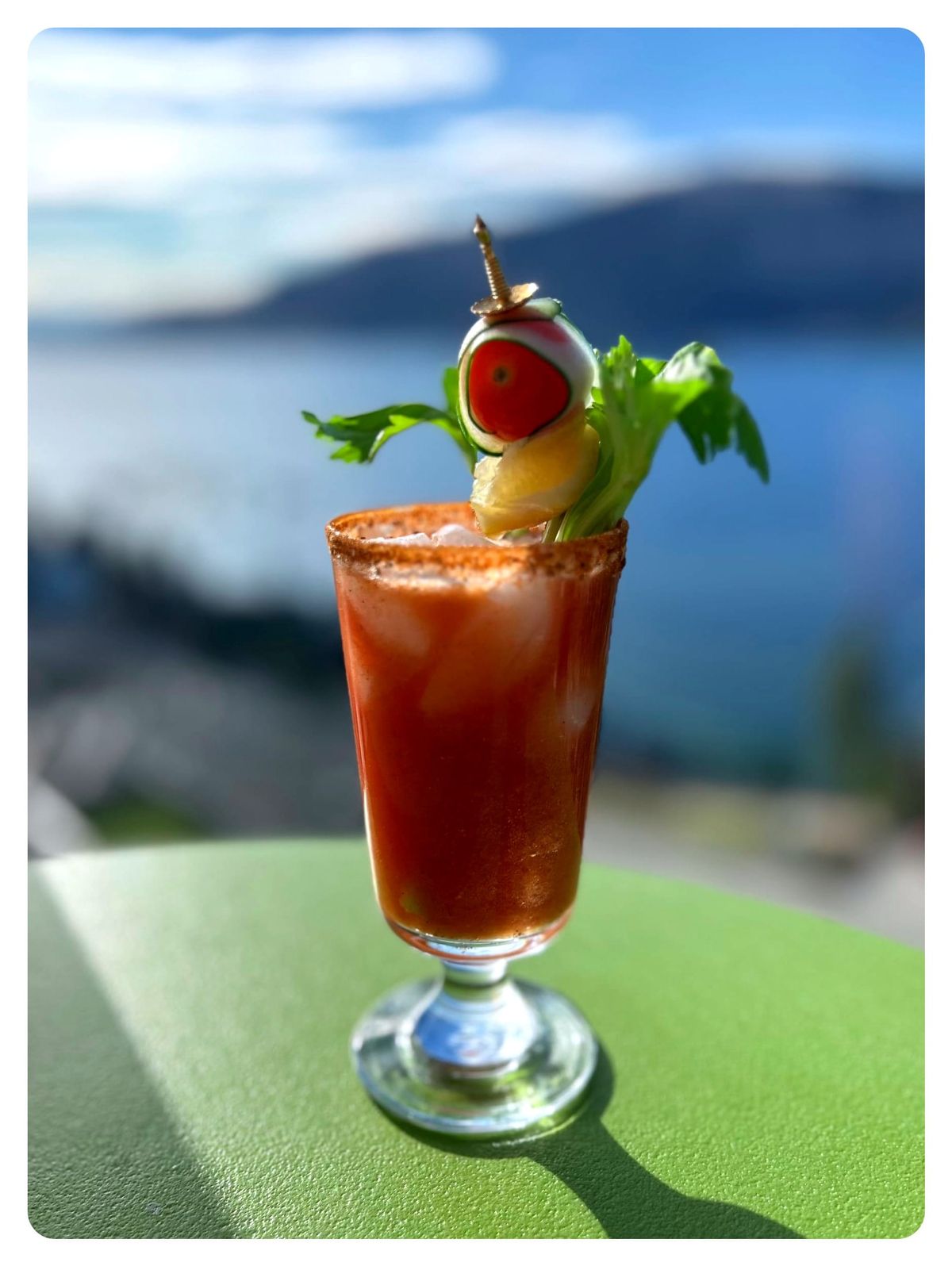
- ½ oz White rum
- ½ oz Tequila blanco
- ½ oz Triple Sec
- ½ oz Gin
- ½ oz Vodka
- ½ oz Lemon juice
- 6 oz Caesar mix, Classic
- Shake with ice for 20-30 seconds, strain over ice into a Collins glass
- Garnish with a lemon wedge and cherry tomato
Happy Friday, friends!
Since relocating to Canada this past year, I’ve been paying attention.
Some Canadian symbols are obvious: hockey, Tim Hortons, the maple leaf, and the reflexive “sorry.” But this week I’ve discovered two more pillars of Canadian identity: the Caesar and the Winter Olympics.
Thanks to a wonderful 300+ page deep dive, Caesar Country by Aaron Harowitz and Zack Silverman—the founders of Walter’s Craft Caesar Mix—I’d like to introduce you to a Caesar by another name: the Vancouver Island Iced Tea.
The Caesar was created in 1969 by Walter Chell, food and beverage manager at the Owl’s Nest lounge in the Calgary Inn. Tasked with developing a signature cocktail for a new Italian restaurant, Marco’s, Chell drew inspiration from spaghetti alle vongole.
Tomato. Clam. Savory depth.
He blended tomato and clam juice with vodka, Worcestershire sauce, black pepper, and oregano–his secret ingredient. The result became a local sensation in Calgary, spread across Alberta and British Columbia, and eventually turned national.
Duffy-Mott recognized the opportunity and quickly commercialized Clamato juice, making it a ubiquitous fixture on Canadian grocery shelves.
A cocktail born from Italian cuisine became Canada’s signature drink. That’s branding you can’t manufacture.
This version riffs on the Long Island Iced Tea structure–but swaps cola for Caesar mix and layers in distinctly British Columbian spirits.
I leaned into locality wherever possible:
- Quadruple Sec from Sons of Vancouver (North Vancouver)
- Sheringham Seaside Gin and Pacific Vodka from Vancouver Island (Langford, BC)
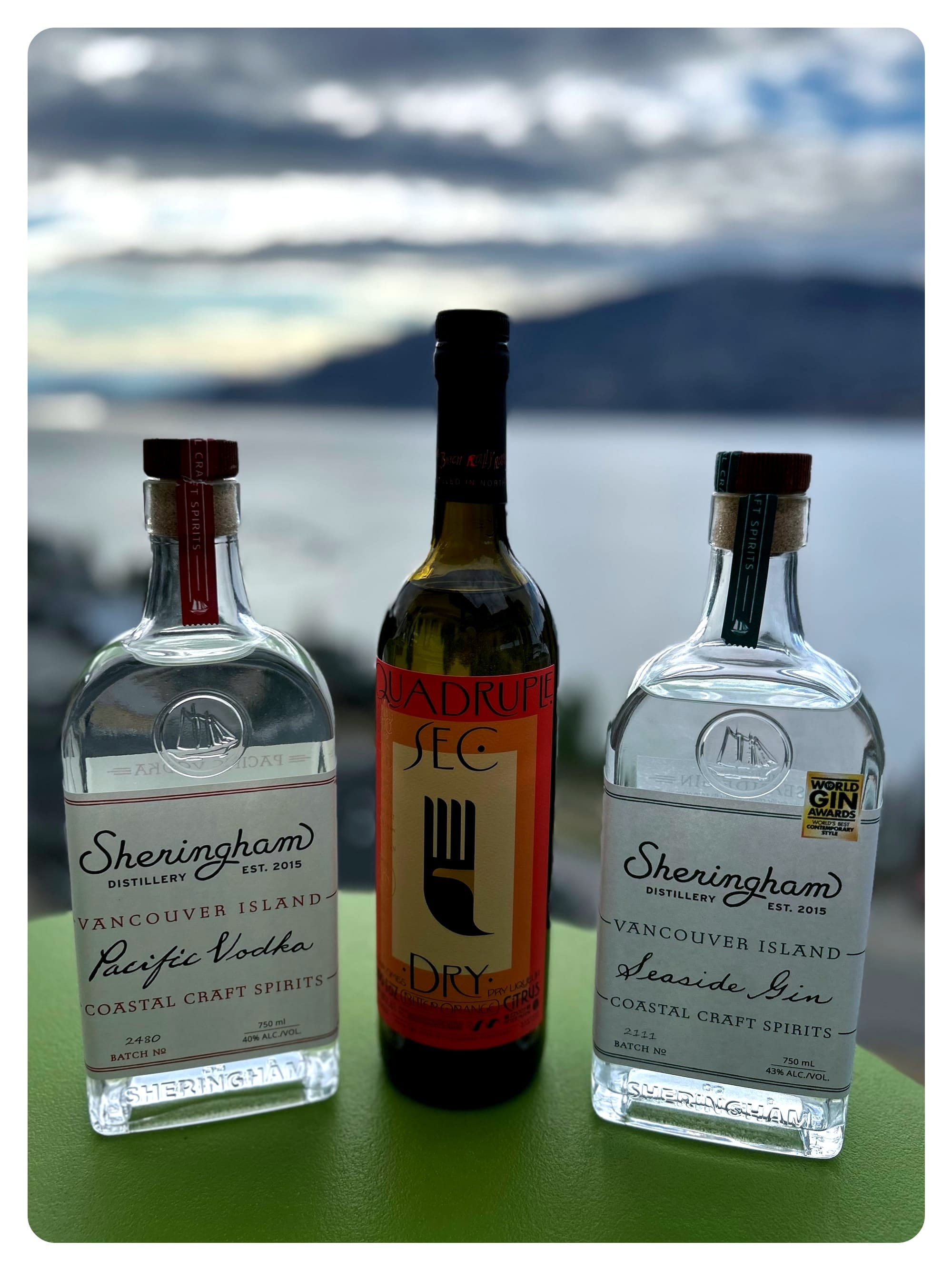
Unlike typical triple sec–which can lean syrupy and sweet–SOV’s Quadruple Sec is deliberately dry and intensely citrus-forward. At 40% ABV and built around bitter chinotto orange, it avoids the cloying sweetness of many commercial orange liqueurs.
It’s sharp. Purposeful. Structural.
Named World’s Best Contemporary Gin at the 2019 World Gin Awards, Sheringham Seaside Gin captures Pacific Northwest coastal character. Juniper and coriander anchor it, but winged kelp provides that faint maritime salinity—the “salted whiff of the seaside.”
It tastes like standing on a rocky shoreline.
Made grain-to-glass from BC-grown white wheat and malted barley, Sheringham Pacific Vodka carries creamy grain notes, hints of vanilla, and a warm, gently spiced finish.
With a 2:1 ratio of Caesar mix to spirits, the first impression is unmistakable: spicy tomato upfront.
Personally, even in classic Caesars, I struggle to isolate the clam component once the spirits are added. Here, it integrates seamlessly.
Mid-palate, lemon brightness emerges alongside the botanicals of the gin. The rum and tequila blanco remain supportive players–contributing body without demanding attention.
On the finish, the vodka asserts structure and warmth.
Unlike many Caesars that highlight a single spirit, this one disperses identity across a chorus. No soloist. Just collective impact.
Which, fittingly, feels very Canadian.
The Caesar may be Canada’s drink. The Winter Olympics is its global stage.
We’re currently watching the Milan-Cortina Winter Games, with Team Canada fielding the second-largest athlete delegation. The Prime Minister sent them off with a message emphasizing unity and shared purpose.
Most national leaders do the same. Barack Obama recently praised Team USA before departure, understanding what these moments represent: patriotism, visibility, and collective pride.
To all the athletes representing @TeamUSA: I'm so proud of you. Your talent and perseverance have brought you to this moment, and Michelle and I will be joining Americans from across the country cheering you on.
— Barack Obama (@BarackObama) February 7, 2026
And yet, international sporting events have always reflected political realities. When the U.S. delegation appeared during the Opening Ceremonies and Vice President Vance was shown, the crowd reaction was unmistakable—though not entirely audible on the U.S. broadcast.
Sport does not exist outside politics. It never has.
Canadian corporations have leaned into Olympic sponsorship messaging around unity, diversity, inclusivity, grit, and teamwork. Bell Canada’s campaign stands out as particularly effective—less spectacle, more emotional resonance.
National identity is a fragile thing. It needs tending.
My first Olympic memory is the 1980 Winter Games in Lake Placid.
Eric Heiden dominated speed skating with five gold medals. But the lasting image was the U.S. men’s hockey team defeating the Soviet Union in what became known as the Miracle on Ice.
These were college athletes–young men from modest backgrounds–defeating a professional powerhouse. It wasn’t just sport. It was symbolism during a period of recession, energy crisis, and uncertainty.
A new Netflix documentary revisits that moment. In it, Mike Eruzione reflects:
“As a country we were just getting beat up, and all of a sudden a bunch of young kids brought joy to a country at a time when we needed something… We could use a 1980 now.”
He’s not wrong.
But history doesn’t repeat on command.
Whether today’s fractures are temporary corrections or permanent realignments remains to be seen.
What I do know is this: I’ll be here with a Caesar-style Vancouver Island Iced Tea in hand, cheering maple-leaf-bespeckled competitors who represent diversity, inclusivity, and collective aspiration.
Cocktails, like countries, are built from many components. Sometimes the strength lies not in a single dominant note, but in the blend.
Cheers, and go Canada. 🍁🥇🥈🥉🥃
And speaking of global stages and cultural voice, here’s some more Bad Bunny.