Pink Chihuahua
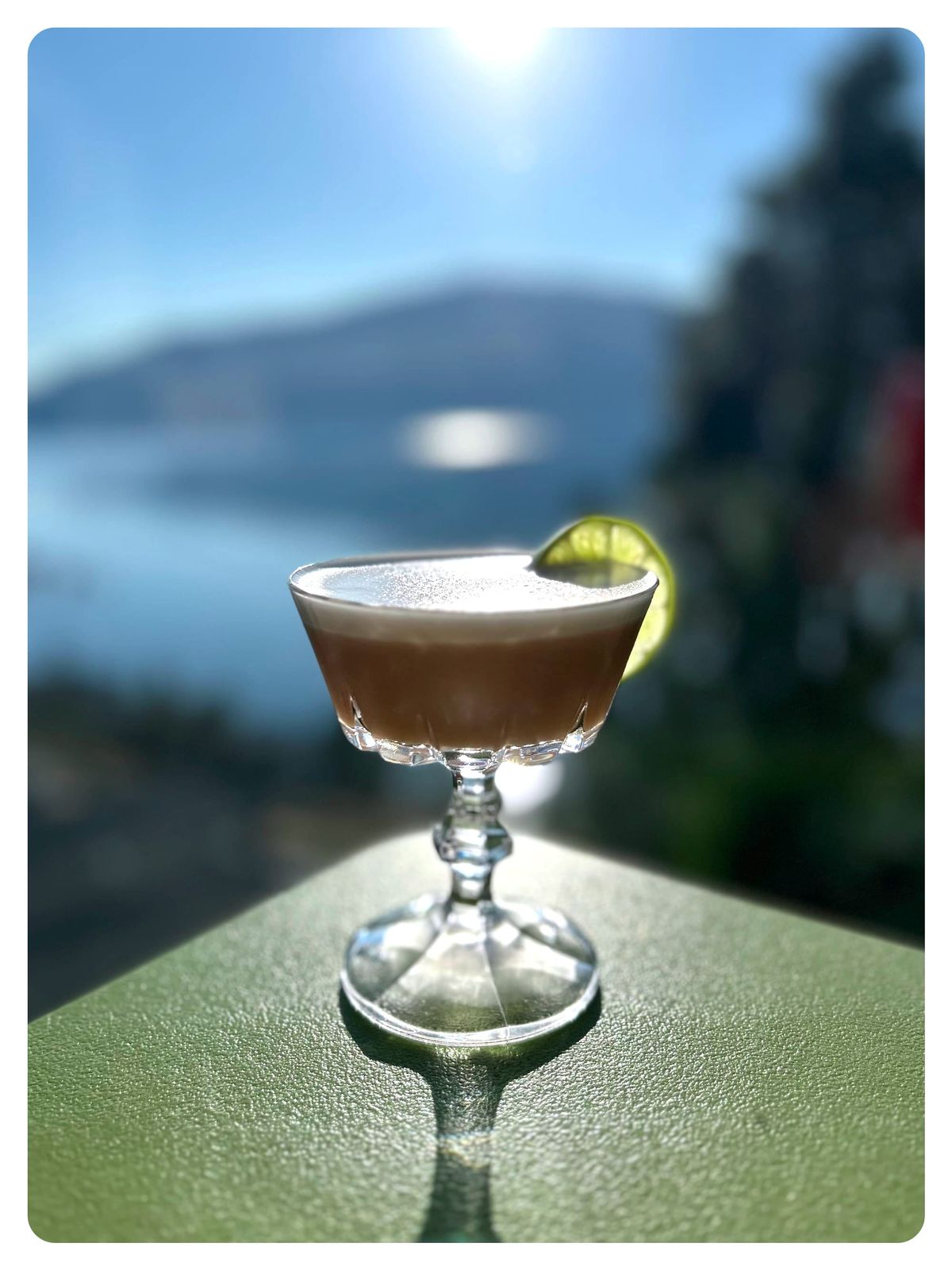
- 50ml Tequila Blanco
- 25ml Fresh lime juice
- 25ml Fresh pomegranate juice
- 12.5ml Orgeat syrup
- 10ml Egg white or vegan foamer
- Dry shake for 20-30 seconds
- Shake again with a large cube of ice for another 20-30 seconds
- Fine strain into a chilled coupe
- Garnish with a lime wheel
Optional home-bar adjustment: Replace half the pomegranate juice with grenadine for a slightly sweeter, rounder drink.
Happy Friday, friends!
This week’s theme is British cocktails, for reasons I will get to in the second half.
I have spent plenty of time here extolling the North American bartenders who helped usher in the modern cocktail renaissance–Jeffrey Morgenthaler, Phil Ward, and others whose drinks have shaped my own home bar. But across the pond, the bartender who helped light the fuse beneath London’s cocktail revival was Dick Bradsell.
So, with that in mind, may I introduce the Pink Chihuahua.
Richard Arthur “Dick” Bradsell was one of the architects of the modern London cocktail renaissance: a bartender whose insistence on fresh ingredients, properly chilled glassware, generous ice, accurate measures, and genuine hospitality helped pull British cocktail culture out of the syrupy, careless doldrums of the 1970s and into a new era of craft.
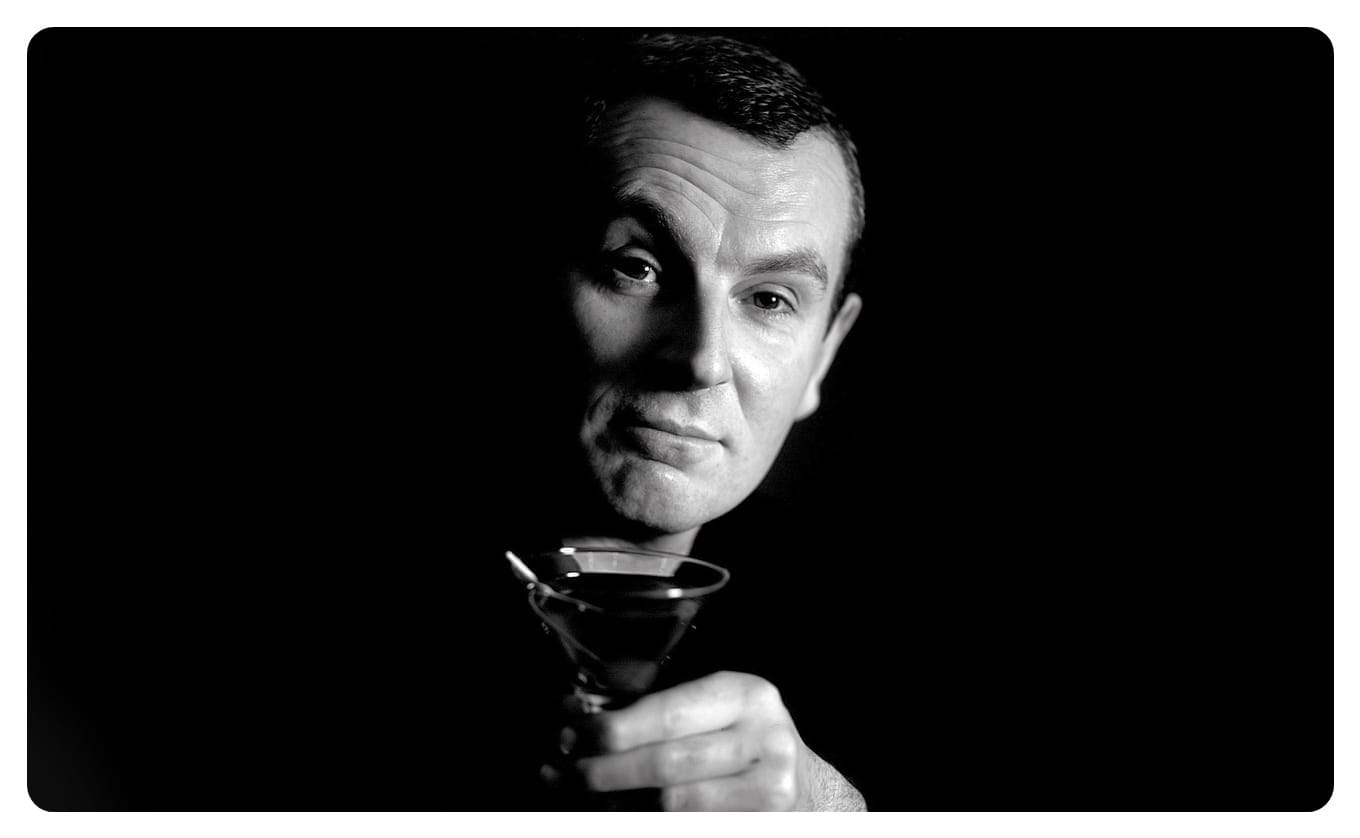
Born in 1959 and raised on the Isle of Wight, Bradsell made his way into London bar culture as a young man. Over the next four decades, he worked at, managed, and influenced some of the city’s most important rooms: Fred’s Club, the Groucho Club, Café de Paris, Detroit, Quo Vadis, Pharmacy, Match Bar, The Player, and Atlantic Bar & Grill, where “Dick’s Bar” was named in his honour.
Late in his career, Bradsell worked at El Camion and its downstairs bar, Pink Chihuahua, in Soho. That is where this drink was born.
His life and career are captured in the wonderfully unruly Dick Tales: Or Thankyous and Sluggings, a biography assembled from letters, photographs, scribbled recipes, recollections, and the general detritus of a long life behind the bar. It reads a little punk, frankly–which may be exactly right. Bradsell was not punk because he was careless. He was punk because he rejected the idea that British cocktails needed to be dull, lazy, theatrical, or second-rate.
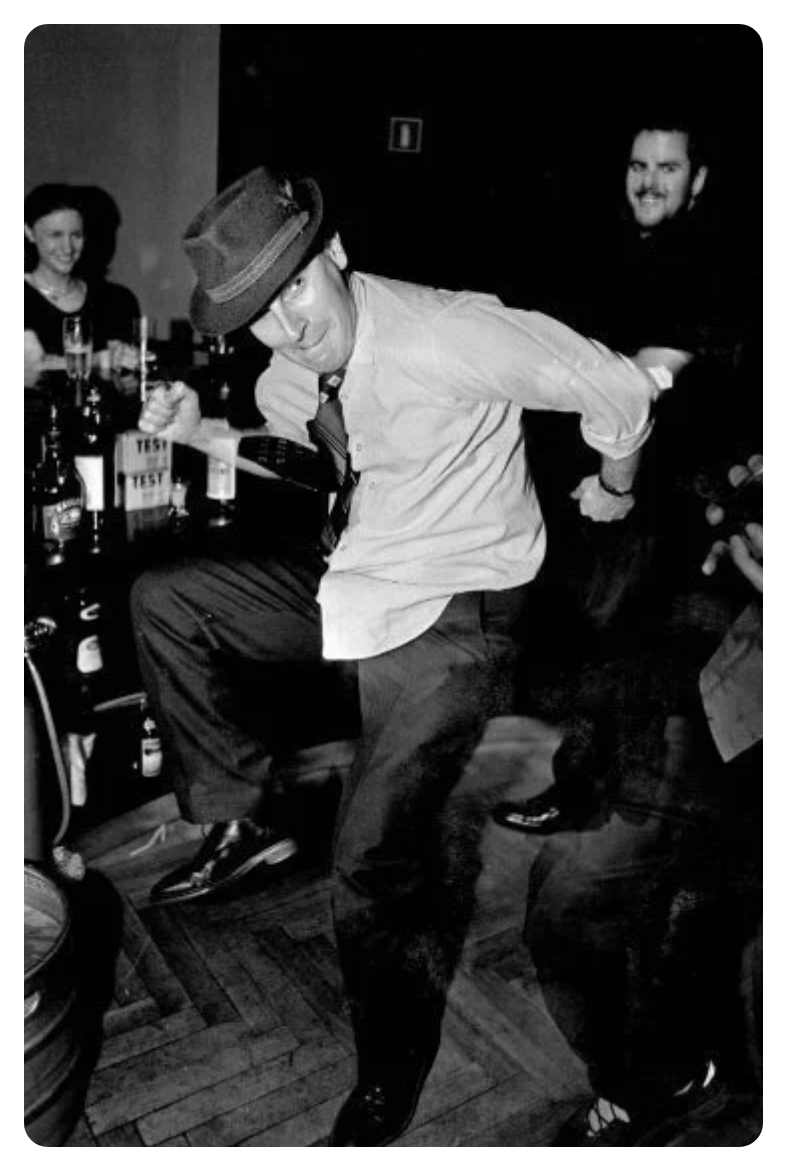
Bradsell’s legacy is not merely that he invented famous drinks, though he unquestionably did. He is credited with the Espresso Martini, Bramble, Russian Spring Punch, Treacle, Wibble, and Carol Channing, among others. More importantly, he mentored and influenced generations of bartenders who carried his standards across London and then across the world.
He believed drinks should be balanced, fresh, reproducible, and joyful. He believed a bartender’s job was not to perform cleverness at guests, but to connect people to one another.
The Pink Chihuahua, created around 2010, is one of Bradsell’s later drinks. It is a tequila sour with a distinctly Bradsell-like sense of contrast: blanco tequila, lime, fresh pomegranate, orgeat, and egg white.
The drink is subtly pink, softly textured, bright with citrus, and much more serious than its playful name suggests.
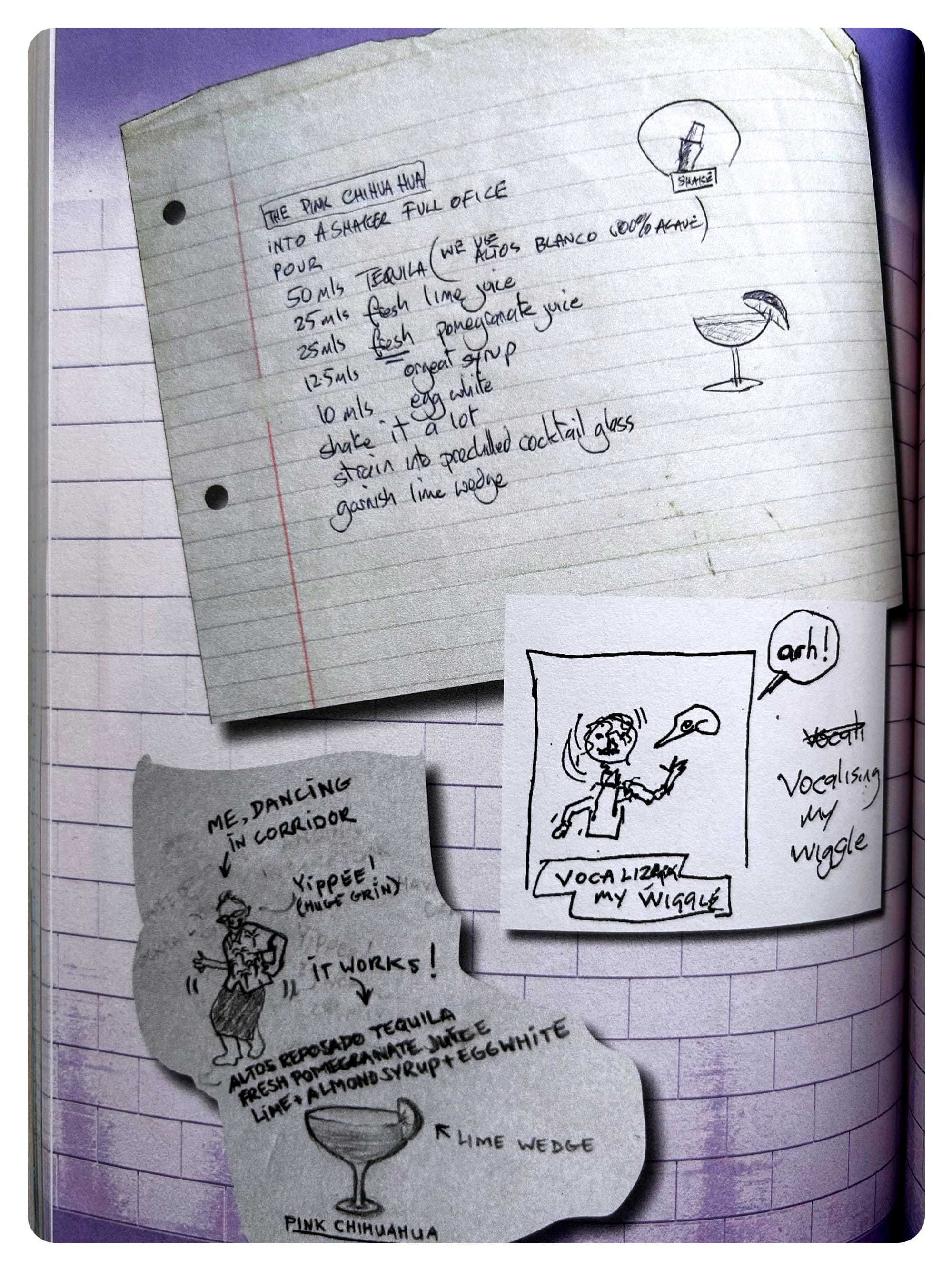
The original recipe is pomegranate-forward, but as cocktail recipes are wont to do, it has been reinterpreted online in several directions–most often by swapping grenadine for fresh pomegranate juice.
I tested it three ways: all grenadine, half grenadine and half pomegranate, and all pomegranate. The all-pomegranate version was juicy, tart, and perfect for a summer day in the sun. But I preferred the half-and-half version. The grenadine added a bit of sweetness and helped turn down the sharpest edge of the lime while making the pink hue a touch more cheerful.
The tequila gives peppery agave, citrus, minerality, and a faint earthy bite. Lime supplies structure and brightness. Pomegranate brings tart, juicy fruit. Orgeat adds almond, floral richness, and a soft marzipan edge. Egg white turns the competing notes into a silky, frothy whole.
On the nose, bright citrus and agave remind you of the Margarita you have been meaning to make. The first sip is a marriage of sours—lime and pomegranate—wrapped in an agave blanket. Then the orgeat emerges, pairing with the tequila’s inherent sweetness and the grenadine’s fruitiness to carry the drink across the palate. At the finish, the lime, almond, fruit, and agave all stand at attention.
A Margarita it is not.
Instead, it is something more nuanced, more composed, and therefore more worth sitting with.
That is a fitting Dick Bradsell drink: technically precise, grounded in classic sour structure, but carrying enough personality to make a guest smile before the first sip.
Bradsell died in 2016, but his influence remains in every bar that squeezes citrus to order, chills its glassware, respects its ice, and treats cocktail service as an act of generosity rather than theatre.
This cocktail–and its UK cocktail-culture theme–was selected for a purpose.
Remember back in July, when I shared the Eight Amaro Sazerac to celebrate my new employment and our daughter’s acceptance to circus school in Italy?
The Italian school did not happen.
Unfortunately, the program was contingent on attracting enough committed students to launch a new cohort. It did not reach the number it needed.
That was disappointing. It was also one of those painful early lessons in the creative world: sometimes a door closes not because you were unworthy, not because you did not prepare, but because the world around you did not line up in time.
But our daughter did not stop.
She kept applying. She kept auditioning. She kept putting herself forward.
And she received an invitation to London.
Specifically, she has begun at the National Centre for Circus Arts in Shoreditch, London. This is her first week of school, and I could not be more thrilled for her.
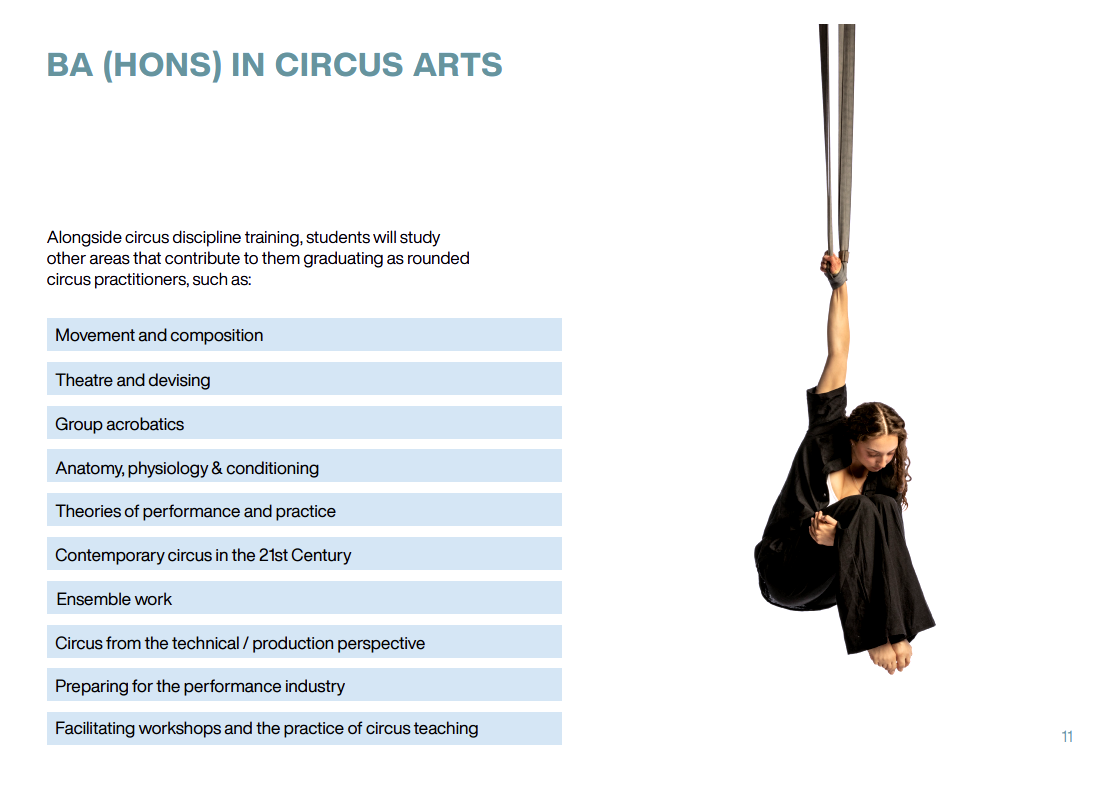
Where else does a young person get to earn a bachelor’s degree by doing the thing they love most?
There is something deeply moving about watching a child choose a difficult, specific, improbable path–and then work hard enough to make it less improbable every day.
I think about the moment in my own high-school years when more creative interests began giving way to the “college-prep curriculum.” Art classes competed with language requirements and academic electives. I do not regret studying Spanish–though my muscle memory for the language has faded after all these years–but that was a time when I was asked to choose between desire and responsibility.
What if I had chosen differently? What if I had found a school that treated visual arts, movement, design, performance, and imagination as a legitimate course of study rather than an indulgence around the edges?
I do not ask that question with regret.
I ask it with joy.
Because my daughter gets to ask it in real time–and answer it by getting up every morning in London, walking into a world-class circus program, and doing the work.
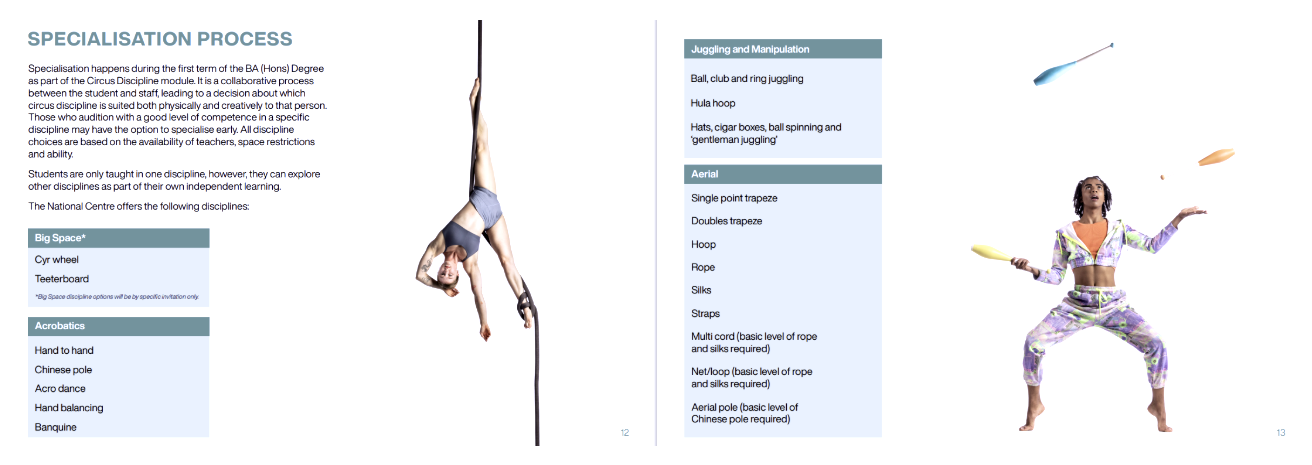
The breadth of aerial apparatuses she will train on is extraordinary. I have shared an image below from the Centre’s prospectus, but the picture is only the beginning: silks, rope, trapeze, hoop, straps, hand-to-hand work, acrobatics, object manipulation, performance, physical theatre, creation, collaboration, and the daily discipline that turns gravity into an artistic partner.
It is no wonder the program is so robust. It comes from a rich history.
Founded in 1989 as Circus Space, the National Centre for Circus Arts began as a volunteer-led project by more than 30 circus artists who wanted a dedicated place to train, rehearse, and create contemporary circus work. It later moved into a converted power-station building in Hoxton and became the National Centre for Circus Arts in 2014, reflecting its national role in training, artistic development, and advocacy for the UK circus sector.
Today, it is one of Europe’s leading circus-arts institutions and one of only two UK providers of higher-education circus training. Its three-year BA (Hons) Circus Arts programme is supported by youth training, outreach, open training, professional residencies, and development opportunities for established artists.
Its alumni have gone on to work with Cirque du Soleil, the Royal Shakespeare Company, the National Theatre, NoFit State, and Les 7 Doigts de la Main. Almost 100 performers in the London 2012 Olympic and Paralympic ceremonies trained there.
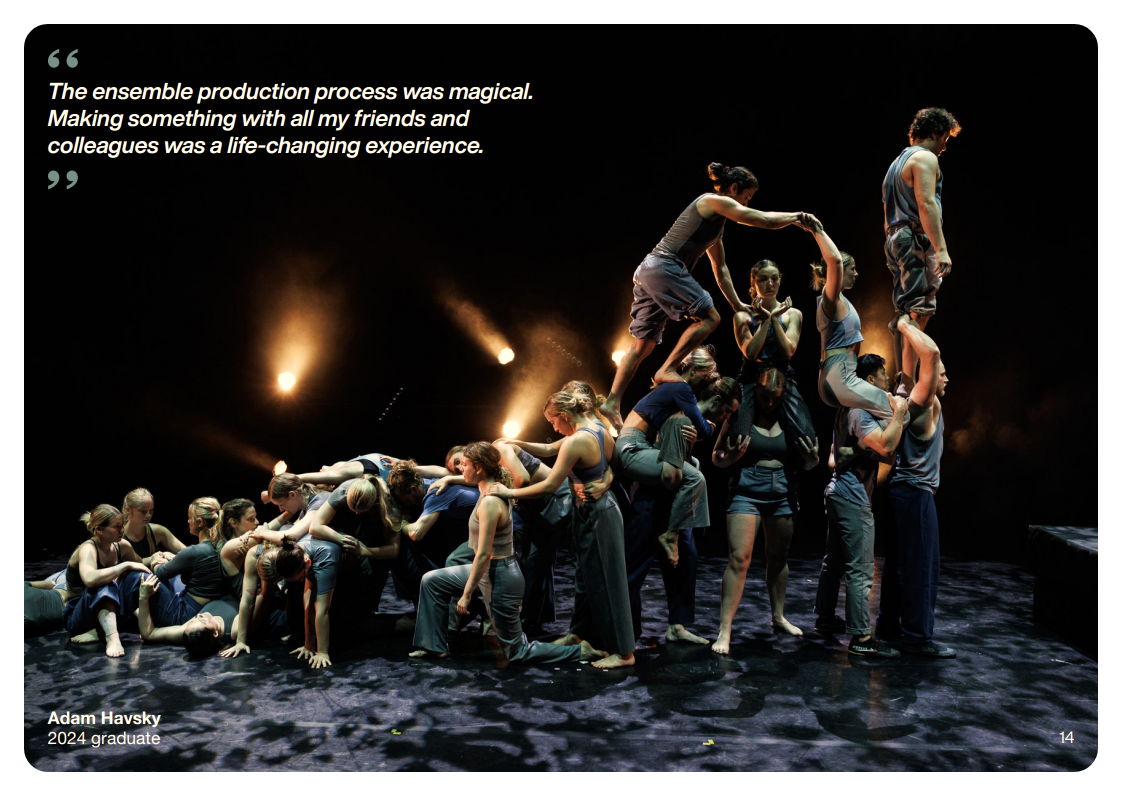
Of course, all of this is in service of a future that nobody can entirely predict: performing, teaching, creating, collaborating, travelling, falling, getting back up, and perhaps one day inventing a new discipline we have not even learned the name of yet.
And she gets to do it in London.
London is one of the great cities on earth: history around every corner, cousins scattered across southern England, theatres, galleries, music, food, art, public transit, beautifully strange neighbourhoods, and a city-sized invitation to become more of yourself.
We are helping her get settled now. She has school in Shoreditch, and a home base not far away. She is beginning to learn the transit lines, the rhythm of the streets, the stores, the cafés, the routes between “I do not know where I am” and “this is becoming mine.”
That is a beautiful thing to watch.
So with this Pink Chihuahua in hand, I shout congratulations from the rooftops of British Columbia all the way to Shoreditch, London.
May our daughter–the circus performer–find her strength through hard work, her confidence through practice, her people through collaboration, and her art through the courage to keep reaching.
May she fly, and inspire the rest of us to keep doing the same.
With all my love. 💖🪽💂
p.s. If you aren't listening to the British band, Wolf Alice, why not?