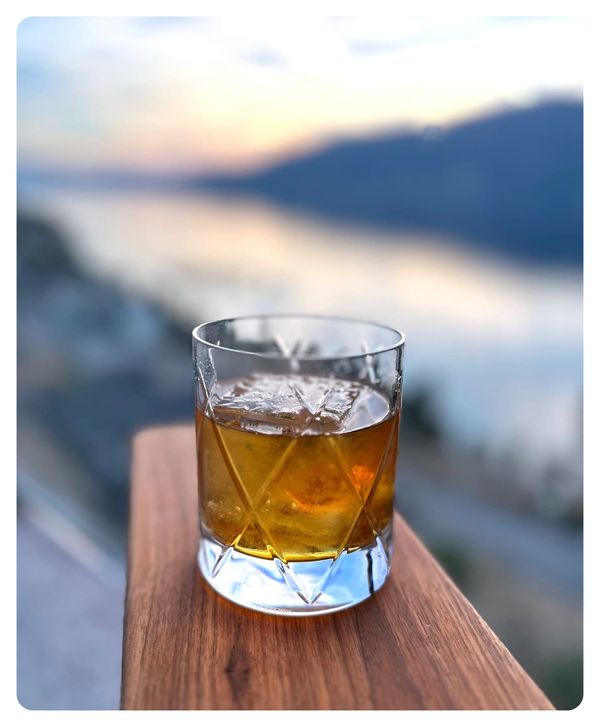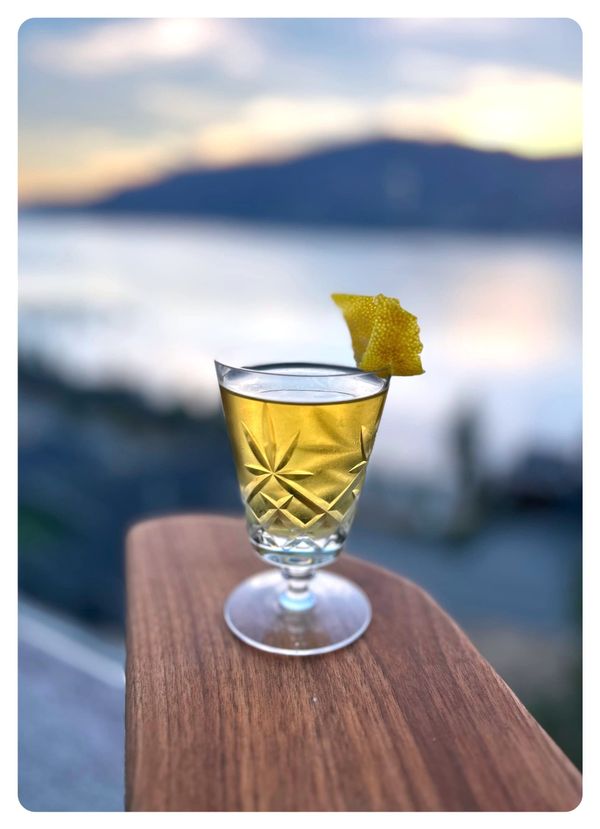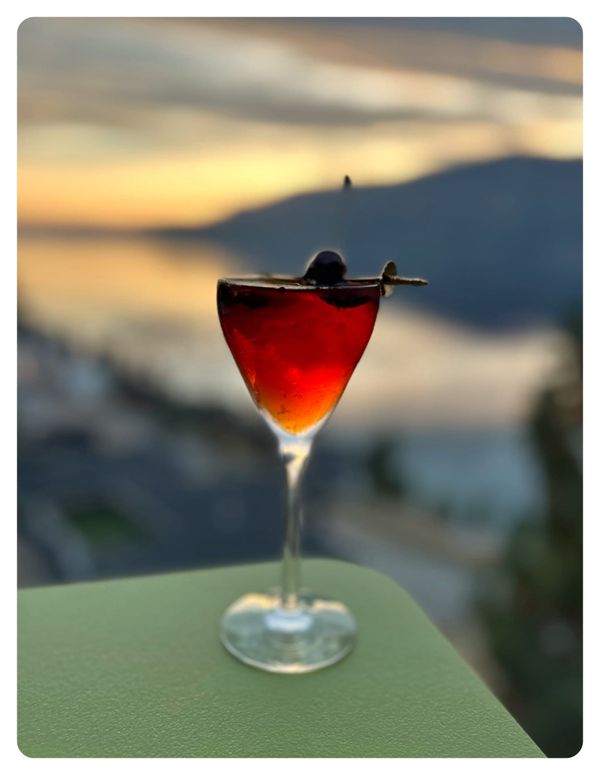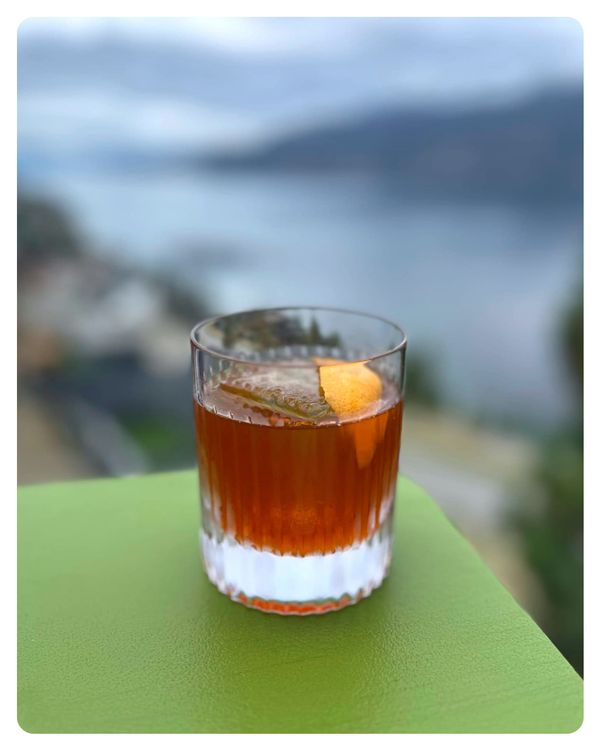
Ozymandias
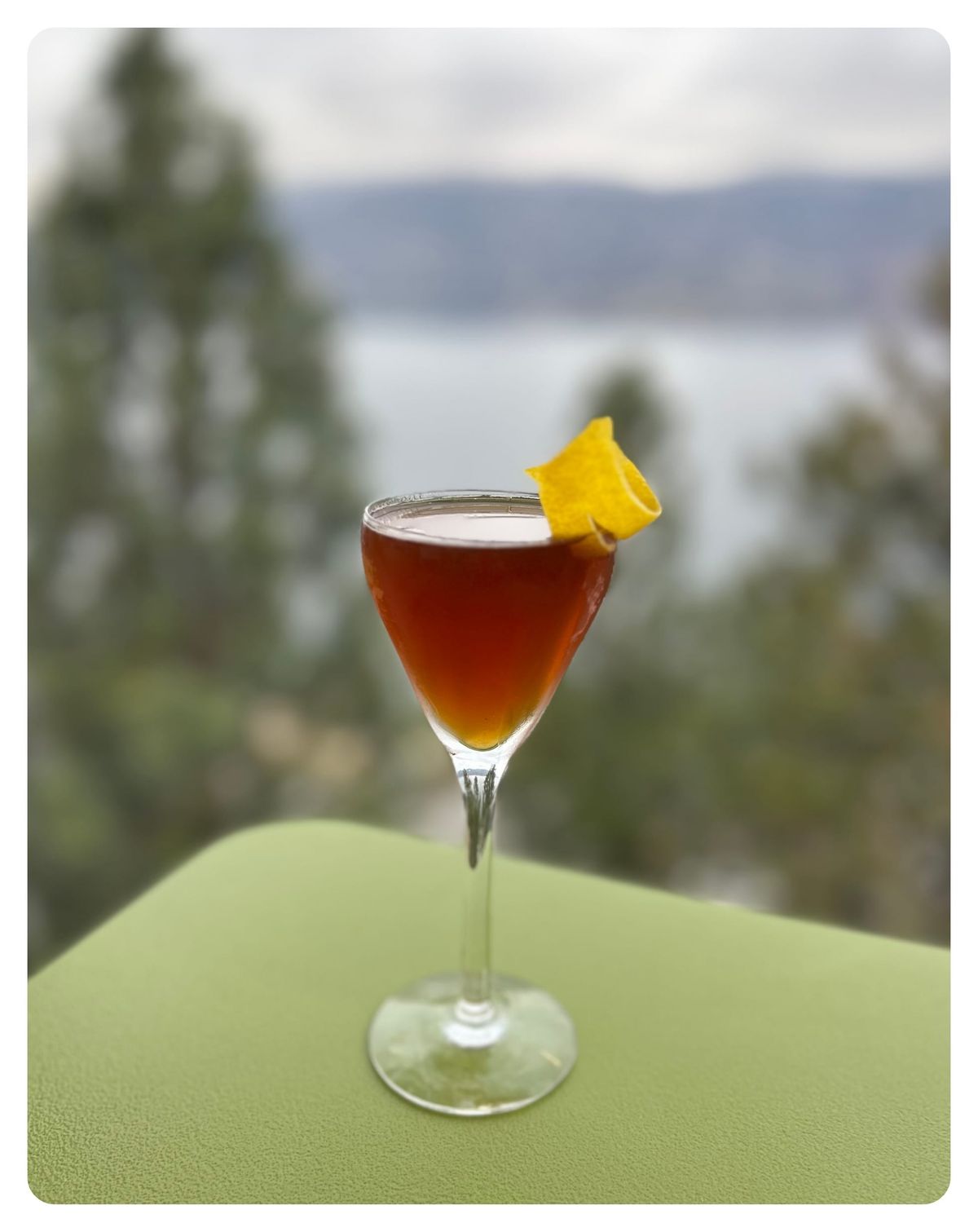
- ¾ oz Rye whiskey
- ¾ oz Cognac or Brandy
- 1⁄2 oz Bénédictine
- 1⁄2 oz Sweet vermouth (Carpano Antica Formula)
- 1⁄2 oz Bigallet China-China Amer
- 1 dash Bittermens Elemakule Tiki bitters
- Stir ingredients with ice for 20-30 seconds, strain into a coupe
- Garnish with a lemon twist
Happy Friday, friends!
Another week, another series of consequential—and increasingly unprecedented—events unfolding on the world stage. This time, the spotlight fell on Davos, Switzerland, during the World Economic Forum.
To weather that kind of moment, I bring you a rich, contemplative sipper–one that shares DNA with the great New Orleans classics. This one comes from Nickle Morris of the now-defunct Bar Expo in Louisville, Kentucky, and once again I have J.E. Clapham’s The Bénédictine Cocktail Book to thank for the introduction.
Say hello to the Ozymandias.
If you’ve spent any time with Flavor Notes, you know my fondness for the whiskey-forward cocktails of New Orleans: the Vieux Carré, La Louisiane, and Sazerac chief among them. The Ozymandias fits comfortably within that lineage. It uses a rye base–split with cognac or brandy–anchored by Bénédictine and sweet vermouth. For the latter, I went big with Carpano Antica Formula.
Where it diverges is where things get interesting.
Rather than leaning on Peychaud’s bitters or an absinthe rinse–both hallmarks of the New Orleans canon–the Ozymandias introduces Bigallet China-China Amer and Bittermens Elemakule Tiki bitters, both newcomers to this blog.
Bigallet China-China Amer is a bittersweet French amer produced in the Alps since 1875 and bottled at 80 proof. Despite its name, it has nothing to do with the country of China. Instead, “China” refers to cinchona bark, a source of quinine, paired here with gentian for bitterness. The result is a deeply layered spirit with notes of bitter orange, anise, clove, and bark-driven bitterness.
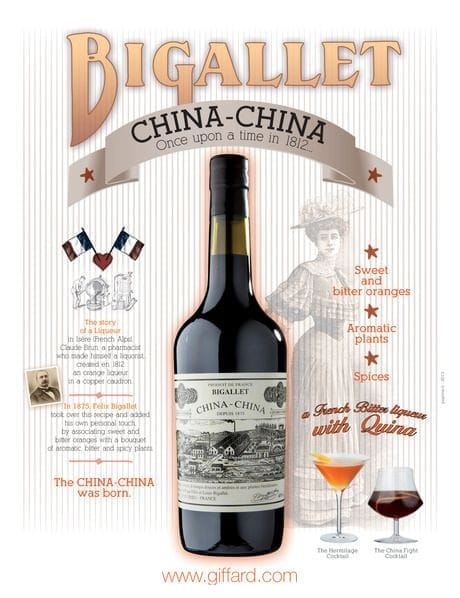
For me, quinine has a way of amplifying everything around it. When combined with a richly herbal vermouth like Carpano Antica and the honeyed complexity of Bénédictine, it creates an outsized presence–one that refuses to stay in the background.
The bitters choice reinforces that point. While Angostura, Peychaud’s, and orange bitters dominate most home bars, Bittermens has long pushed beyond the familiar. Elemakule Tiki bitters bring allspice, cinnamon, clove, and citrus–spices that harmonize beautifully with rye, cognac, Bénédictine, and the China-China Amer.

On the nose, citrus greets you first, led by the China-China Amer and the lemon twist. The front of the palate follows with honeyed sweetness from the Bénédictine, before the base spirits broaden across the mid-palate–rye spice, cognac warmth, and barrel notes layered with baking spice from the bitters. As the drink resolves, herbal and floral notes give way to quinine and gentian bitterness, reminding you who’s really steering this cocktail.
It’s a drink built for contemplation–especially as we take stock of what unfolded this week in Davos. The Ozymandias is a fitting companion for making sense of a world that increasingly appears to be reorganizing itself–one no longer anchored by clear, consistent U.S. leadership.
The name, of course, is no accident.
When I hear “Ozymandias,” my first instinct is to think of Watchmen. In the graphic novel, Ozymandias fashions himself the smartest man alive—a benevolent ruler who engineers a god-scale deceptive genocide to “save humanity.” He builds monuments to his brilliance, assumes himself beyond ordinary limits, and believes history will justify his works.
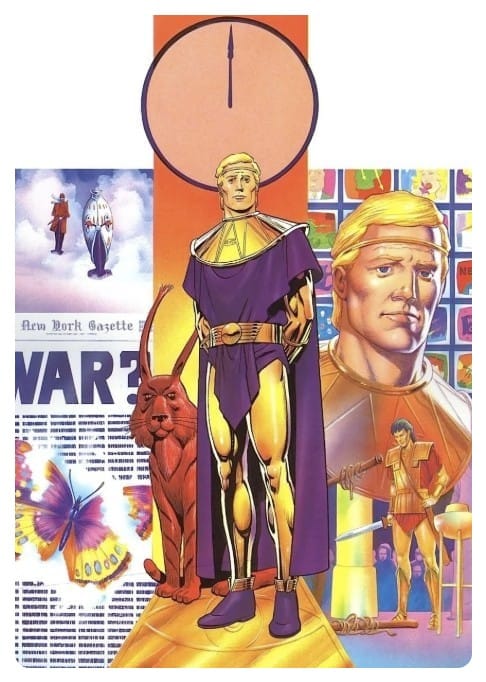
That character was deliberately named.
In fact, Ozymandias was the Greek name for Ramesses II, one of ancient Egypt’s most powerful pharaohs. Most of us encounter him through Percy Bysshe Shelley’s 1818 poem Ozymandias, in which a shattered statue in the desert bears the inscription:
My name is Ozymandias, King of Kings; Look on my Works, ye Mighty, and despair!
Nothing remains but sand.
The poem’s message is unambiguous: power, ambition, and empire decay. Arrogance does not survive time.
Sound familiar?
This week, the world heard a statement from Canadian Prime Minister Mark Carney at Davos–one that will likely endure far longer than the headlines around it. Carney’s speech functions as a counter-myth to Ozymandias: an argument that endurance in a fractured world belongs not to those who build monuments, but to those who design systems.
Carney rejected the idea that we’re merely in a “transition.” He described a rupture. The post-WWII, post-Cold War order promised efficiency through integration–predictable rules, cheaper supply chains, frictionless capital. That system worked until it didn’t. Integration without accountability became extraction. Globalization turned from value-creating network into coercive leverage–tariffs, payments rails, energy dependence, and data infrastructure repurposed as weapons.
The modern American Ozymandias embodies that shift. That worldview is transactional, zero-sum, and performative. Power is demonstrated, not institutionalized. Deals exist to be re-priced later. Visibility is mistaken for permanence.
But trust is the ultimate compounding asset–and transactionalism burns it for short-term gain.
Carney’s response is neither nostalgia nor resistance theatre. It is values-based realism–a phrase that sounds soft until you examine its policy spine. Diversified trade. Domestic industrial capacity tied to defense. Plurilateral coalitions organized by function, not sentiment. This is the functional conservatism of a central banker who led both the Bank of Canada and the Bank of England through periods of structural stress.
Institutions matter–but only if backed by capability and accountability. Values endure–but only if defended.
The American Ozymandias believes dominance can be endlessly monetized. Carney’s strategy is distributed and resilient. He warns–correctly–that hegemons cannot cash in relationships indefinitely without degrading them. Empires don’t fall when challenged from outside; they hollow out when allies quietly hedge.
Middle powers collectively represent the growth margin. If they coordinate standards, capital, and supply chains, they become the market that matters. One approach builds monuments. The other builds ecosystems.
Carney isn’t challenging the statue in Shelley’s poem.
He’s letting the sand do the work.
So as we contemplate this emerging world of interconnected middle powers, I raise an Ozymandias in hand–to systems over statues, to resilience over spectacle, and to a Canadian prime minister willing to step into a vacuum when leadership is required.
Cheers. 🍁🥃