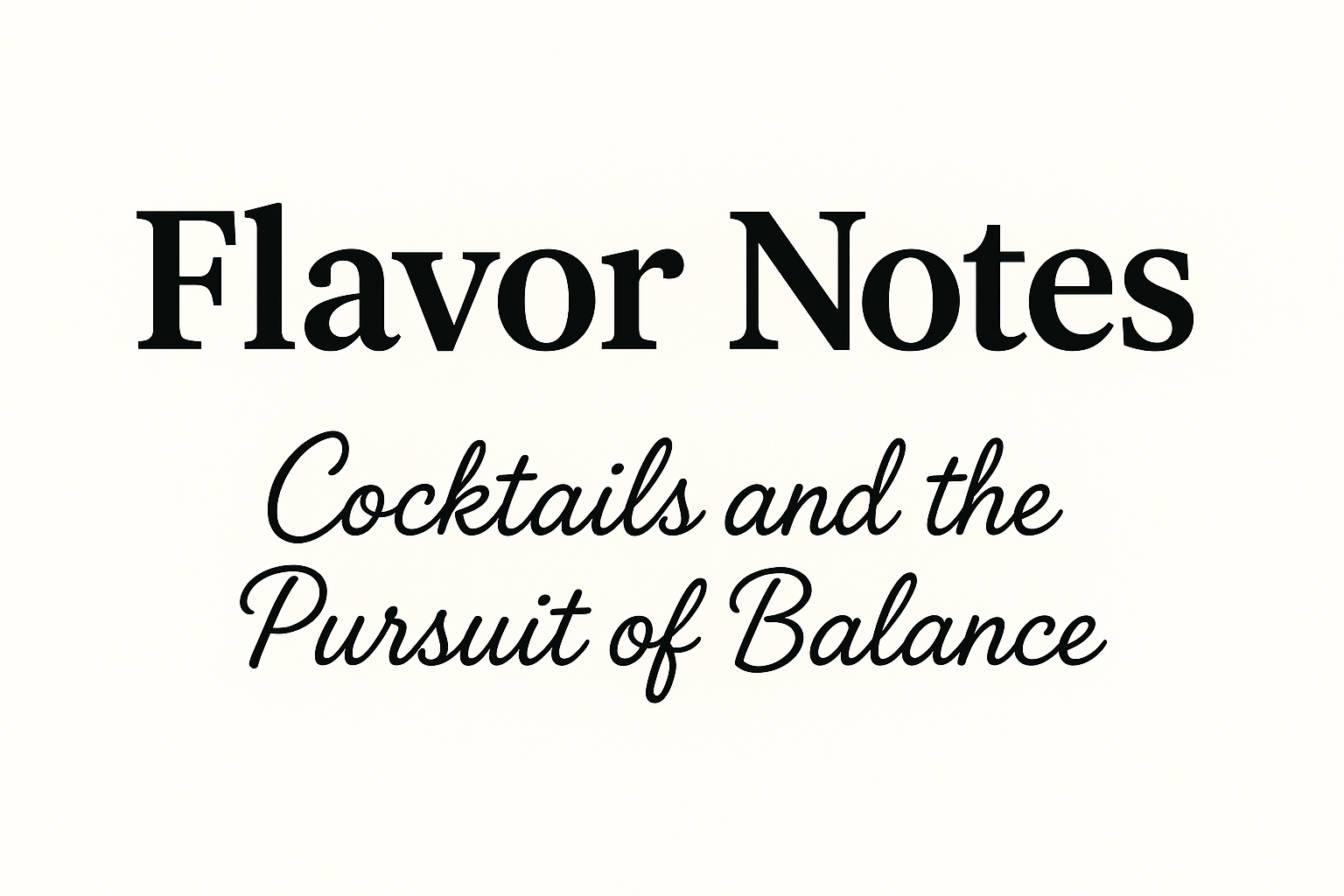
Dashboard Hula Girl
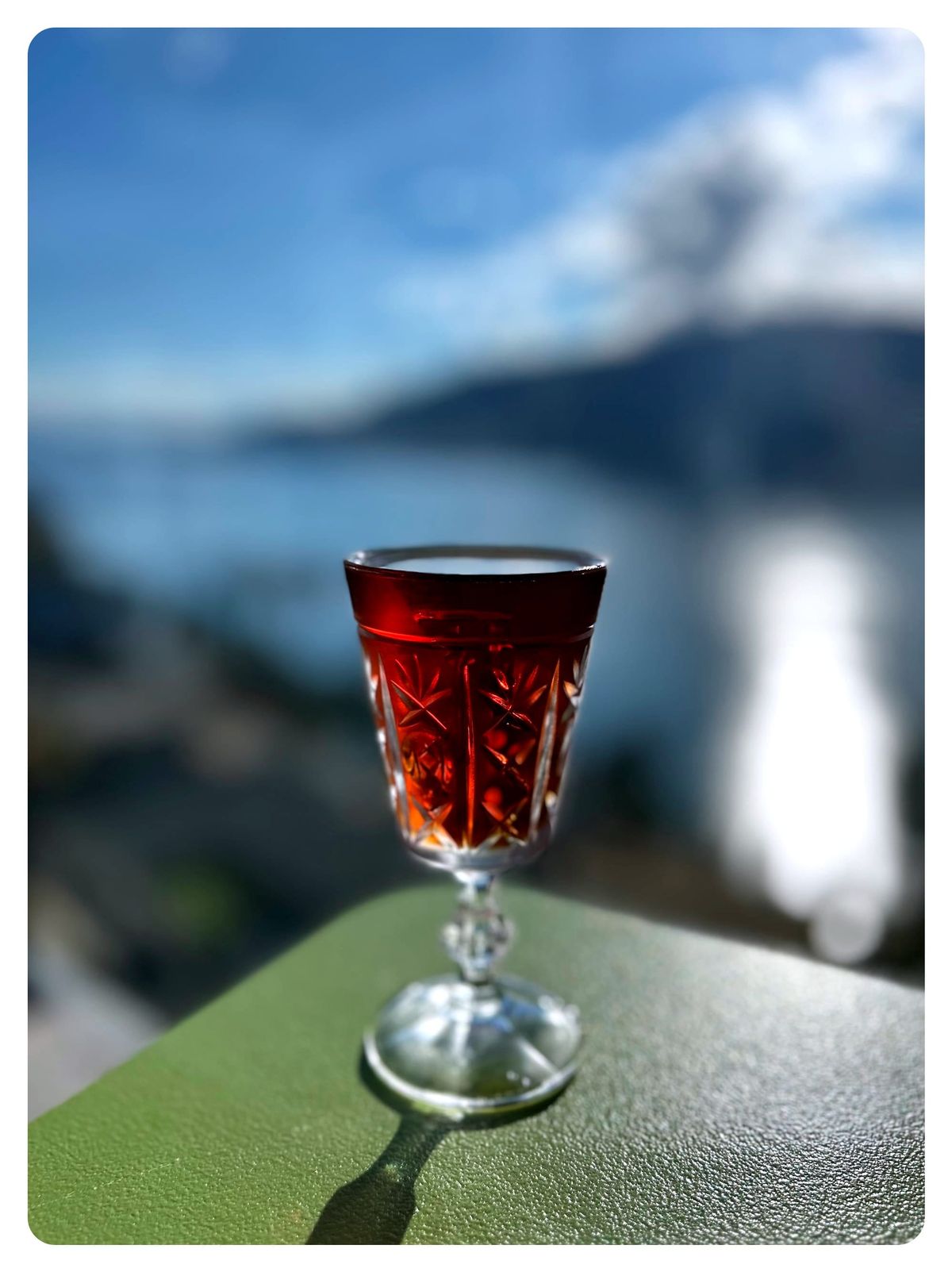
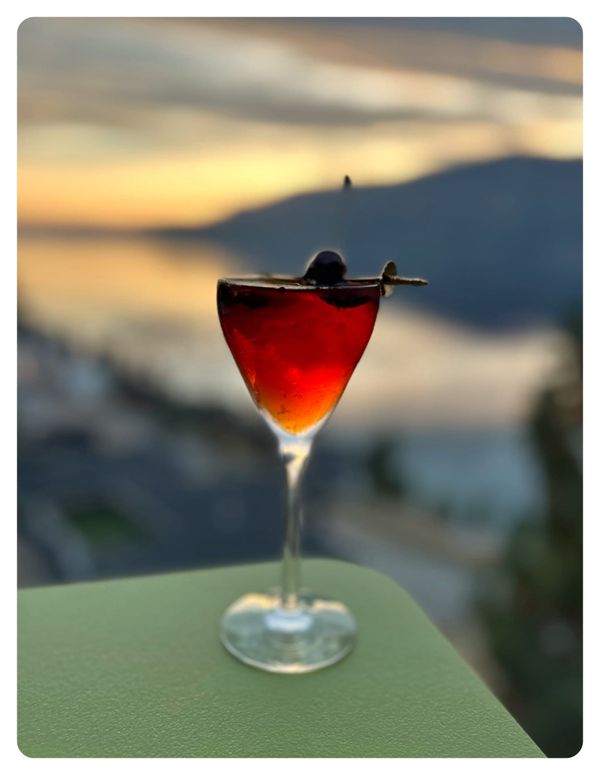
- 1½ oz Planteray Stiggins’ Fancy Pineapple Rum
- ¾ oz Amontillado Sherry
- ¾ oz Averna Amaro
- Stir over ice for 20-30 seconds
- Strain into a chilled coupe
- Express a flamed orange twist over the drink and discard
Happy Friday, friends!
It has been a quiet week heading into the Labour Day weekend here in Canada—yes, Labour Day, with the “u.” But I suspect that is a topic I will fully earn the right to litigate only once my Permanent Residency arrives.
In the meantime, I am taking the opportunity to wax poetic about one of my favourite newly discovered cocktail ingredients: Sherry.
So this week, may I present the Dashboard Hula Girl.
It is difficult to argue with this cocktail.
One reason I selected it is simple: it features Sherry. Flavor Notes has explored Sherry before through cocktails like the Doubloon and the Trident, so the category is not exactly new around here.
What is new is the source.
Prolific cocktail-recipe collector J.E. Clapham recently published another installment in his growing cocktail-book collection: The Amontillado Cocktail Book. Selfishly, I would have loved an entire book devoted to the sweeter, richer, deeper end of the Sherry spectrum–Pedro Ximénez, Moscatel, Oloroso, and the like–but Amontillado is a particularly natural cocktail Sherry because it brings more richness and oxidative depth than Fino or Manzanilla while remaining fundamentally dry.

The Dashboard Hula Girl itself was created by Tainah Soares at Trina’s Starlite Lounge in Somerville, Massachusetts. According to Frederic Yarm, it was conceived as a tribute to an old band involving one of the local bartenders.
Regardless of its backstory, it is a wickedly unusual combination.
The Amontillado provides roasted nuts, dried apricot, cedar wood, and a subtle saline-mineral note. It is a wine that begins its life under flor, much like Fino, before that protective yeast layer disappears and the wine continues aging oxidatively. The result is a Sherry with dryness and lift, but also toasted depth, marzipan, dried fruit, spice, and wood.
This cocktail gives that complexity room to breathe.
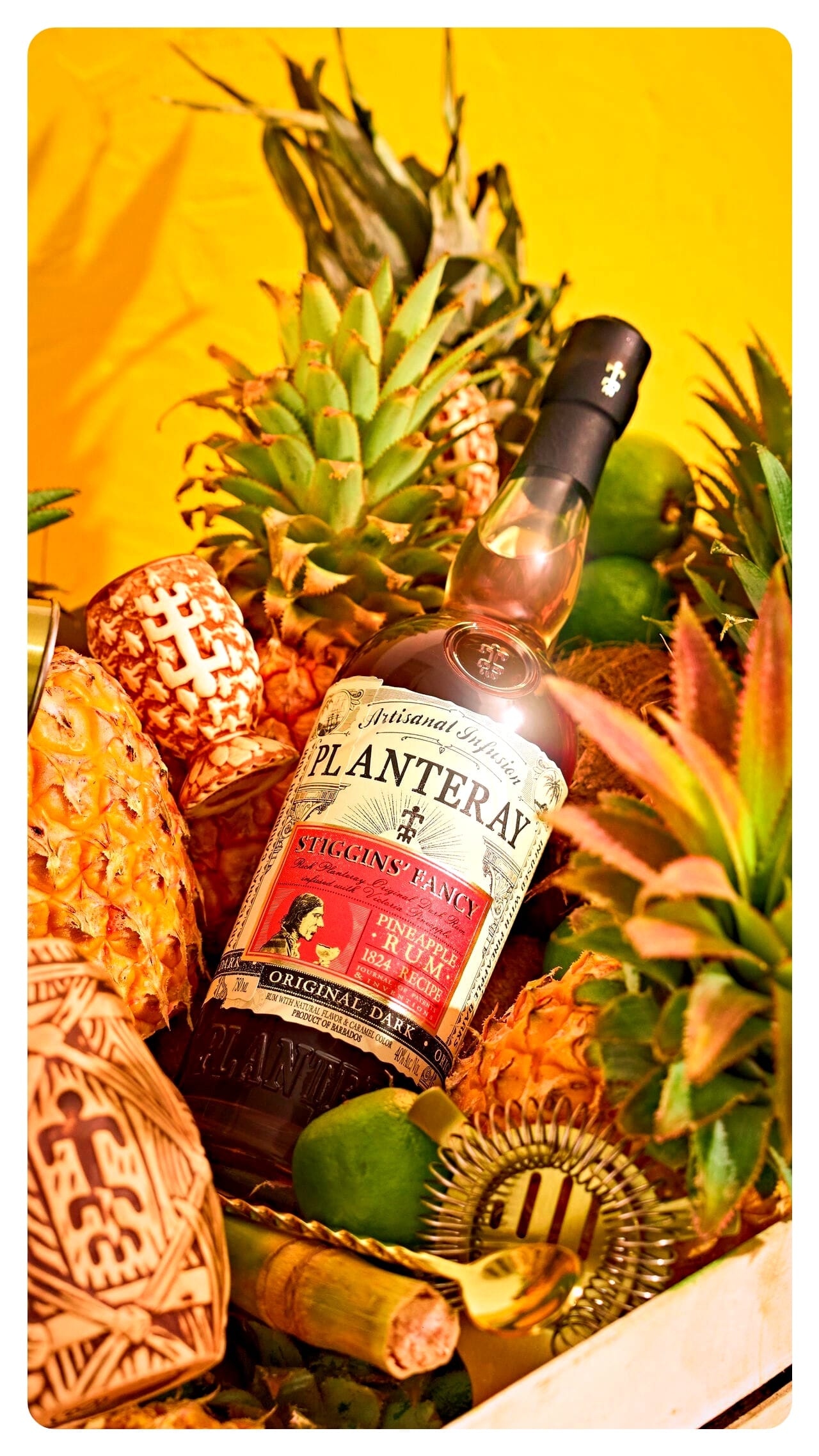
You may remember Planteray Stiggins’ Fancy Pineapple Rum from the Cyrano. It remains one of the standout bottles in the pineapple-rum category. Its production begins with pineapple-rind-infused rum that is redistilled, then blended with dark rum infused with the fruit. The result is not simply “tropical.” It is rich and layered: seared pineapple, caramel, baking spice, citrus, and a faint smoky quality that makes it far more flexible than a novelty bottle has any right to be.
That leaves us with Averna.
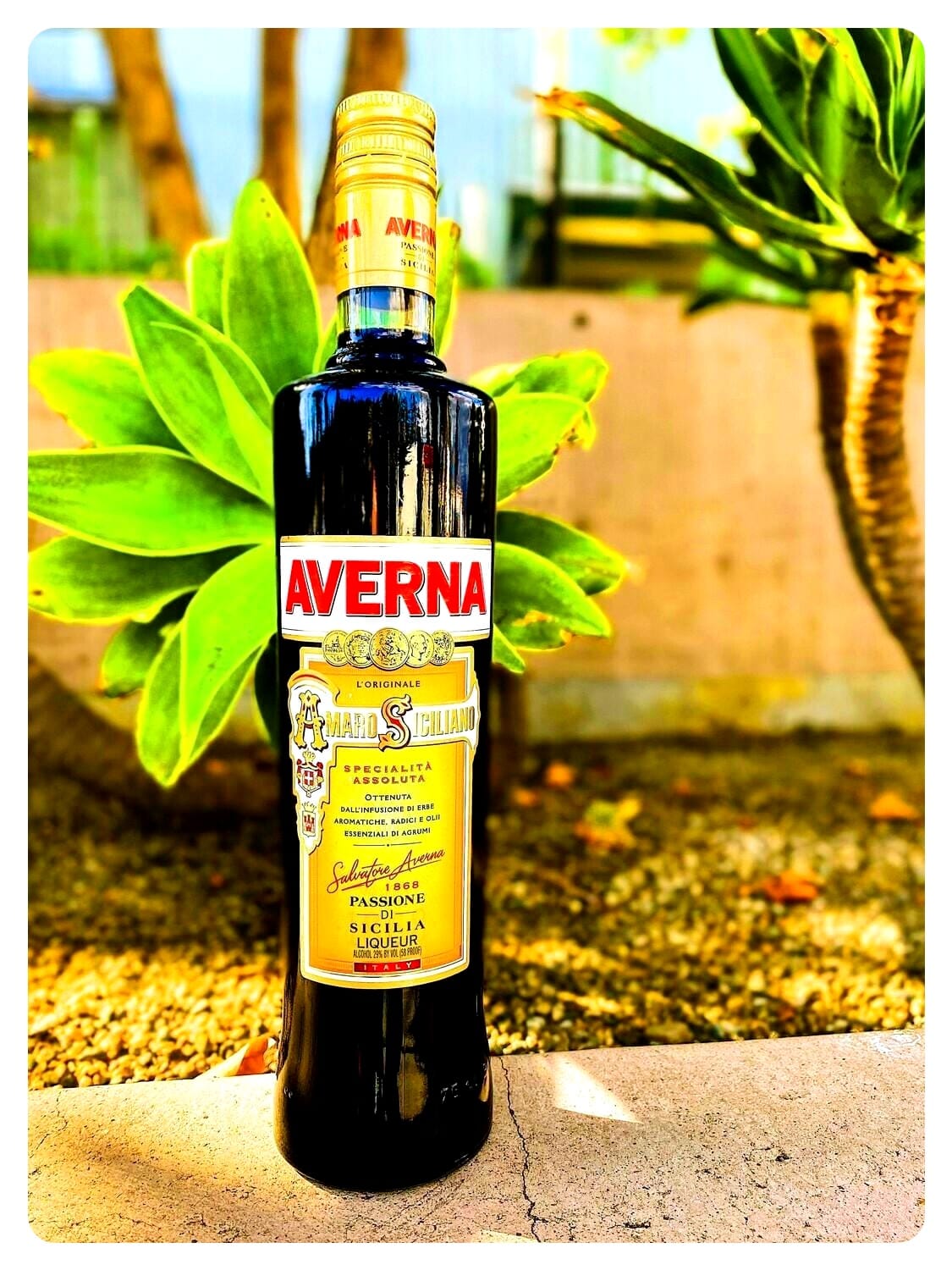
Averna is a Sicilian amaro that, for me, walks the same beautiful line as Amontillado: sweet enough to feel generous, bitter enough to remain serious. It opens with caramel, molasses, dark cocoa, and candied orange peel, then quickly redirects toward cinnamon, licorice root, clove, and earthy Mediterranean herbs.
In the Dashboard Hula Girl, these three ingredients do not merely coexist. They set one another up.
The flamed-orange oils open with caramelized citrus on the nose. The first sip brings a subtle, seared-pineapple note, followed by the rum’s sweetness. Then Averna’s caramel and molasses meet the Amontillado’s roasted nuts and saline edge, building toward a finish that is dry, herbal, lightly bitter, and distinctly oxidative. Mediterranean herbs, cinnamon, licorice, and clove join the Sherry’s nuttiness just long enough to make you thirsty for the pineapple all over again.
It is a strange cocktail. It is a beautiful cocktail. And it is exactly the sort of drink that makes you ask: why are we not drinking more Sherry?
The Sherry industry is no longer the global fortified-wine giant it was in the late 20th century. But it remains culturally durable, commercially meaningful, and increasingly relevant to bartenders, sommeliers, chefs, and those of us who enjoy drinking without always drinking at full proof.
Sherry’s story is both a warning for vermouth and a case study in how cocktail culture can restore prestige without necessarily restoring mass-market volume.
For a category newcomer like me, the numbers are sobering.
Jerez wine exports reached approximately €100 million in 2025. That is a meaningful figure, but it is important to say what it is-, and what it is not. It represents export value, not the Sherry industry’s total global revenue. It excludes domestic Spanish sales, bodega hospitality, wine tourism, restaurant activity, and other economic life across the Sherry Triangle.
Still, it tells us the category remains a serious export business.
Sherry earns money through several channels:
- Bottled wines across the full range: Fino, Manzanilla, Amontillado, Oloroso, Palo Cortado, Pedro Ximénez, Moscatel, Cream, and more.
- Exports, especially to legacy markets such as the United Kingdom, Germany, and the Netherlands.
- Premium, aged, and limited bottlings, including VOS/VORS wines and rare solera releases.
- Sherry-cask production and seasoning for the Scotch whisky industry, which values the dried-fruit, nut, spice, and oxidative notes the casks can impart.
- Wine tourism and hospitality across Jerez de la Frontera, El Puerto de Santa María, and Sanlúcar de Barrameda.
- Newer extensions such as Sherry vermouth, aperitivo-style serves, and still wines under the broader denomination framework.
That blend of revenue sources matters. Sherry is gradually becoming less dependent on huge volumes of low-cost Cream Sherry and more dependent on distinct, higher-value wines, hospitality, premium bottles, and its usefulness to adjacent drinks industries.
Sherry’s former popularity is difficult to overstate.
It was one of Spain’s defining exports through much of the 19th century and a major international fortified wine through much of the 20th. At its modern peak in 1979, Sherry sales approached 180 million liters. By 2022, that had fallen to just over 27 million liters. That is an approximately 85% decline in volume.
And the contraction has continued.
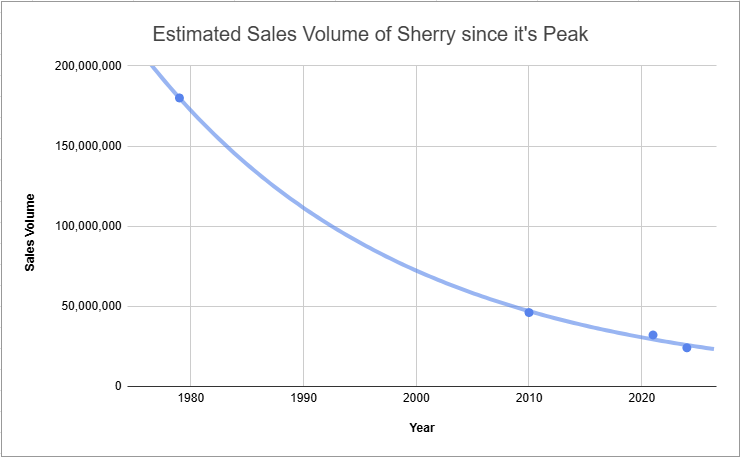
In 2024 alone, global Sherry sales fell 6%. Since 2021, they fell roughly 24%; since 2010, about 48%.
It is difficult to compare historical revenue directly with today’s €100 million export figure because older records are usually reported in litres and hectolitres, not inflation-adjusted revenue. But the larger truth is clear: Sherry once generated far more economic activity by volume.
Its decline was not merely cyclical.
Changing tastes, aggressive discounting, overproduction, an aging consumer base, and a persistent image problem all played a role. In some markets, Sherry became associated with grandparents, sideboards, Christmas visits, and sweet Cream bottles rather than with dry aperitifs, serious wine lists, or dynamic bars.
That story should worry vermouth producers–but not condemn them.
Vermouth shares several of Sherry’s risks. It is frequently misunderstood as merely a cocktail ingredient. People know it through the Martini, Manhattan, Negroni, or dusty half-empty bottle in the back of a home bar. It is vulnerable to poor storage and stale pours. And it exists in an awkward category space somewhere between wine, spirits, aperitivo, and mixer.
But vermouth has one significant advantage: it is fully embedded in a modern aperitivo culture.
The Spritz, Negroni, Americano, vermouth-and-soda, and low-ABV cocktail movements have made aromatized wine feel current, social, and fun. Sherry is now borrowing from that same playbook, including the growth of Sherry vermouth.
The lesson for both categories is simple:
Do not allow a versatile, place-driven, service-sensitive wine to become a forgotten mixer.
The cocktail renaissance has been genuinely helpful to Sherry, particularly for dry and oxidative styles such as Fino, Manzanilla, Amontillado, Oloroso, and Palo Cortado.
Bartenders value Sherry because it can add savoury, nutty, saline, and oxidative complexity without adding excessive proof. It can replace part of a base spirit in a Martini, Old Fashioned, Manhattan, highball, or sour. It makes low-ABV drinking more compelling. And it plays beautifully with citrus, stone fruit, amari, vermouth, tea, chocolate, coffee, and salty or umami-rich foods.
Cocktails will almost certainly not return Sherry to its 1979 volume peak.
But they can help it become smaller, more premium, more respected, and more financially sustainable.
And there are promising examples of exactly that kind of work. The Consejo Regulador continues to support Sherry programming, education, and events through Sherry.wine. In San Francisco, El Lopo has built a neighbourhood-bar identity around Sherry, vermouth, cider, and wine, with at least ten Sherries available by the glass and food deliberately curated for the pairing experience.
That is enough to get my Cocktails & Spirits Tasting wheels spinning.
In the meantime, I raise this Dashboard Hula Girl to Sherry: a centuries-old Spanish category that has survived booms, busts, fashion cycles, overproduction, reinvention, and a long period of being misunderstood.
It remains glorious in the right glass.
Cheers! 🍷🍇🍁