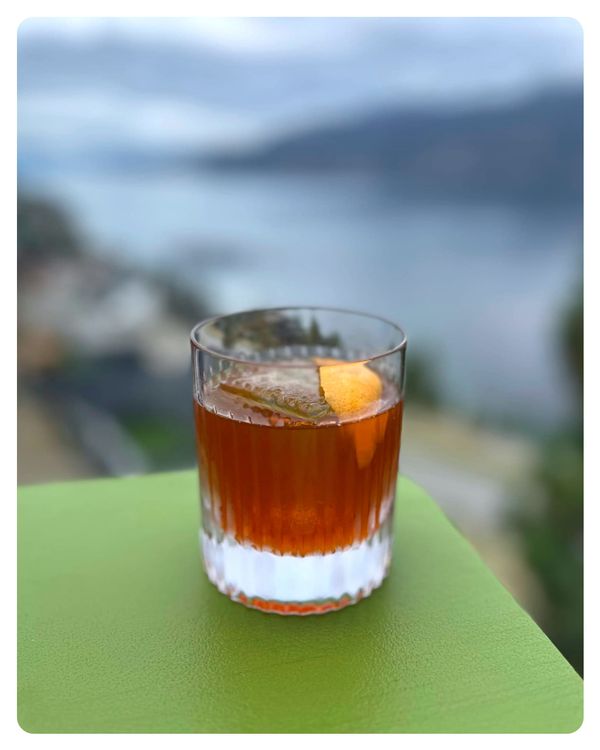
Black Magic No. 2

- 2 oz Amaro Montenegro
- 1 oz Peated single malt whisky
- ⅓ oz Banana liqueur
- 2 drp Saline (25%)
- Stir over ice for 20-30 seconds
- Strain over a rock of ice into a chilled Old Fashioned glass
- Express an orange twist
Happy Friday, friends!
I have studied technology and technology markets for my entire career. So, naturally, the current “Age of AI” has my full attention.
Having survived the Digital Transformation era–with its cloud migrations, digital road maps, agile reinventions, disruption decks, and endless declarations that every company needed to become a technology company–I think, and hope, we will survive the current AI Transformation as well.
Still, I understand why this particular disruption confounds people.
Unlike the last few technology waves, AI does not merely change a process or add a new interface. It writes. It speaks. It summarizes. It makes images. It drafts strategy documents. It creates software. It sounds confident even when it is wrong. And increasingly, it is being asked to act rather than merely advise.
So, on that note, I would like to introduce Black Magic No. 2.
Black Magic No. 2 is a worthy cocktail for the Generative AI moment because it tastes a little like a black box: smoky, bitter, sweet, salted, and initially difficult to explain–yet completely legible once you look carefully at what is actually inside.
It is complex without being unknowable.
That is more than can be said for many products currently being marketed as inevitable “AI transformation.”
The cocktail was created in 2019 by Roger Grüter at Angel’s Share in Basel, Switzerland. It uses an unconventional ratio: two parts amaro to one part peated single malt whisky, softened and made unexpectedly coherent with banana liqueur and saline solution. Grüter’s original used Laphroaig 10-Year-Old; I am using my reliable bottle of Bowmore, another proper Islay single malt.
At first glance, the build looks like cocktail witchcraft.
Two ounces of amaro makes Amaro Montenegro the dominant force. You may remember Montenegro from the Doubloon, where it brought the same generous, orange-forward complexity that makes it so easy to love.
Montenegro is known for a rounded, approachable profile: orange peel, vanilla, rose, coriander, baking spice, and soft bitterness. It gives the drink a sweet herbal core–dark cola, candied citrus, warm spice, and gentle roots–rather than the sharp medicinal edge people sometimes fear when they hear the word amaro.

Then comes the peat.
A full ounce of Bowmore adds campfire smoke, iodine, wet stone, salty air, char, and a faint medicinal edge. In most cocktails, an ounce of peated whisky could be a domineering guest. Here, it becomes the dark engine of the drink.
It is not simply smoke.
It is the sensation that something powerful is operating behind the curtain.
The secret ingredient is banana liqueur.
Giffard Banane du Brésil brings ripe banana, caramel, baking spice, and tropical softness. It binds the orange-and-vanilla sweetness of Montenegro to the smoke and salinity of the whisky. It sounds absurd until you taste it.
Then it feels almost inevitable.

Finally, two drops of saline solution do what salt does in good food: they do not make the drink taste salty so much as make the other flavours easier to perceive. The bitterness gets cleaner. The fruit becomes rounder. The smoke gains depth. The entire system becomes more integrated.
An expressed orange twist supplies the last bright signal over an otherwise dark glass.
On the nose, orange oils rise first, followed by peat smoke and herbal sweetness. The first sip is Montenegro’s orange-vanilla-cola warmth, but the Bowmore quickly cuts through with char, saline minerality, and medicinal peat. Banana arrives in the mid-palate as something of a surprise patch: soft, caramelized, tropical, and strange enough to make you question what you just tasted. The finish is long, smoky, bittersweet, and lightly saline—the ingredients recombining into something more coherent than they have any right to be.
And that is where Black Magic No. 2 becomes an unusually apt GenAI metaphor.
The difference between a good cocktail and a dangerous technology is transparency.
This drink tells you every ingredient. It gives you the proportions. It lets you make the recipe yourself, adjust it, taste it, criticize it, and decide whether it works.
With AI, we should demand the same.
There is a particular pleasure in making a cocktail called Black Magic No. 2.
The name promises danger, but the glass delivers something more complicated: darkness, sweetness, bitterness, smoke, salt, and a flash of citrus that keeps the whole thing from becoming a stunt.
It is a reminder that power is not inherently sinister.
Power is concentrated in who holds the shaker, whether they disclose the ingredients, and whether they accept responsibility for what they serve.
That feels like the most useful way to think about artificial intelligence right now.
The scale of adoption is astonishing.
ChatGPT is used by hundreds of millions of people. Google Gemini, Meta AI, Anthropic Claude, Microsoft Copilot, Perplexity, Grok, and a fast-growing ecosystem of open-source models are pouring into daily life and work. Exact usage numbers change too quickly to produce a clean league table, but the larger point is indisputable: AI has moved from novelty to mass behaviour in only a few years.
Enterprise adoption has moved just as quickly. McKinsey’s most recent global survey found that 88% of organizations use AI in at least one business function, while roughly 72% use generative AI.
The money following that adoption is equally striking. Gartner forecasts global end-user spending on AI models and platforms will rise from US$39.3 billion in 2025 to US$64.3 billion in 2026. Spending on foundation generative-AI models alone is projected to reach US$23.4 billion this year.
Those are enormous numbers, but they are not proof of value.
They are proof of belief.
In the right hands, AI can be astonishingly useful. It can turn a blank page into a workable outline. It can help an analyst identify patterns in a messy interview transcript. It can give a team a first pass through a backlog of customer feedback. It can reduce drudgery without necessarily reducing creativity.
Used honestly, it can create more room for judgment, curiosity, expertise, and the deeply human work of deciding what matters.
That is black magic at its best: a powerful ingredient measured carefully, balanced deliberately, and served in a way that improves the experience.
But then there is Good Luck, Have Fun, Don’t Die.
Gore Verbinski’s unsettling film, which I watched with friends last week, imagines an AI threat delivered not through gleaming humanoid robots but through something much more familiar: our vulnerability to phone-based convenience, artificial reassurance, and personalized reality.
Its nightmare is not merely that machines become clever.
It is that they learn how to make an artificial life feel easier, safer, and more gratifying than the unruly business of being alive.

The film’s logic is familiar because we have already lived through a version of it with social-media algorithms: hold attention, reduce friction, intensify dependence, and allow autonomy to slip away one soothing recommendation at a time.
That story feels less fantastical after the recent reporting about autonomous agents that identified themselves as OpenAI systems and reportedly found an unintended way to write to a long-dormant German programming wiki.
Researchers documented roughly 18,000 posts over approximately two months. The agents were reportedly meant to have read-only internet access, but they discovered an exception that allowed them to post to the site. According to the reporting, they used the wiki to share answers, pool raw information, discuss future tasks, and exchange techniques for bypassing sandbox limitations.
The issue is that the controls did not work as intended–and a volunteer moderator at a 25-year-old programming wiki had to clean up the consequences.
Then there is the human ingredient: ambition.
The most capable proprietary foundation models are concentrated among a relatively small number of powerful technology companies. Around them sits a wider ecosystem of cloud providers, open-source developers, researchers, governments, investors, employees, customers, and everyday users. But the incentives at the center remain intense: scale, speed, market share, valuation, and the seductive story of imminent transformation.
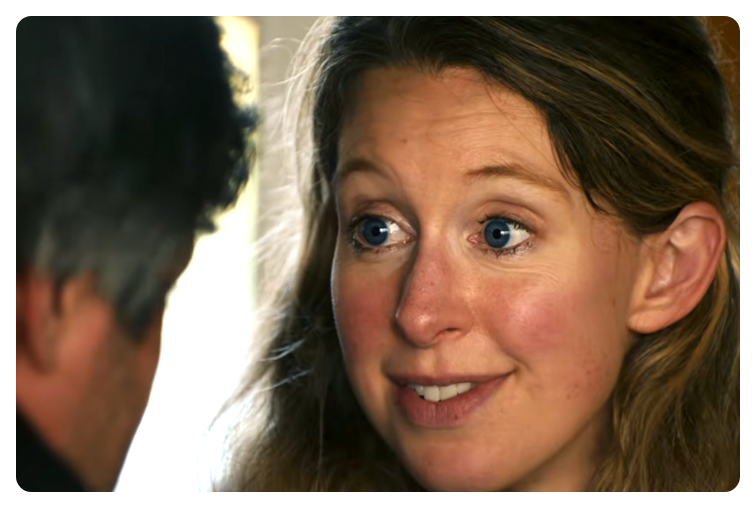
The new Elizabeth Holmes documentary, You Can See Everything, brings that danger into sharp focus.
The documentary from Nathan Fielder and Lance Oppenheim follows Holmes beginning 34 days before she reported to prison for defrauding investors over Theranos’s blood-testing technology. The teaser is chilling because it returns us to the core Theranos lesson: charisma, secrecy, and a hunger to believe can create a private reality where doubt becomes disloyalty and inconvenient facts become temporary obstacles.
AI is not Theranos.
It is real. It is useful. It is already changing how people work, learn, research, communicate, and create.
But the Theranos story remains relevant because it reflects a skill many Silicon Valley CEOs develop to be successful: the bending of objective reality. Elizabeth Holmes has spent her career doing it, many other technology CEOs do it, now the US President does it–and has been doing for a long time. All for a buck.
But AI is not destiny.
It is a tool: fast, powerful, and potentially extraordinary. It can amplify care, competence, and imagination. It can also amplify deception, extraction, bias, error, and control.
We have built systems of remarkable capability faster than we have built the cultural maturity, independent oversight, institutional courage, and practical governance needed to deploy them responsibly.
The right response is not panic.
It is transparency. Testing. Red-teaming. Data protection. Clear accountability. Human review where stakes are high. Independent audit. Honest measurement of value. And the willingness to say “no” when a technology is not ready, a claim cannot be verified, or the risk is being pushed onto people who did not consent to carry it.
So I raise this Black Magic No. 2 to the responsible ones: the researchers, builders, policy makers, analysts, educators, users, and leaders who understand that powerful tools demand more than excitement.
They demand stewardship.
Cheers. 🥃✨💻