Trident

- 1 oz Manzanilla Sherry
- 1 oz Cynar
- 1 oz Aquavit
- 2 dash Peach bitters
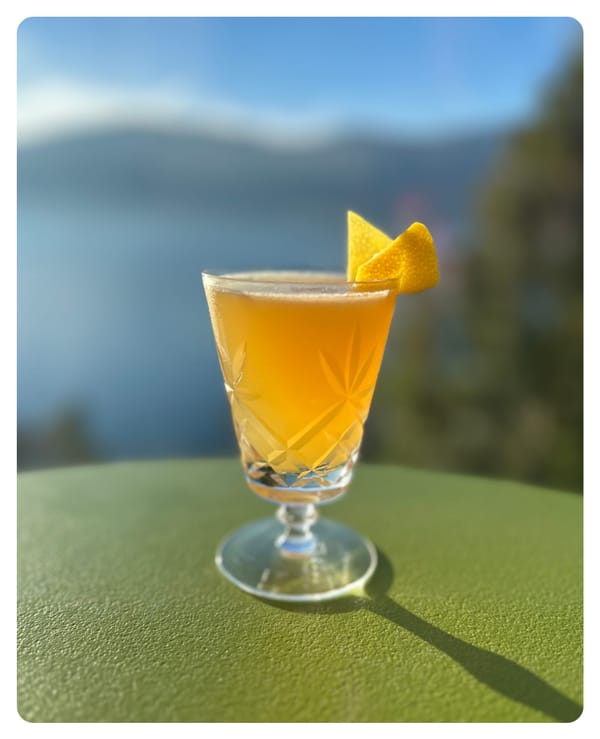
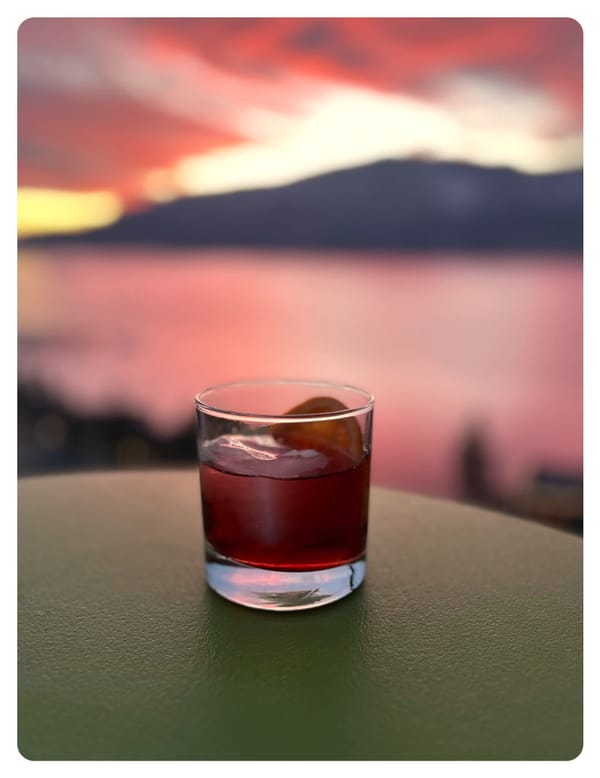
- Stir ingredients with ice, then strain into either a rocks glass with a large cube or serve up in a coupe (as above)
- Garnish with lemon zest expressed over the cocktail.
Happy Friday, friends!
As my Canadian education continues, so too does my cocktail education. And in the spirit of exploring drinks whose ingredients offer more together than they do apart, I’d like to introduce you to the Trident.
Robert Hess created this riff on the Negroni in 2002 at the Zig Zag Café in Seattle. It’s a cocktail with saltwater in its DNA: each component comes from a historic seafaring culture: Scandinavian aquavit, Italian amaro, and Spanish sherry. Even its name nods to that lineage: three equal parts, three maritime regions, and a subtle tribute to Poseidon’s three-pronged spear guiding sailors home.
I’ve featured Cynar, a carciofo amaro with a pleasingly bitter edge, several times now. But this is the first appearance on the blog for aquavit and for sherry.
Aquavit (or Akvavit in Danish) takes its name from aqua vitae—the “water of life.” First produced in Aalborg, Denmark more than 400 years ago, it remains a staple across Scandinavia. Distilled from potatoes or grain and redistilled with botanicals, it’s defined in the EU as at least 38% ABV and prominently flavored with caraway. Many varieties introduce dill, honey, whisky, or sherry for nuance. In the U.S., Linie is a common brand—aged at sea as it crosses the equator twice. I haven’t seen it in Canada yet, so I’m using a standout local option: Aquavitus from Okanagan Spirits Distillery, aged the old-fashioned way—rowed around Lake Okanagan a few times. 😜
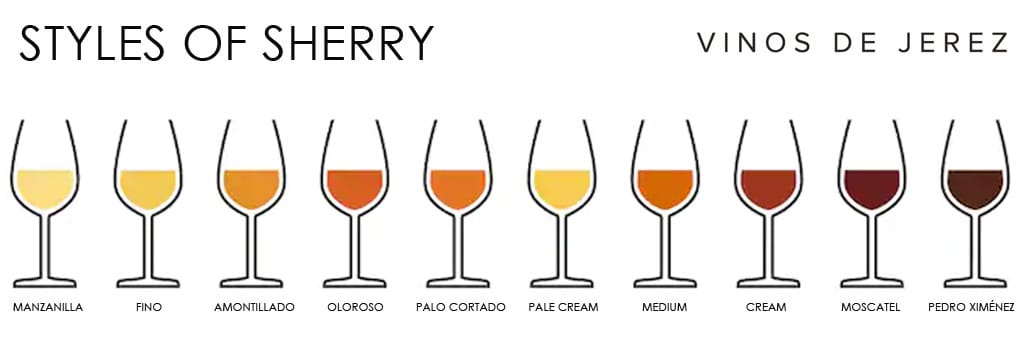
This week’s biggest learning curve came courtesy of sherry. As the chart above shows, the left side captures the dry styles and the right the sweet. All originate from 2–3 grape varietals grown in southern Spain’s hot climate and chalky albariza soil, but they diverge in their aging and fortification processes. (The video below serves as an excellent primer.)
I didn’t grow up with sherry in the house, but when I met my wife’s family in Kelowna, her British father enjoyed a small glass every evening. This tracks with history: after Sir Francis Drake raided Cádiz in 1587 and carried off nearly 3,000 casks of sherry, England became one of the drink’s most devoted markets. My father-in-law favored Cream Sherry, decidedly on the sweeter end.
For years I never really warmed to sherry myself. But many bartenders I admire—like Anders Erickson and The Educated Barfly—swear by it. So when I saw it in the Trident, I went hunting through my home bar and found a single open bottle in the fridge. It turned out to be an Oloroso, not a Manzanilla, which explained why my first attempt tasted unbalanced. If you’re experimenting with alternate sherry styles, it’s absolutely doable, but you’ll need to adjust proportions. With Oloroso I found that halving its share against the aquavit and Cynar brought everything into harmony.
My corrected version with Manzanilla sings. The bright lemon on the nose draws you into a duet between sherry’s natural sweetness and the sweet edge of Cynar, lifted by the peach bitters. As the cocktail spreads lazily across the palate, the bitter notes of Cynar and aquavit intermingle into a chorus of spice—caraway, artichoke, and more. A soft nuttiness returns on the finish, again touched by peach. Hess later revised his recipe to split the bitters between peach and orange; I haven’t tried it yet because I love what the peach alone brings, but I have no doubt the variation works beautifully.
Whichever ingredient you gravitate toward, the Trident offers something richer, sweeter, and more complex than you expect—an ideal companion anywhere north of the 49th parallel.
My education these past weeks hasn't been limited to cocktails. I've been learning some uniquely Canadian rhythms as well.
In the States, Christmas decorations typically go up after the long Thanksgiving weekend in late November—aside from those year-round diehards. When we lived in Northeast Portland, a few neighbor dads and I even created a tradition we called “Light-a-Palooza.” We’d send the wives and kids away, share a cooler of beer, and climb ladders in highly questionable ways. The last house on the list always got the worst light job. One year, someone’s Rudolph statue lost a fight with a drunkenly playful fist. Miraculously, we all survived.
But in Canada, Thanksgiving arrives in mid-October, which means all bets are off. On my mid-November evening dog walks, whole blocks in my Kelowna neighborhood are already glowing. I found myself thinking, It’s not even December, until I realized: early lights make perfect sense when winter snow is just around the corner. And frankly, the earlier warmth is welcome.
Last weekend also brought my first Grey Cup—Canada’s 112th, my first. For the uninitiated, the Grey Cup is the CFL’s Super Bowl, this year featuring the Saskatchewan Roughriders and the Montreal Alouettes, with Saskatchewan winning 25–17. The game looks similar to American football, but a few differences make the flow distinct: a larger field, only three downs, and more pre-snap motion. Thankfully, my brother-in-law—and the Google—answered my steady stream of questions. 💡🤣
And finally, I had my inaugural experience with curling in a country that, outside of Scotland, produces some of the sport’s most skilled competitors. Let me tell you: it’s much harder in real life than it looks on TV.
Stepping onto a curling sheet brings a moment of trepidation, especially for those of us without natural ice instincts. But between the grippy rental shoes and the pebbled ice, there’s more traction than you’d expect. The challenge comes when sliding out from the hack—the plastic slider under your lead foot is as slick as it gets. Most of us novices ended up flat on our backs or stomachs at least once. Thankfully, we didn’t have far to fall.
And if you’re not throwing, you’re sweeping, which helps extend the stone’s path toward the center of the “house.” This part was more manageable, though still a workout. The trick is moving with the rock while sweeping with enthusiasm, if not technique. Fortunately, my wife and I had patient coaches to guide us.
Change is hard. It demands adaptation. Most of the hurdle is mental; leaping from the comfortable known into the uncertain new. Einstein said, “Once you stop learning, you start dying.” And as my family and I continue learning the rhythms of Canada and our new home in British Columbia, I raise this Trident to all who’ve made similar journeys, whether across provinces, countries or oceans.
Cheers to learning and adapting in new places. 🥌🏉🥃