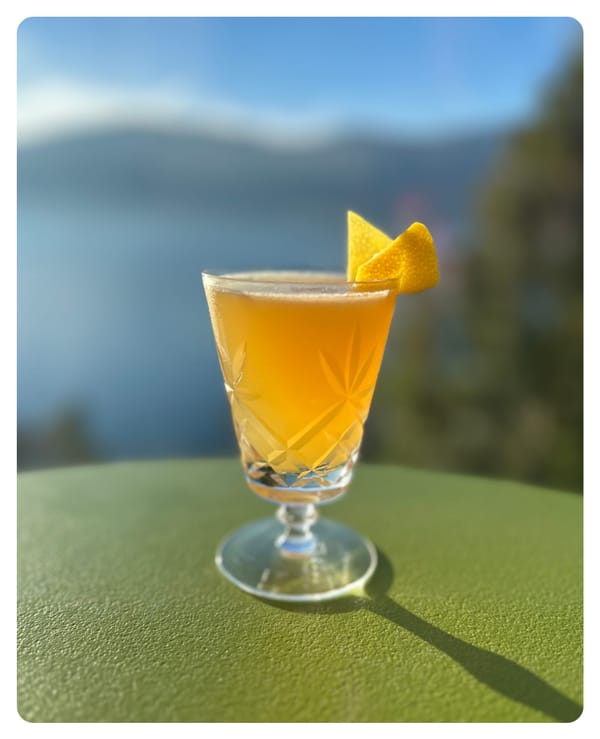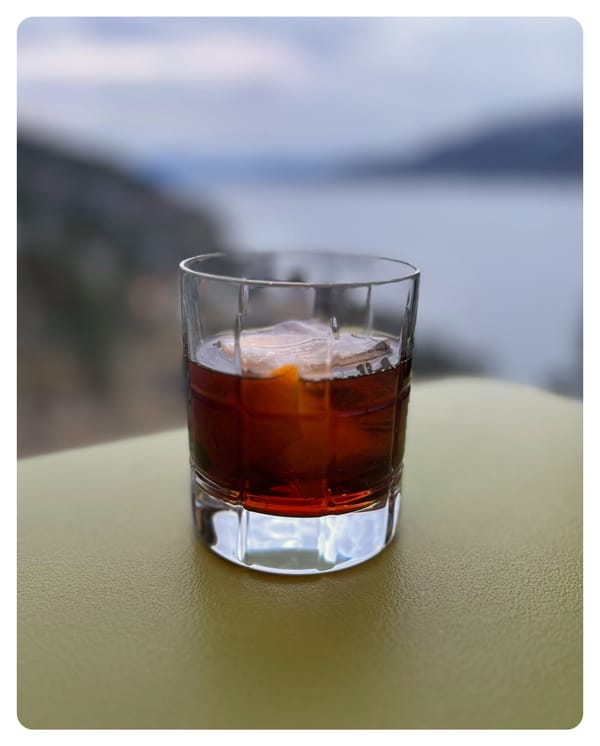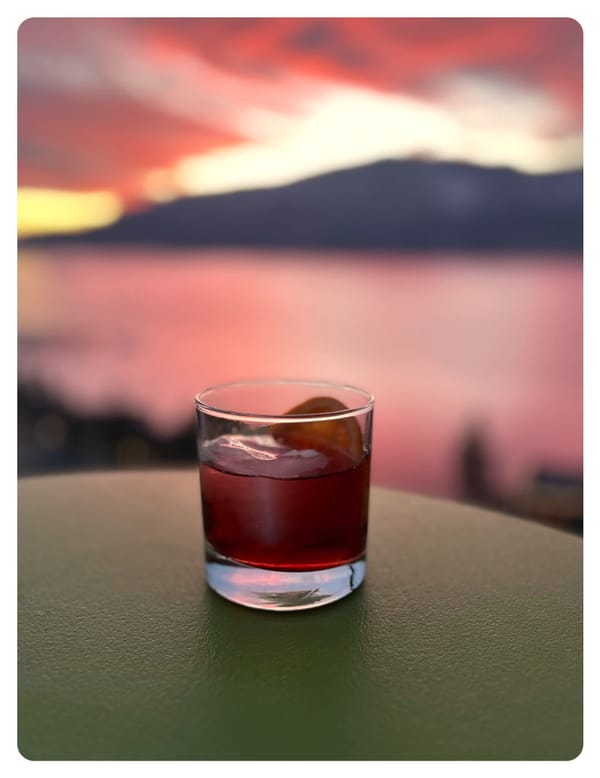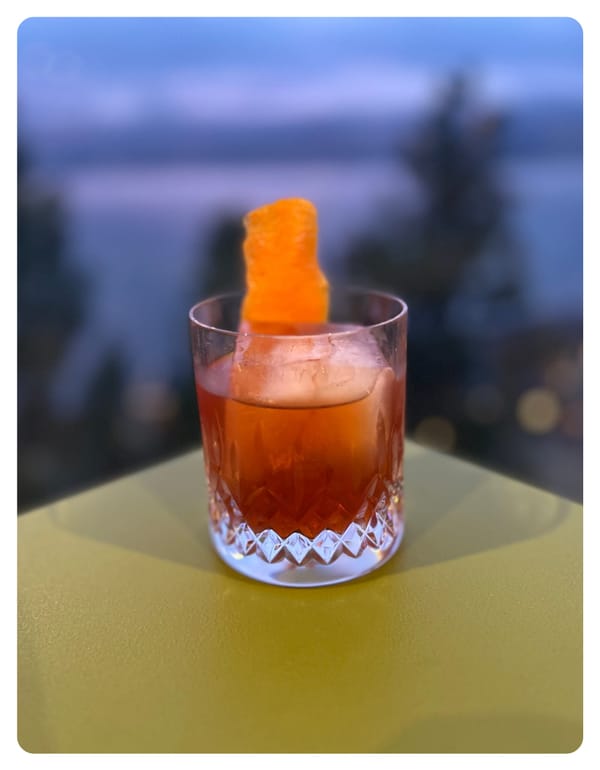
Toronto
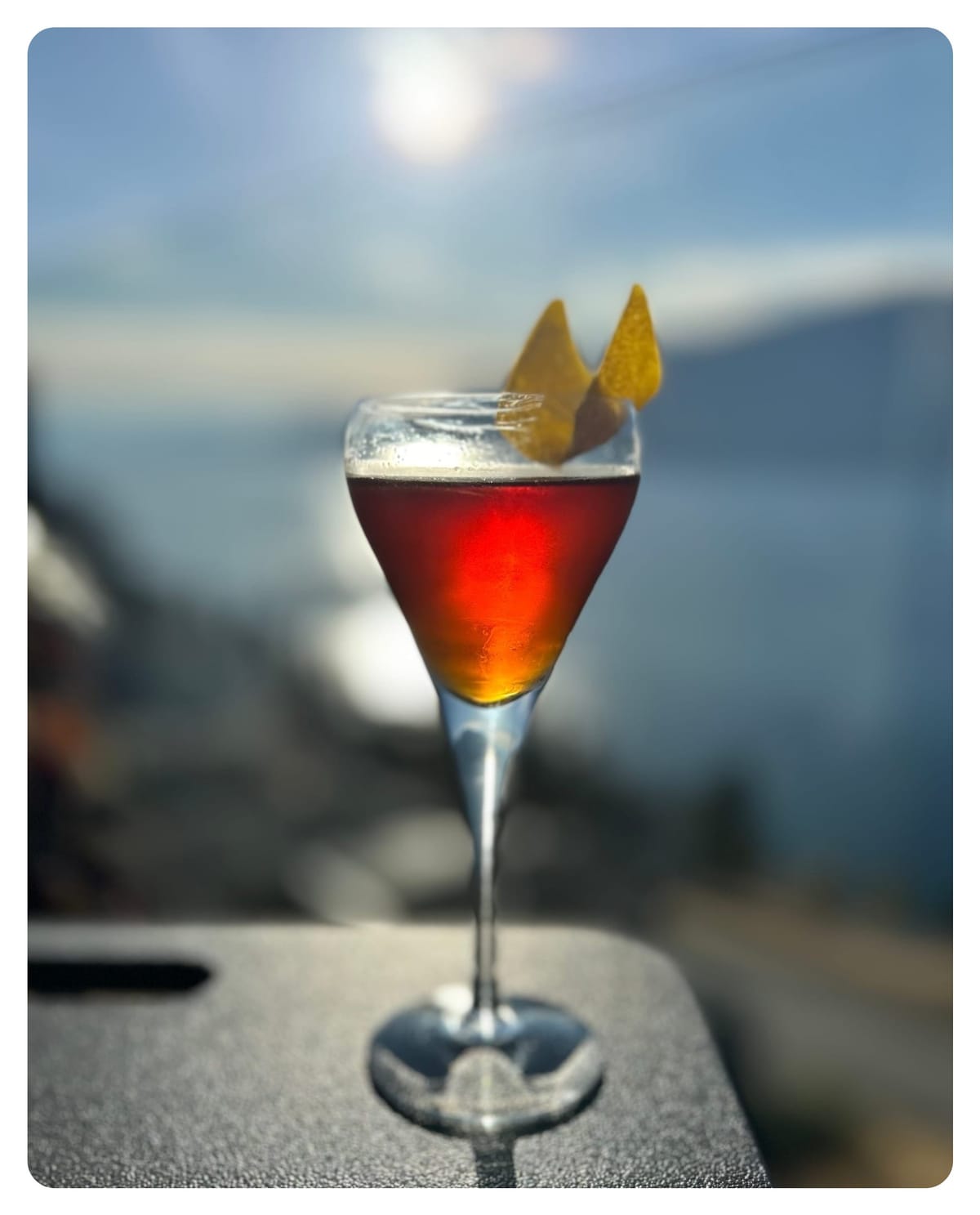
- 1 3⁄4 oz Canadian whisky
- 1⁄4 oz Fernet-Branca amaro
- 1⁄4 oz Maple syrup
- 1 dash Angostura Aromatic Bitters
- Stir with ice, strain into a cold coupe glass
- Garnish with an orange or lemon twist
Happy Friday, friends, and Happy Halloween! 🎃
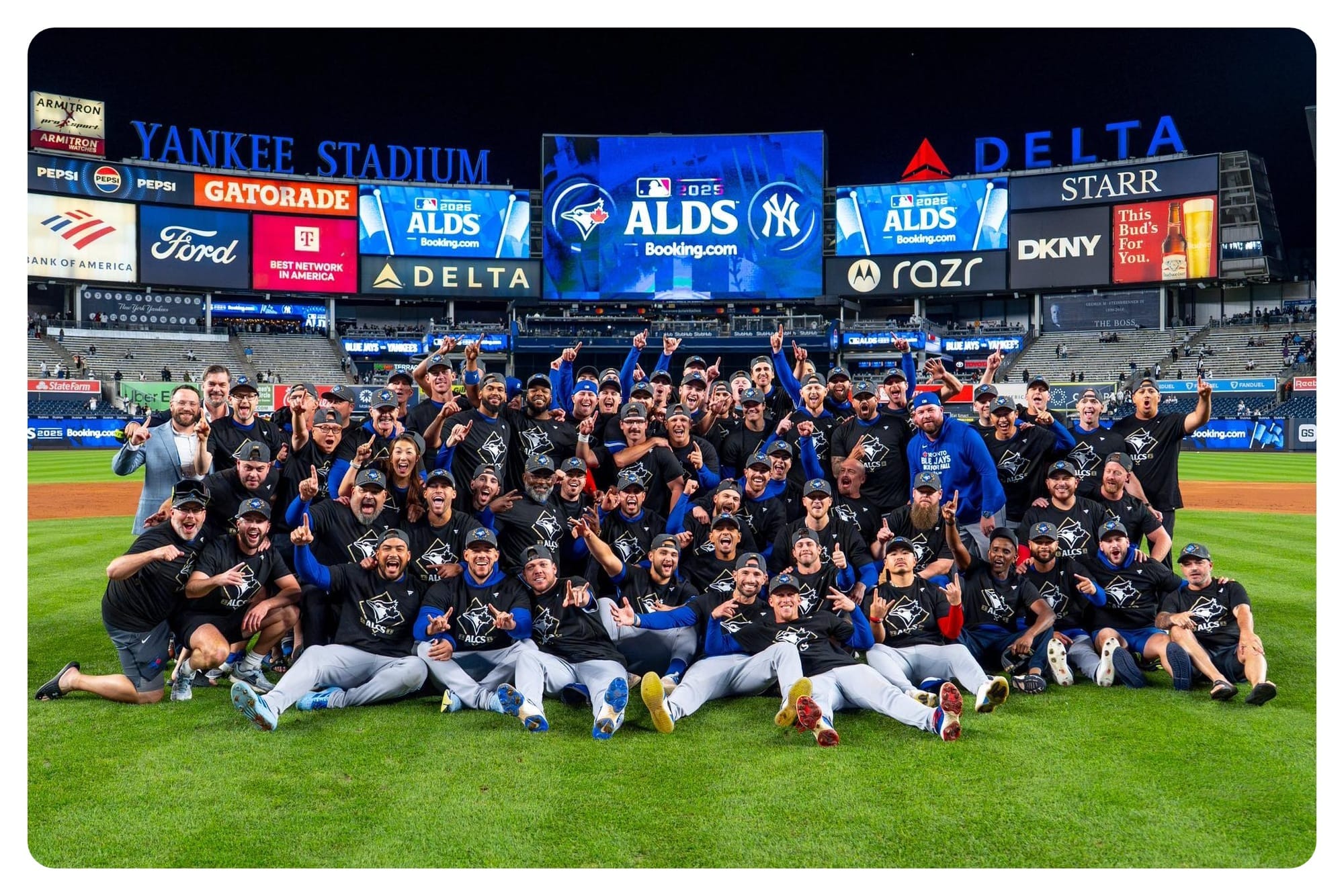
I’ve always been a baseball fan. Always have been. So with Canada’s team, the Toronto Blue Jays, in the World Series for the first time in 32 years, this week’s cocktail pick was a no-brainer: the Toronto.
The Toronto cocktail is one of those rare drinks that manages to bridge two worlds—part Manhattan, part Old Fashioned—depending on how you look at it (or how many you’ve had). Its polarizing modifier, Fernet-Branca, gives it just enough bite to wake up your palate while keeping the maple-sweet, whisky-smooth Canadian heart intact.
Fernet-Branca was born in Milan in 1845, created by Bernardino Branca as an herbal remedy. It landed in the United States in the early 20th century and, like a scrappy rookie, fought for relevance during Prohibition as one of the few “medicinal” spirits allowed on pharmacy shelves. Its intense, bitter, mint-and-herb flavor developed a cult following, first among San Francisco bartenders in the 1980s, and then across North America, where ordering a “Bartender’s Handshake”—a shot of Fernet—became a quiet nod of respect between industry peers.
The drink itself dates back to Robert Vermeire’s 1922 recipe, listed as the Fernet Cocktail, “much appreciated by the Canadians of Toronto” who were, ironically, under local Prohibition at the time. By 1930, William “Cocktail” Boothby rechristened it The Toronto Cocktail. And by 1948, the ratio of spirit to Fernet had shifted from a dauntingly bold 1:1 (think: dental rinse) to a far friendlier 3:1 with Canadian whisky. In 2006, Seattle bartender Jamie Boudreau helped repopularize the drink at a gentler 7:1, a ratio that lets the whisky and maple syrup shine while still keeping Fernet’s herbal backbone in play.
Truth be told, the Toronto drinks more like an Old Fashioned than a Manhattan. The maple syrup amplifies the whisky’s caramel sweetness, while the Fernet and bitters contribute complexity and spice. Choose your garnish according to the flavor notes you'd like to highlight: orange to amplify the caramel sweetness, or lemon to poke the complex bitterness. Served neat, it stays bold and balanced; the way a proper Canadian cocktail should.
Whatever your preferred ratio, the Toronto is unapologetically Canadian: polite on the surface, quietly confident underneath, and just a little bitter if you push it too far.
With the Blue Jays in the World Series this year, the Toronto was the obvious choice for this week’s Flavor Notes. It combines two of my favorite things—cocktails and baseball—in one perfectly stirred metaphor.
I’ve been a baseball fan for as long as I can remember. Growing up in Southern California with the Angels and Dodgers, I learned early that thanks to free agency, loyalty in baseball (and life) is a delicate thing. My dad’s work perks got us Dodger tickets twice a year, and with Anaheim Stadium close by, I could recite both teams’ starting lineups through the late ’70s with eerie accuracy. Then came 1982—Davey Lopes was traded at the start of the season, Steve Garvey left at the end, and I learned my first hard truth about employers and longevity.
In 1989, I moved north to Santa Cruz for college, just in time for the Bay Bridge Series between the Giants and the A’s—and the Loma Prieta earthquake that halted it. The 6.9 quake hit just before Game 3, killing 63, injuring thousands, and causing billions in damage across the Bay Area and my college home of Santa Cruz. Years later, I could still see parking lots paved with the old linoleum tiles from the shops that once stood there.
In 1995, grad school took me to Maryland, where I adopted the Baltimore Orioles—perennial underdogs in the cutthroat AL East. That same year, Cal Ripken Jr. broke Lou Gehrig’s consecutive games record. A few classmates and I caught a game at Camden Yards a few days before that historic night, basking in the electricity of the moment–the kind only baseball can deliver.
Fast forward to 2025: my family and I have resettled in Canada, and the Blue Jays are back in the World Series for the first time since 1993. I remember that series well–Paul Molitor had just joined the Jays from the Brewers (I was already a fan of his work). That roster was a dream lineup: Molitor, Joe Carter, Rickey Henderson, John Olerud, Devon White, Roberto Alomar–with Dave Stewart, Juan Guzman, and Al Leiter on the mound. Molitor’s performance earned him Series MVP, and in 2004, while in upstate New York for a wedding, I visited the Baseball Hall of Fame in Cooperstown the same year he and Dennis Eckersley were inducted.
For my wife, this year’s World Series carries its own symmetry. The last time the Jays were here was 1993—the same year she left British Columbia for grad school at Purdue. Her studies led her to D.C., where we met, married, and began our own adventure. Now, back in Canada three decades later, the Jays’ return to the World Series feels like a homecoming for both of us.
Of course, back in ’93, Canada had two Major League teams: the Jays and the Montreal Expos. I loved catching the Expos when they came to L.A.—Andre Dawson, Tim Raines, Gary Carter—legends, all of them. I played catcher myself growing up, and Gary Carter was my guy. Watching that team’s eventual demise was heartbreaking, a story now well told in the excellent Netflix documentary Who Killed the Montreal Expos.
Since 2004, the Blue Jays have stood alone as Canada’s sole MLB team. And in a time when U.S.–Canada tensions feel louder than the seventh-inning stretch, the whole country has rallied behind them. From ads to commentary to Jays caps on every corner, Canada’s cheering with one voice—if only to remind us that a nation united always plays stronger than a nation divided.
So heading into Game 6, with the Jays up three games to two, I’ll be raising a Toronto to toast Canada’s team. May they bring it home—for the country, for the fans, and for every bartender quietly cheering from behind the counter.
Cheers, friends, and go Jays go!