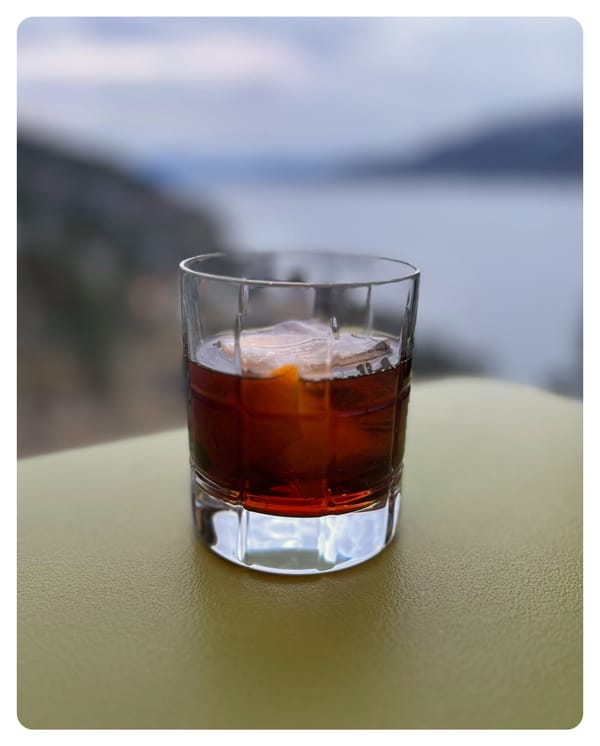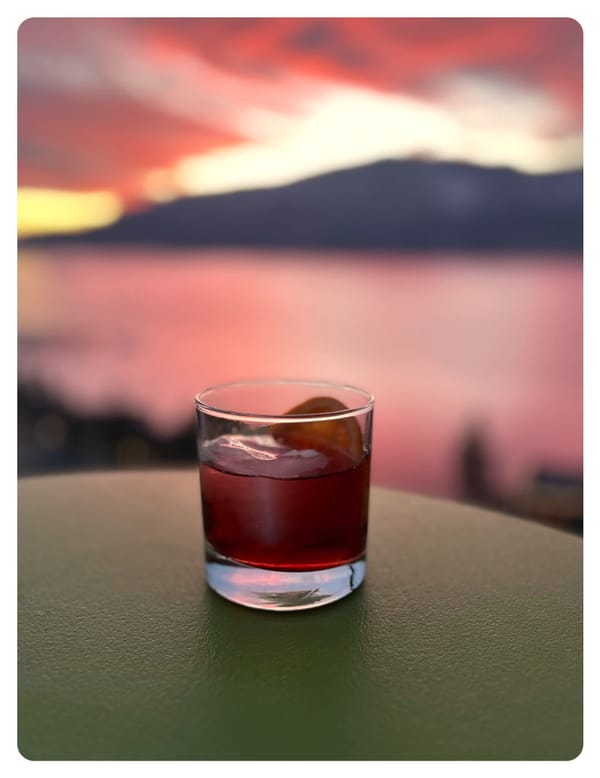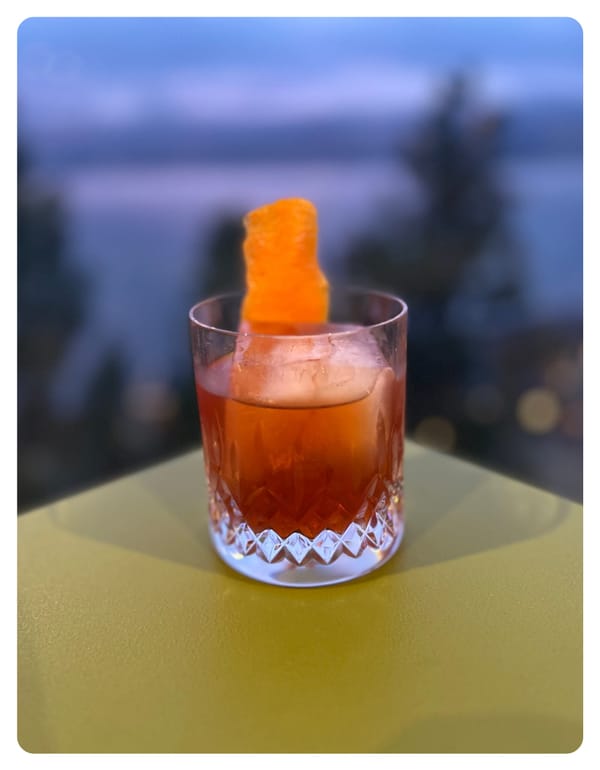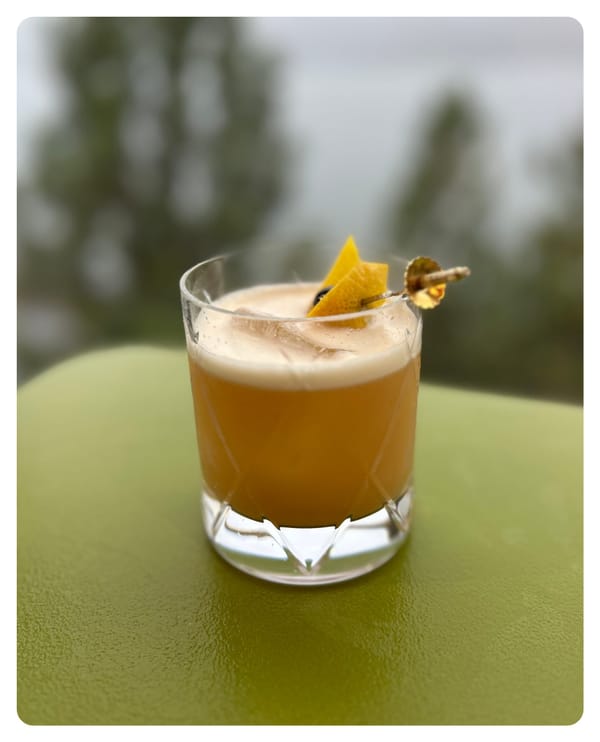
Revival
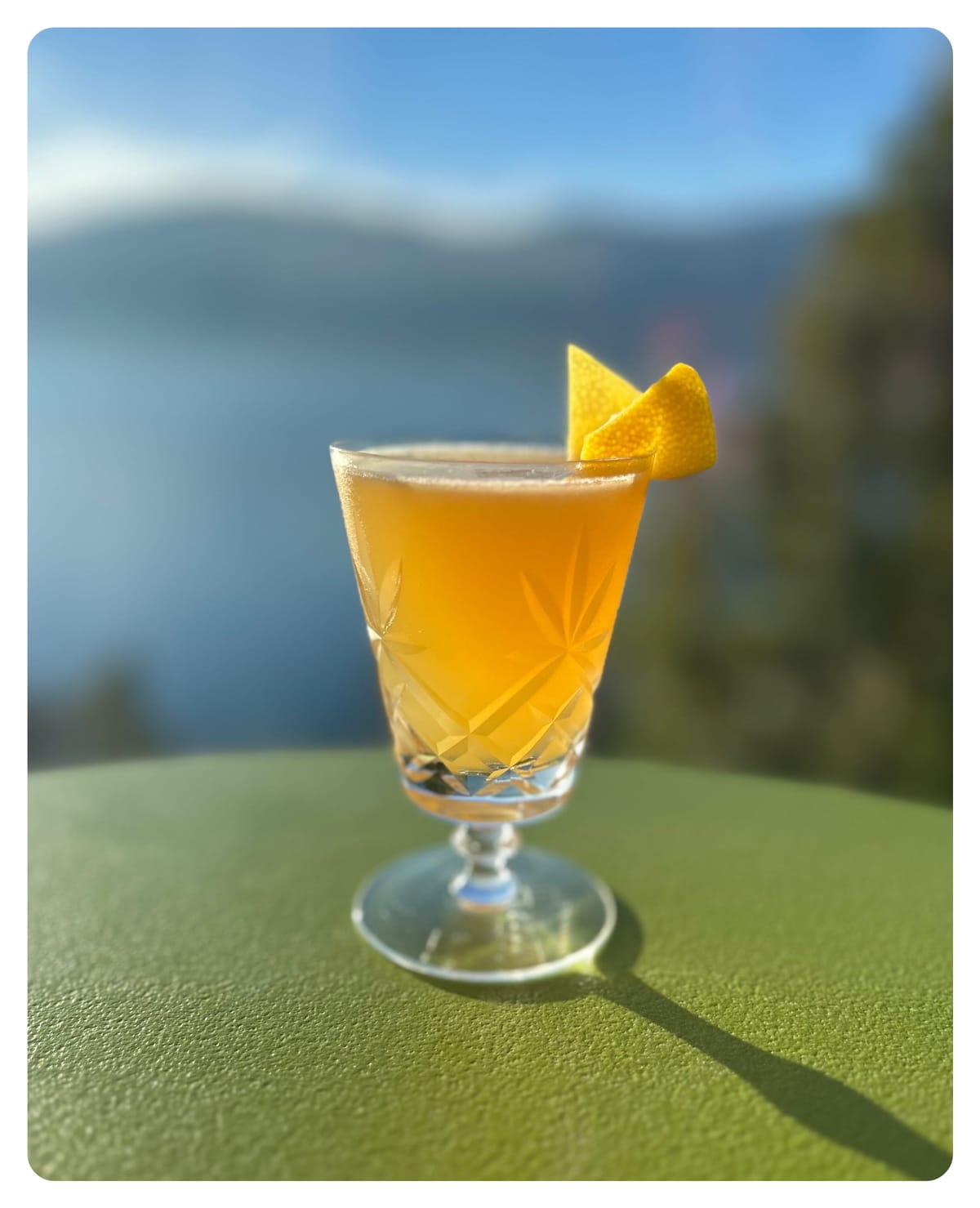
- 2 oz Rye whiskey
- ½ oz Bénédictine
- 1⁄2 oz Maraschino
- ¾ oz. Lemon juice
- ½ Bsp Absinthe
- Add all ingredients to a shaker with ice. Shake for 20-30 seconds and strain into a coupe glass
- Garnish with a lemon twist.
Happy Friday, friends!
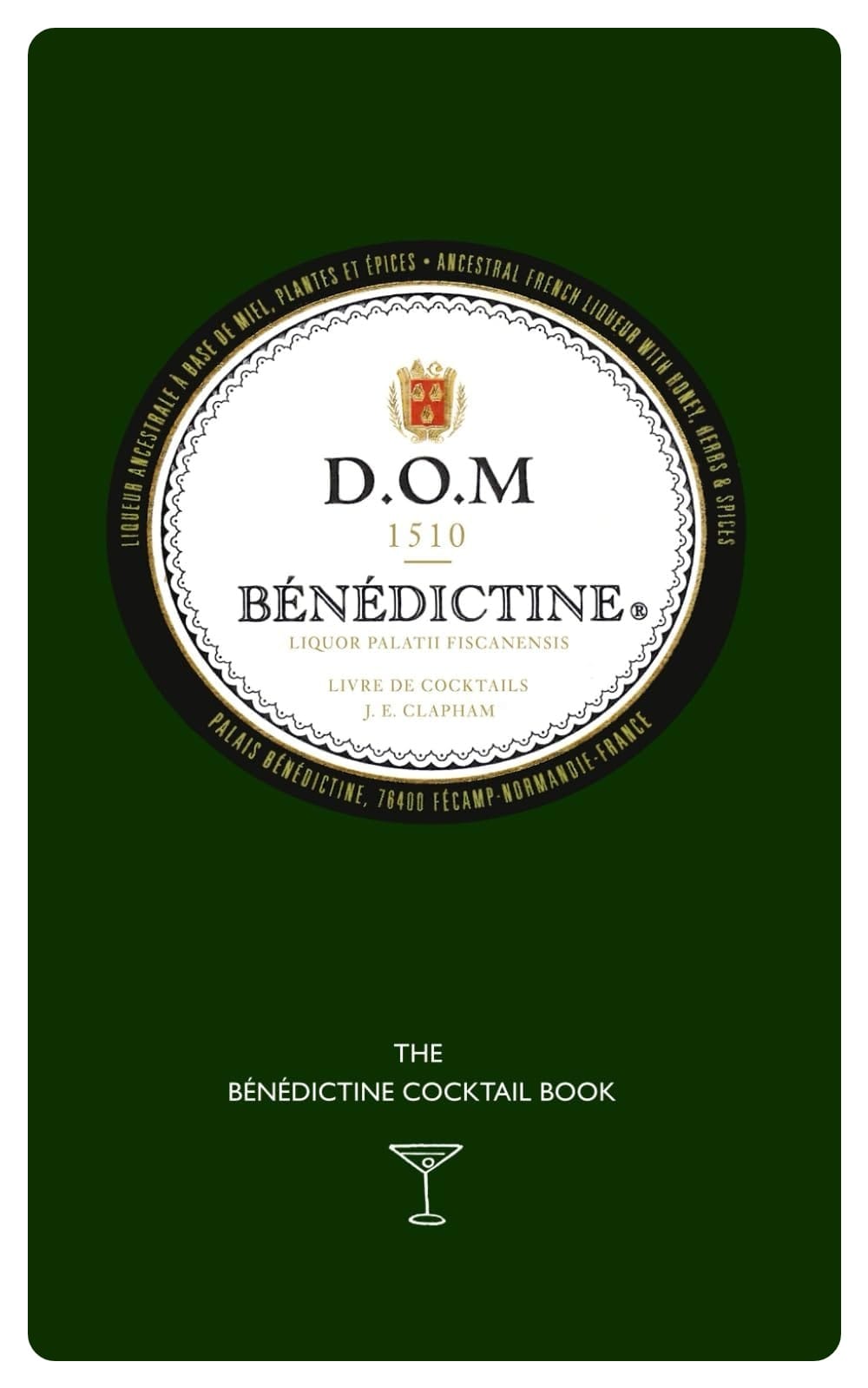
We’ve had a beautiful week of winter weather here in the Okanagan—bright sun, crisp air, and just enough chill to remind you it’s still January. I found myself craving something with real winter heft, but with enough brightness to reflect those clear blue skies. The cocktail that fit the bill comes from the now-closed Monarch Bar in St. Louis and appears in another of J. E. Clapham’s excellent volumes, The Bénédictine Cocktail Book.
Say hello to the Revival.
If you have even a passing familiarity with classic cocktails, you’ve likely encountered the Corpse Reviver. Corpse Revivers are a 19th-century family of “hair of the dog” drinks, named for their supposed ability to cure hangovers—or, as the name suggests, revive the dead. Early mentions appear in Punch magazine as far back as 1861, with formal recipes showing up by the 1870s. The most famous variation, Corpse Reviver #2, was popularized by Harry Craddock in The Savoy Cocktail Book (1930) and combines gin, Cointreau, Lillet Blanc (or quinquina), lemon juice, and a rinse of absinthe.
I can’t help but imagine the characters of The Great Gatsby reaching for these after one of Jay Gatsby’s ill-advised marathon parties—potent, citrus-driven, and herbal enough to feel medicinal.
The Revival takes that same structural model—one base spirit, two modifiers, lemon juice, and a dash of something assertive—but modernizes it in important ways:
- Gin is swapped for rye whiskey, adding warmth and spice better suited to winter.
- Lillet Blanc gives way to Bénédictine, a richer, sweeter herbal liqueur that complements rye beautifully.
- Cointreau is replaced with Luxardo Maraschino, shifting the sweetener from orange to cherry.
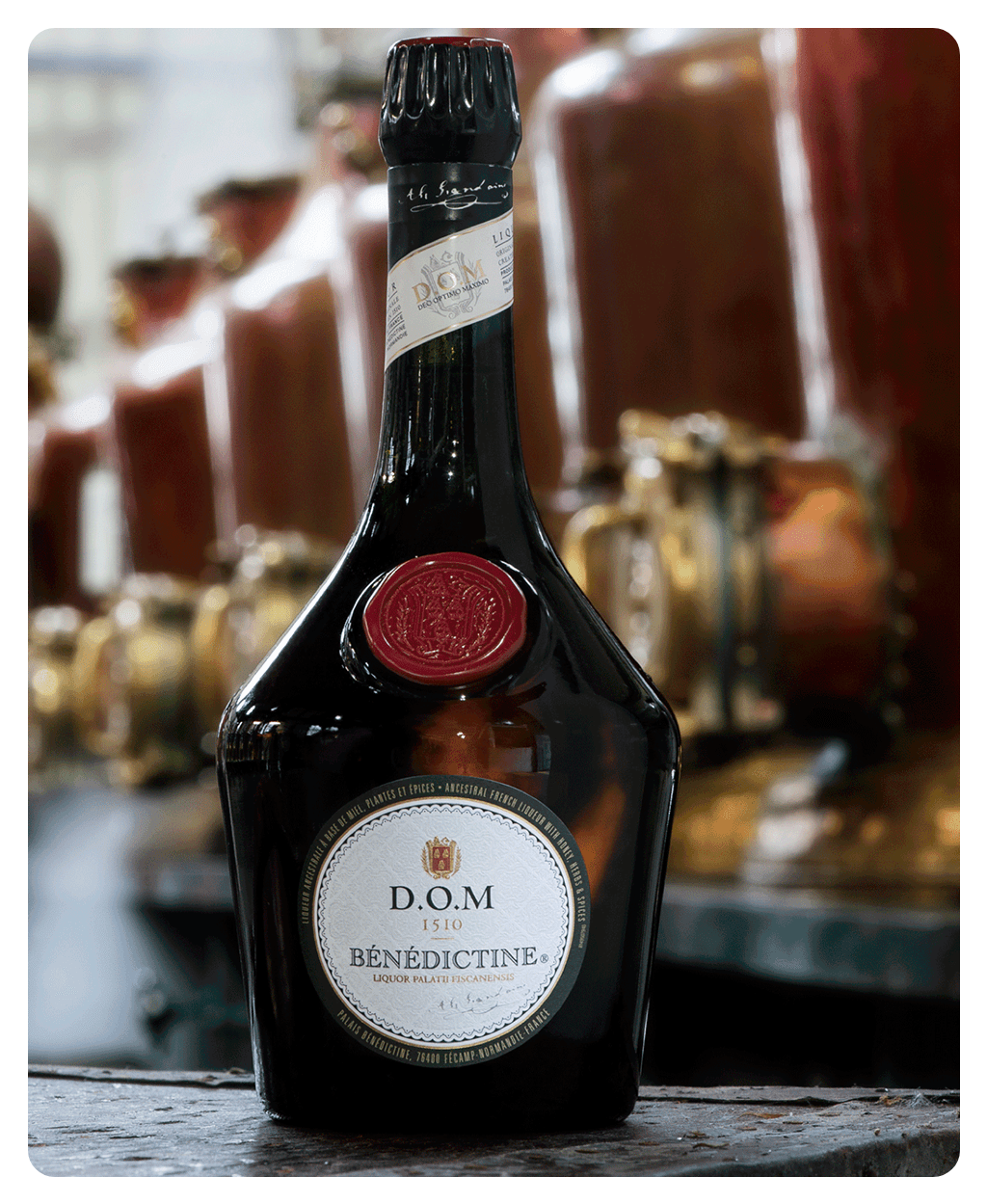
Both Bénédictine and Maraschino are newcomers to Flavor Notes, so they’re worth a brief introduction.
Bénédictine is a golden-amber French herbal liqueur made from a closely guarded blend of 27 botanicals. Its flavor profile spans herbs, baking spices (cinnamon, clove, nutmeg), citrus, honeyed sweetness, vanilla, and subtle floral notes from ingredients like angelica and hyssop. Developed in the 19th century by Alexandre Le Grand—drawing inspiration from Benedictine monastic recipes—it’s a staple in New Orleans classics like the Vieux Carré and La Louisiane and an excellent winter warmer.
Maraschino liqueur exists in many forms, but the version most people recognize is Luxardo Maraschino, easily identified by its straw-wrapped bottle. Distilled from Marasca cherries, it delivers flavors of sweet cherry, almond, vanilla, and stone fruit, with faint chocolate and nutty undertones. One practical tip: buy the 375 ml bottle. The full-size 750 ml is a storage nightmare.
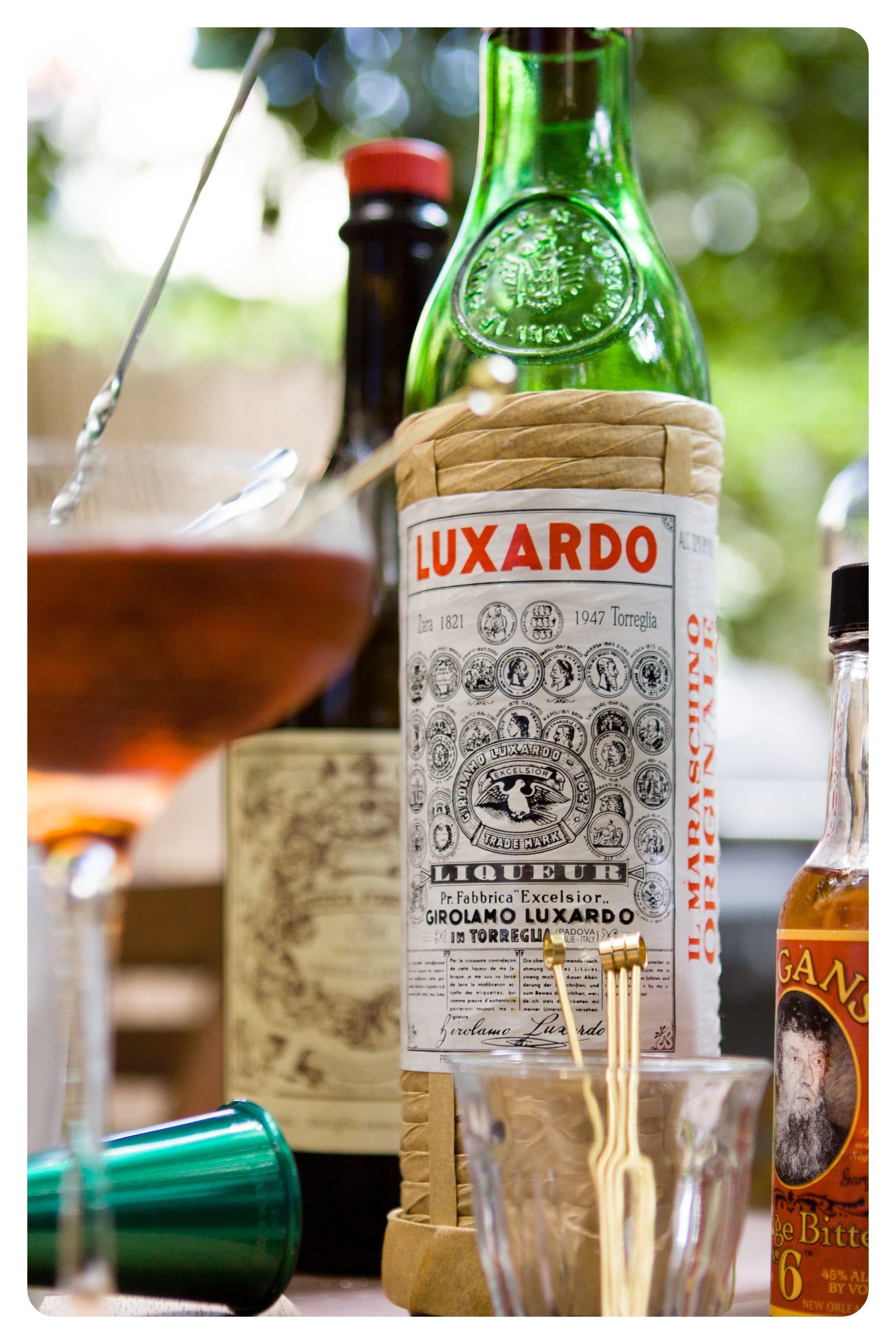
What I particularly love about both the Revival and Corpse Revivers more broadly is the restrained use of absinthe. Despite the brightness from lemon and the sweetness of the modifiers, that whisper of anise—used sparingly—adds a grounding bitterness that reminds you there’s a limit to the sweetness. For this drink, I’m using Taboo Genuine Absinthe from Okanagan Spirits, the first authentic absinthe distilled in Canada.
On the nose, the lemon garnish leads, quickly followed by bright citrus aromatics. On the palate, the rye’s spice arrives first, flanked by the herbal sweetness of Bénédictine and the nutty cherry notes of the Maraschino. As those settle, the lemon reasserts itself, joined by a subtle anise note from the absinthe. It’s lively, layered, and remarkably cohesive—a winter cocktail that offers both warmth and lift.
The Revival is the kind of drink that boosts your spirits while reminding you why balance matters, especially in mid-winter north of the 49th parallel.
But the name of this cocktail also points elsewhere.
This week, we’re sipping a Revival while thinking about the revival and rejuvenation of our dog, Keenai, who is now one week out from knee surgery.
Our family has been a dog family from the beginning. My wife came into our relationship with her dog, Kirby, whom she adopted in graduate school, and we’ve had two—sometimes three—dogs in our household ever since.
Keenai is our current medium-sized, mid-life dog: about 65 pounds and five years old. He plays hard. Somewhere along the way, that enthusiasm led to a partial tear of his cranial cruciate ligament (CCL)—the canine equivalent of a human ACL injury. It wasn’t catastrophic, but it was enough to cause pain and instability.
Since moving to Canada, we noticed he was stopping more frequently on walks, so we took him to our local veterinarian and then to a specialist. The diagnosis was clear. A CCL tear destabilizes the knee joint, leading to pain, inflammation, cartilage damage, and progressive arthritis if left untreated. Over time, it can significantly limit a dog’s mobility and quality of life.
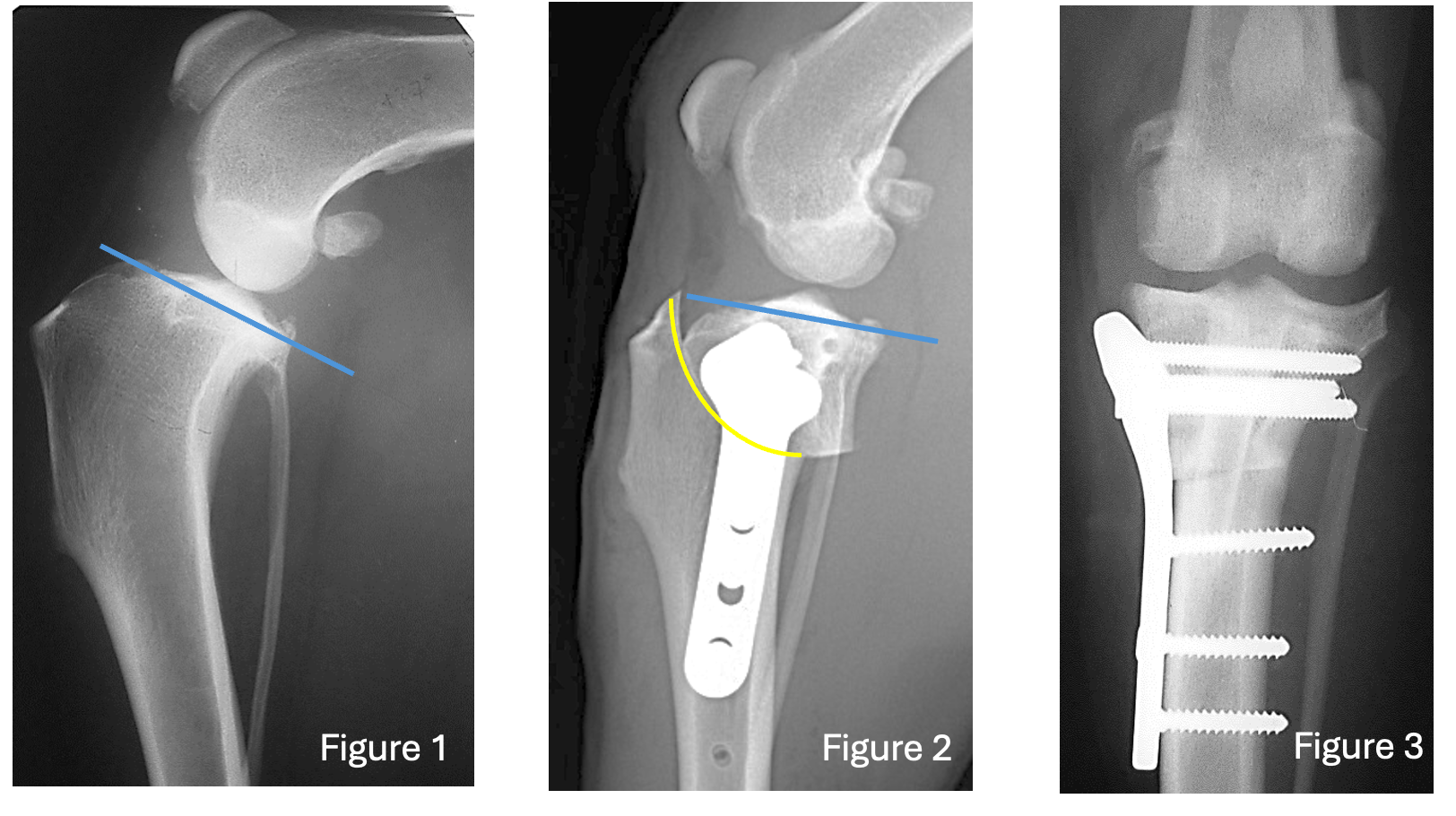
Unlike in humans, a dog’s CCL cannot be repaired directly—it lacks its own blood supply. The recommended solution was a surgical procedure known as a TPLO: Tibial Plateau Leveling Osteotomy.
Rather than replacing the torn ligament, TPLO changes the mechanics of the knee entirely:
- The surgeon makes a controlled curved cut in the top of the tibia.
- That section of bone is rotated to change the angle of the tibial plateau.
- A metal plate and screws hold everything in place while the bone heals.
By leveling the slope of the tibial plateau, the knee no longer relies on the damaged ligament for stability. The result is restored function, reduced pain, and a slower progression of arthritis.
TPLO is widely considered the gold standard for medium to large dogs, particularly those with active lifestyles. In many ways, it’s a correction for generations of breeding that placed increased mechanical stress on dogs’ rear legs.
Thankfully, Keenai is healing well. He was an exemplary patient during the first week—my wife an exceptional nurse—and is already eager to test the limits of his eight-week recovery plan. A short walk to the end of the street yesterday may have been a touch ambitious, judging by his unusually quiet afternoon, but his appetite to recover is a good sign.
We’ve also been deeply impressed with our veterinary care here in Kelowna. We’ve been fortunate with vets everywhere we’ve lived, but Canadian veterinary care seems to add an extra layer of calm, kindness, and reassurance.
So tonight, I raise this Revival to our pets and the people who care for them. May our animals continue to light up our lives, and may their healers help mend the inevitable wear and tear that comes from living fully.
Cheers. 🍁🐕🦺🥃