Growing Old and Dying Happy is a Hope, Not an Inevitability
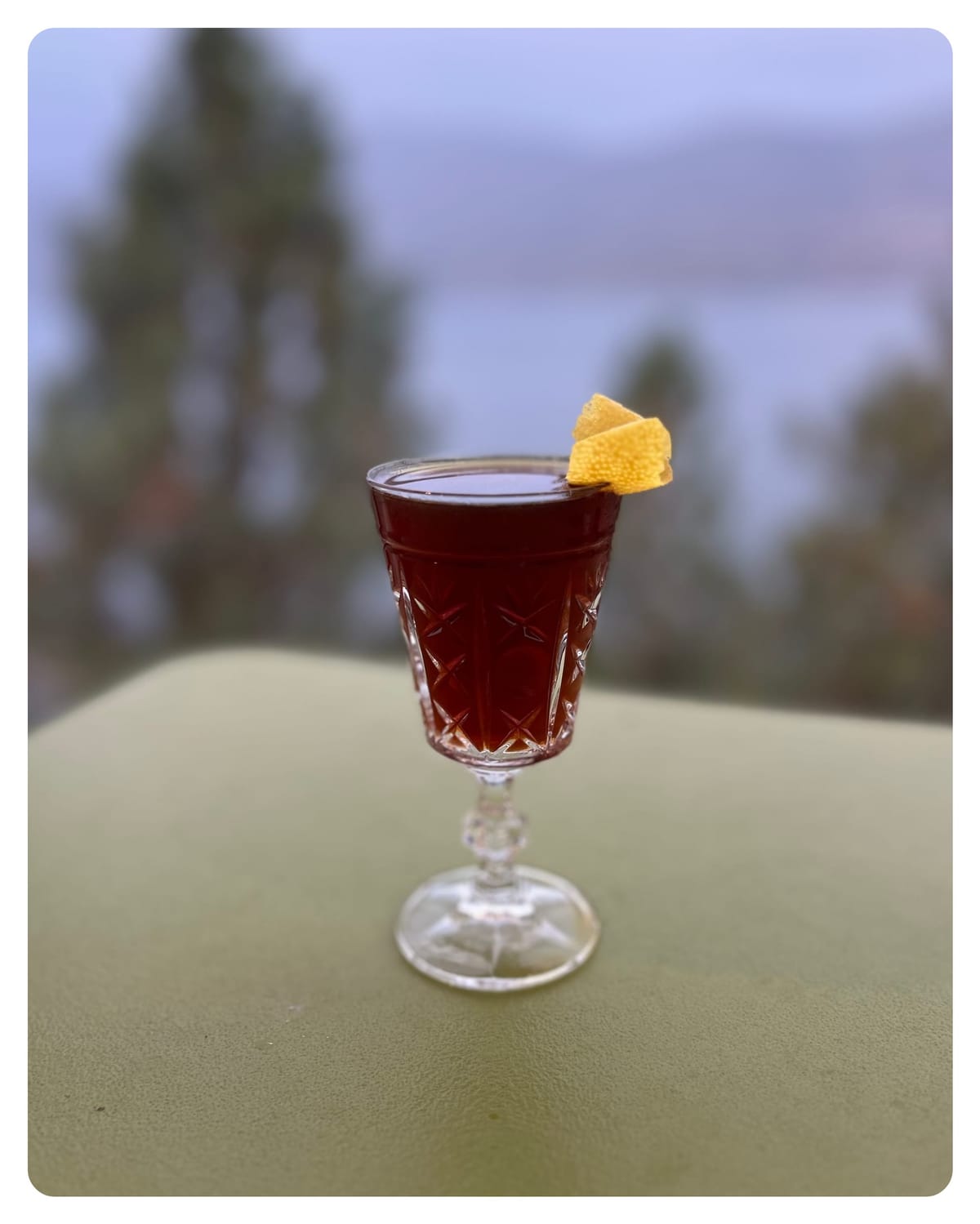
- 1⁄24 oz Absinthe rinse
- 2 oz Cynar
- 1 oz Straight rye whiskey (100+ proof)
- 4 Lemon peels
- 6 drop 25% Saline solution
- Express 4 lemon peels to release oils into a mixing glass and drop zests in.
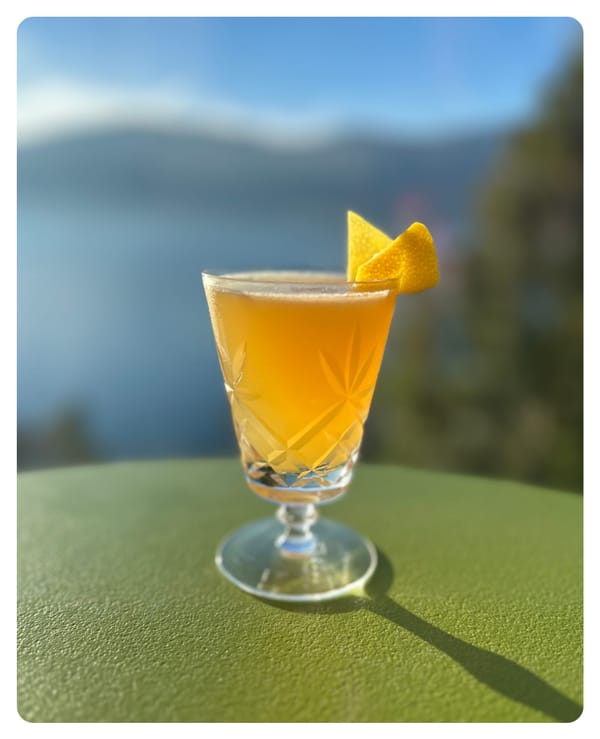
- Regal stir ingredients and lemon peels with ice, then strain into absinthe rinsed coupe
- Garnish with lemon twist expressed over the cocktail.
Happy Friday, friends!
After the conclusion to the 2025 World Series last weekend where the Los Angeles Dodgers emerged victorious over Canada’s team, the Toronto Blue Jays, I sought a cocktail this week that most represents sorrow, dreams dashed, and hopes unfulfilled.
The cocktail I found also has the longest name I’ve ever seen: Growing Old and Dying Happy is a Hope, Not an Inevitability.
Besides giving me the opportunity to drink my sorrow away, it also features some of my favorite ingredients: rye whiskey, Cynar amaro, and a hint of absinthe from the rinse. The drink was created by two bartenders from Cure in New Orleans, who contributed the recipe to Rogue Cocktails—an underground effort so elusive you can barely find a PDF reference online. The team later published one of my favorite cocktail books, Cure, named after their New Orleans bar.
Much like Eeyore’s Requiem from a few weeks ago, this cocktail inverts the classic structure away from the base spirit and into the bitter amaro modifier. In this case, Cynar–an amaro introduced in 1952 and made from 13 herbs and spices, including artichoke leaves as its defining ingredient–becomes the base spirit, letting its complex bitterness take center stage. Fittingly, its early marketing slogan was: “Cynar, against the stress of modern life.”
Cynar is supported by a high-proof rye whiskey, grounding its bitterness with spice and sweetness. I discovered bourbon in graduate school but came to rye much later. On a milestone birthday trip to Kentucky in 2022, I learned that both 51%+ and nearly-100% ryes share similar sweet tones drawn from very different places: corn’s warmth versus rye’s grassiness. In this cocktail, I’m using a 51% rye here: the kind that whispers sweet nothings to your tastebuds.
And then there’s the absinthe rinse—a New Orleans hallmark I’ve come to love through Sazeracs and La Louisianes. It’s the ghost in the glass, haunting the flavor without overpowering it.
The technique of regal stirring the four lemon peels ties it all together. Regal stirs (and their shaken counterparts) date back to the mid-19th century, revived in the early 2000s by the innovators at Milk & Honey in New York. Rather than floating citrus oils on top, you stir them directly into the cocktail, infusing brightness without dilution. The result is an aromatic depth that feels alive.
Sipping the cocktail, the lemon on the nose invites your palate into a conspiracy. On one hand, the saline softens the Cynar’s bitterness, leaving a lingering note of cola or root beer. On the other, the rye and absinthe intertwine into a faint sweetness, lifted by citrus light. The maths doesn’t math (as the Brits say); how these seemingly discordant ingredients resolve into harmony is pure alchemy.
Between the Cynar, absinthe rinse, and lemon regal stir, Growing Old and Dying Happy is a Hope, Not an Inevitability becomes the embodiment of bittersweetness: grief and gratitude, sorrow and satisfaction, all in one sip.
Speaking of loss, that was exactly what my wife and I felt at the abrupt end of Game 7: a double play in the bottom of the 11th inning, Alejandro Kirk’s broken-bat squibble straight to Mookie Betts with the bases loaded.
Mouths ajar. Eyes misting.
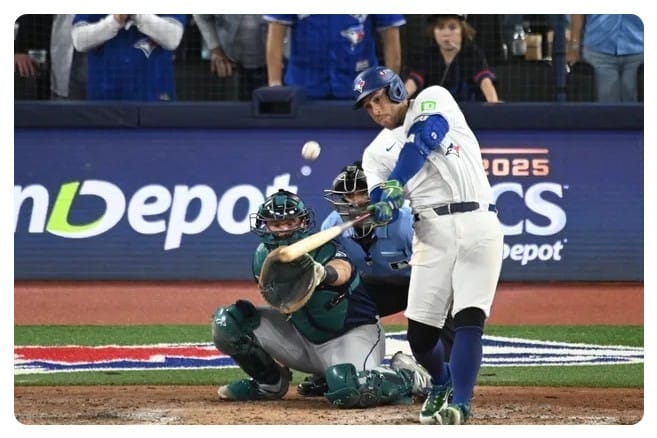
The Blue Jays’ postseason run had been nothing short of cinematic. After beating the Yankees three games to one to clinch the American League East, they found themselves down in the ALCS 0–2 to the Seattle Mariners. But in classic Jays fashion, they rallied to tie the series, including a 13–4 blowout in Game 3. Seattle forced a Game 7, but the Jays–boosted by George Springer’s seventh-inning, three-run homer–punched their ticket to the World Series.
Then came the Dodgers.
The Jays opened with authority in Toronto, winning 11–4, only for L.A. to roar back and take the next two. Game 3, the 18-inning marathon, ended with Freddie Freeman finally driving one over the wall after hours of near-misses—a walk-off that felt scripted by Olympus itself.
Toronto responded, taking two straight at Dodger Stadium to go up 3–2. The Dodgers, ever the foil, forced Game 7 back in Toronto.
“Mad" Max Scherzer faced MLB’s unicorn, Shohei Ohtani. Scherzer outlasted him—Ohtani was pulled in the third after Bo Bichette’s three-run homer. The bullpens traded blows into extra innings until Will Smith’s solo home run in the 11th sealed Toronto’s fate.
Yet like this cocktail, the Series defied logic. Baseball, like life, isn’t math—it’s myth.
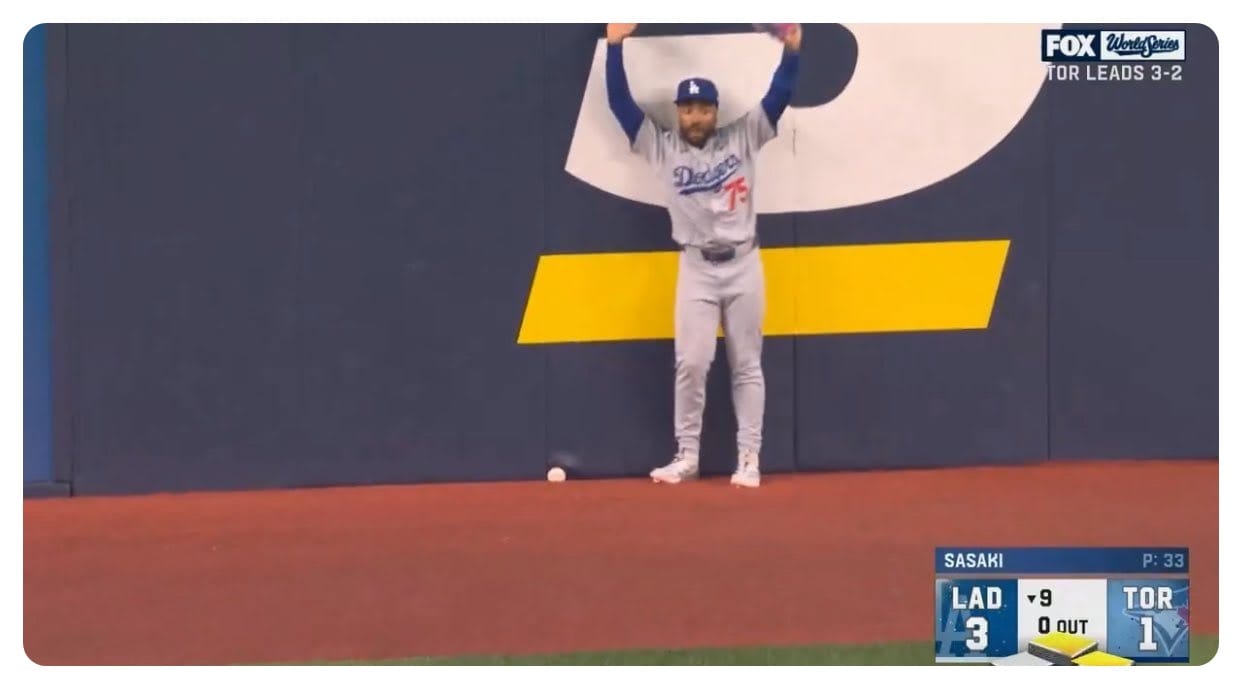
The lodged ball Addison Barger hit that should have scored a run…
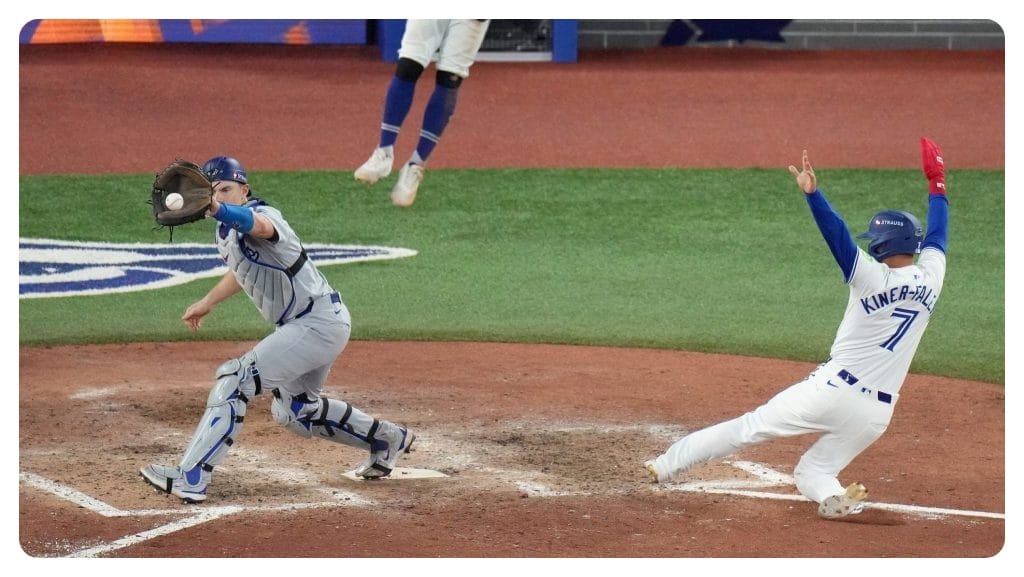
The split-second when Will Smith pulled his foot off home plate as Isiah Kiner-Falefa slid instead of running through…
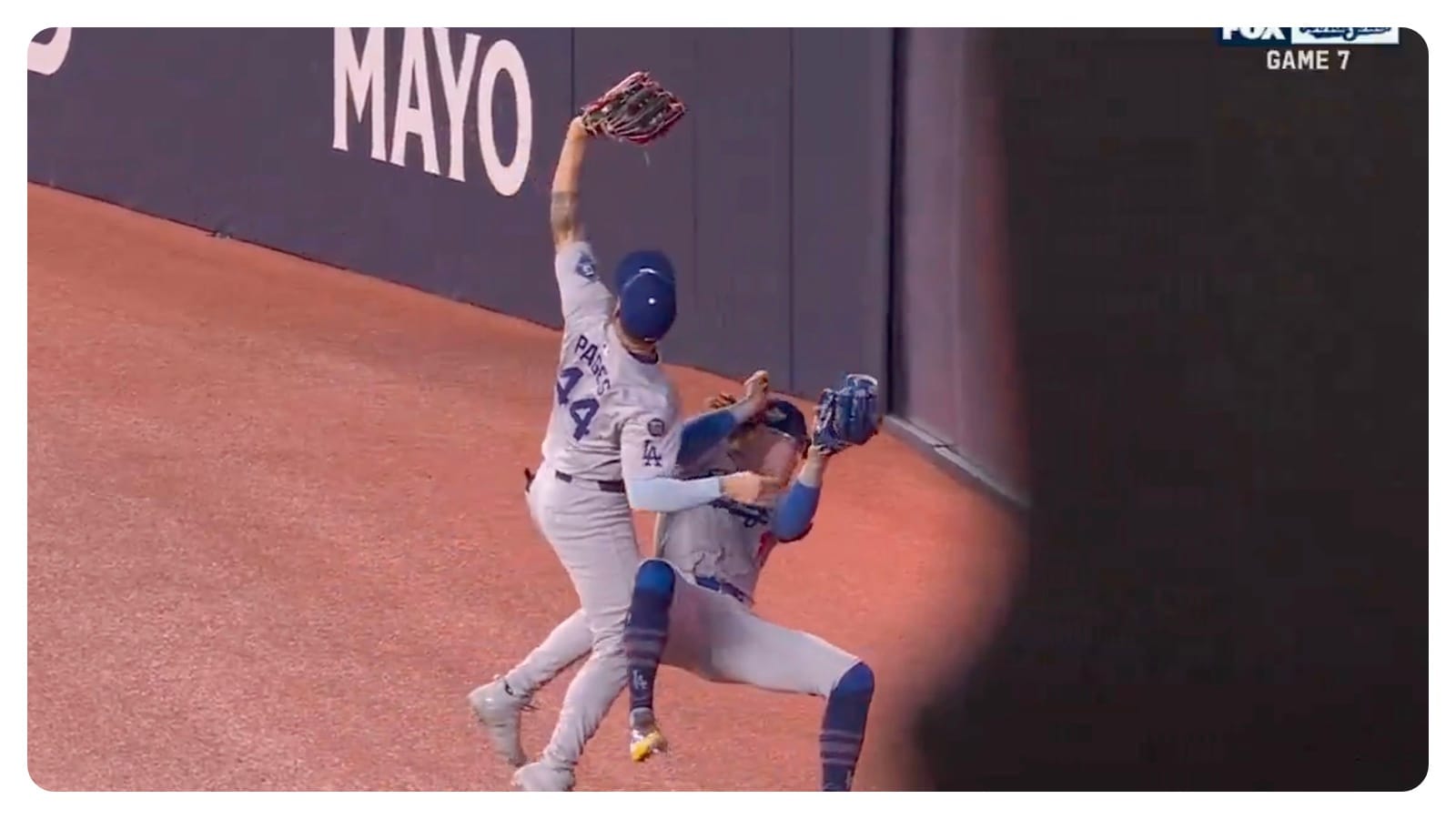
The inconceivable pop-fly catch by Andy Pages over a tumbling Kiké Hernández…
Moments like these made the Series feel touched by gods, fate, or sheer absurd luck.
This Series is going down as one of the greatest World Series of all time, in part because legends were born:
- Addison Barger hit the first pinch-hit grand slam in World Series history.
- Ernie Clement broke the record for most hits in a single postseason (30).
- Vladimir Guerrero Jr. was as valuable for his glove as his bat.
- And 22-year old Trey Yesavage became the youngest pitcher with 10+ strikeouts in a World Series game–earning more World Series strikeouts than regular-season strikeouts.
Small wonder that several of them, now free agents, have chosen to return. Bo Bichette and Shane Bieber have already exercised their options.
For Canada, the Blue Jays’ run wasn’t just baseball. It was a unifier, a reminder that sport can forge belonging even across a fractured world.
So while the Dodgers lift the trophy, I raise my coupe to the Jays and to this cocktail: a bitter, luminous reminder that Growing Old and Dying Happy is a Hope, Not an Inevitability. But hope–like fandom–has always been the point.
Here’s to next season. ⚾🥃