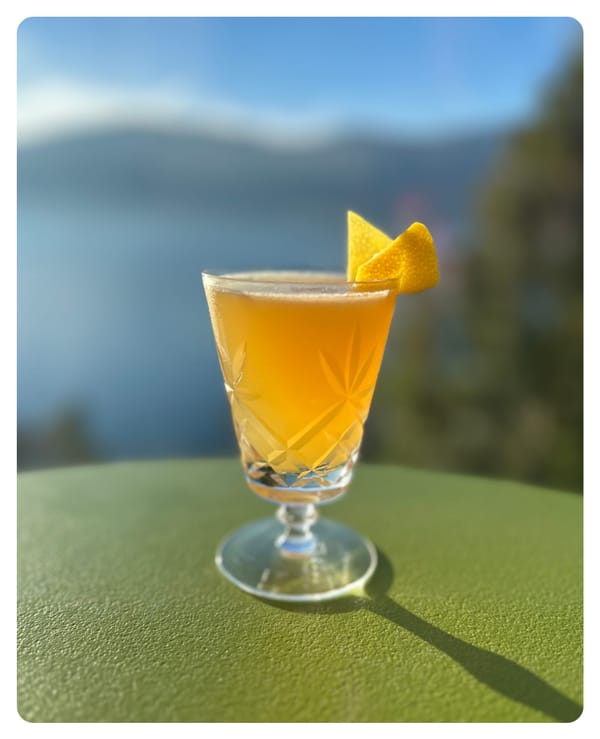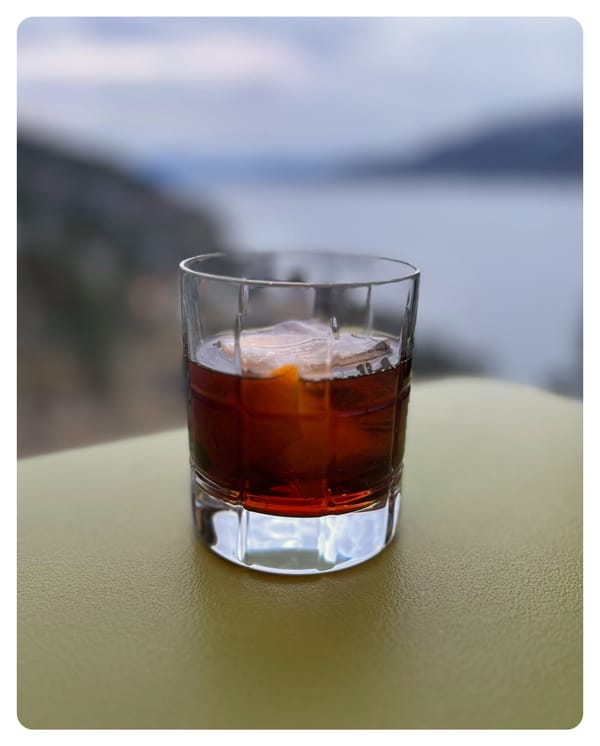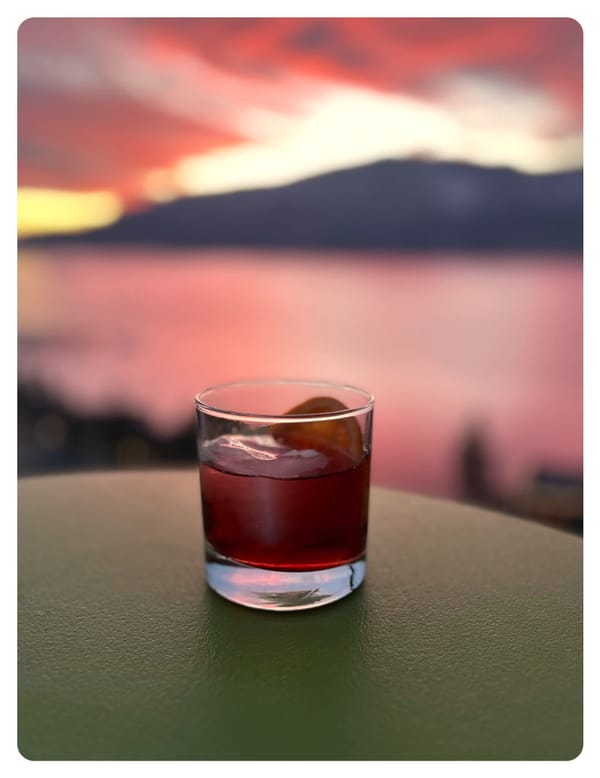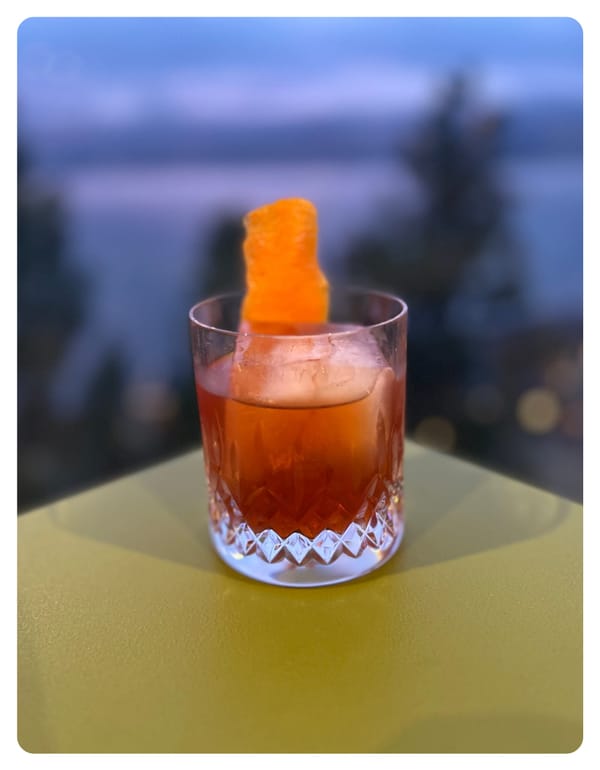
Cooper's
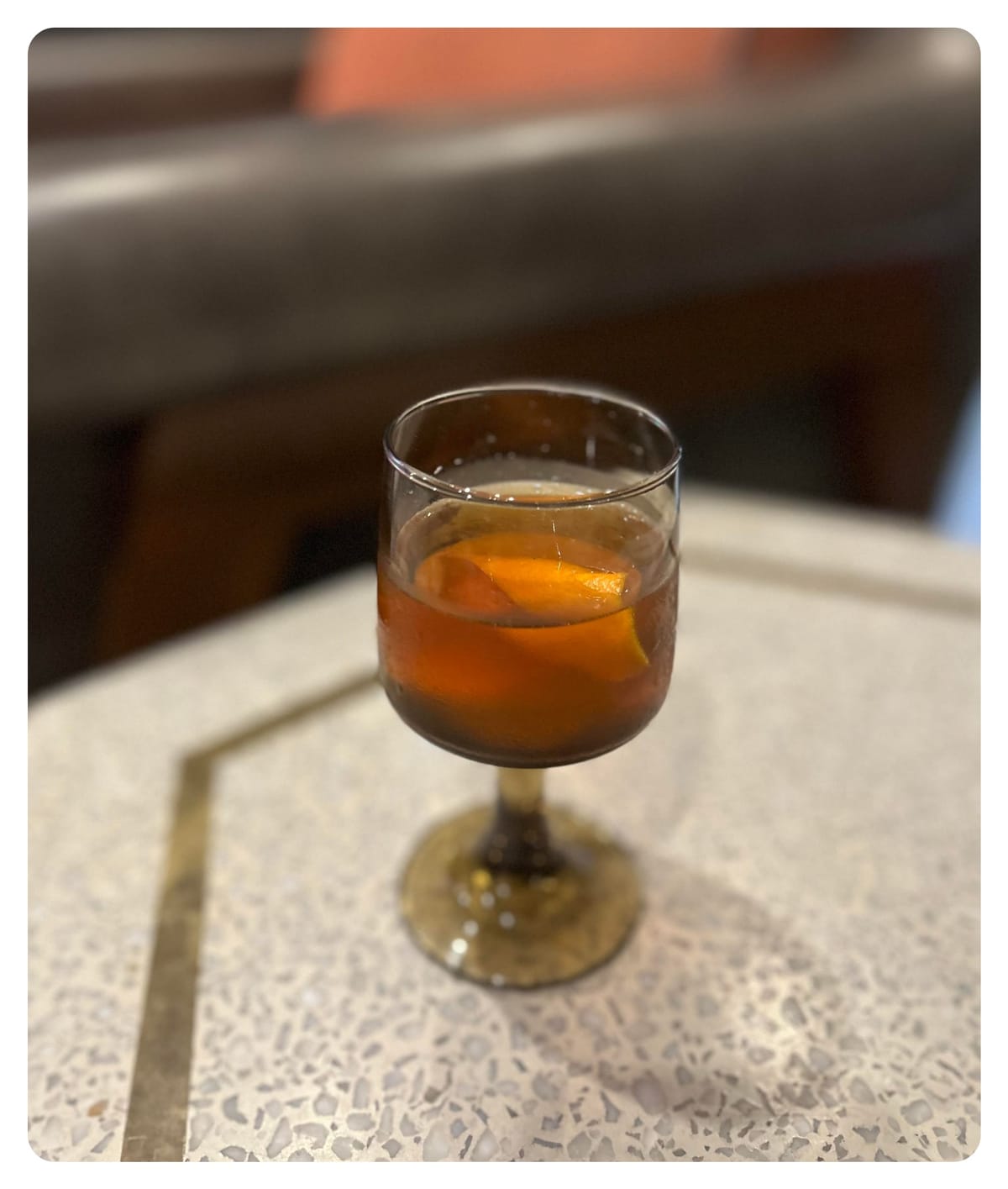
- 2 oz. 100 proof Rye whiskey
- 3/4 oz. St-Germain
- 1/4 oz. Fernet Branca
- Stir in ice; serve neat with an orange twist
Welcome to the first post of Flavor Notes, my blog about cocktails and the pursuit of balance. Each week I’ll share a cocktail—typically on Fridays, when a good drink is the week’s best reward—along with reflections on work, family, and the wider world.
Elderflower liqueur is famously sweet, known most commonly under the St-Germain brand launched in 2007 by Robert Cooper. In my experience, it’s best in cocktails as a fractional modifier that adds a sweet element to balance a tart or bitter element. If bottle design is truly a differentiator on a crowded liquor store shelf, then St-Germain scores an A+ on that front. It stands out like other notable modifiers Luxardo Maraschino Originale and Galliano–and is also frustratingly oversized for most 750ml bottle-sized shelves.
Today’s cocktail, a Cooper’s–an ode to Robert Cooper and St-Germain–was created by Jamie Boudreau at his Vessel bar in Seattle (now closed). It starts with a Rye whiskey base (2 oz.), but then adds a sweet St-Germain (¾ oz.) modification, before rounding out with a bitter Fernet Branca (¼ oz.) bite on the back palate.
The recipe calls for a Bottled-in-Bond (100 proof) Rye whiskey to stand up to the St-Germain. I’d suggest that 100 proof is the minimum for the Rye base for this cocktail–the spicier the better–before layering on the elderflower. Then, much like a great comedian’s joke, the bitter of the Fernet offers a kind of callback to the spicy rye that started you off with your first sip.
Speaking of callbacks, this week I revived a brand from my past: Distill Research. It was an LLC some friends/colleagues and I launched in 2013 to provide market research services to small and medium-sized companies with under-staffed internal research teams at costs below what the typical market research consultancies charged. It was a concept that had value, as our handful of clients attested. But like with so many small-business startups, the proof was in the execution. And in this case, our executional challenge was our marketing-sales pipeline, and keeping it populated while also doing the work we were winning.
Alas, despite all our efforts, Distill ran its course in 2 years and we all went back to day jobs where our personal risk to household income was minimized.
Jump ahead to today: it’s 2025 and an AI transformation is turning all traditional business functions upside down, particularly in SaaS where I’ve spent half my career. Chatbots are replacing Customer Service, a digital Customer Success model is now driving onboarding and engagement, and generative AI is replacing many Marketing functions as well as the early stages of the sales motion.
But here’s what I know, the market is made of people:
- People still own the purchase decision.
- People consume marketing content and craft consideration lists.
- People experience the pains of the problem they’re seeking to solve.
- People and their budgets your competitors are trying to win.
- And no amount of call recording analysis of your sales calls will give you the whole picture of why your sellers are losing deals.
Instead, it’s my responsibility to distill all this Voice of the Customer feedback to provide actionable insights to decision-makers and stakeholders to more successfully deliver their customer experience, go-to-market motions and product strategy.
As a result of this mission–and the unique challenge of recently relocating to British Columbia (more on that in a later post)--I’ve relaunched Distill Research as a marketing banner to represent my status as Contractor-At-Large. The irony is, I have much more appreciation today for the distillates creating these wonderful cocktails than I used to.
So on this, the inaugural Flavor Notes post, I cheer my Cooper’s cocktail to you, Distill Research, cheers to you.