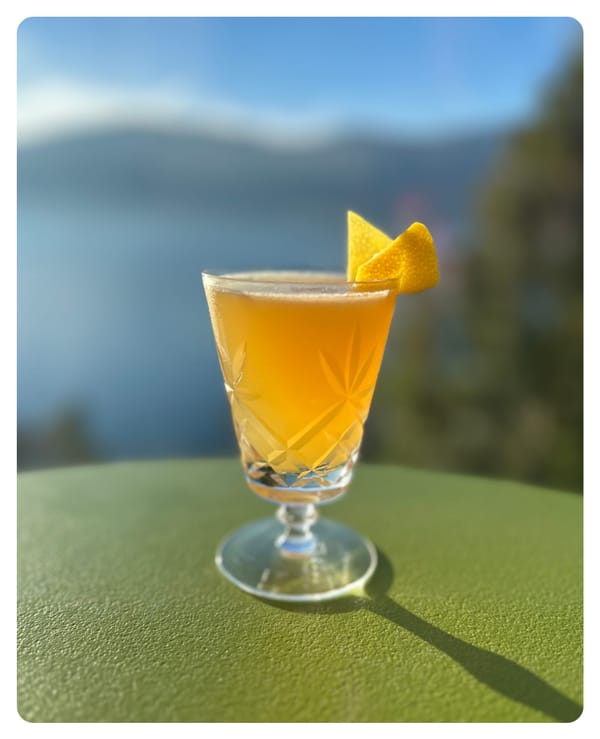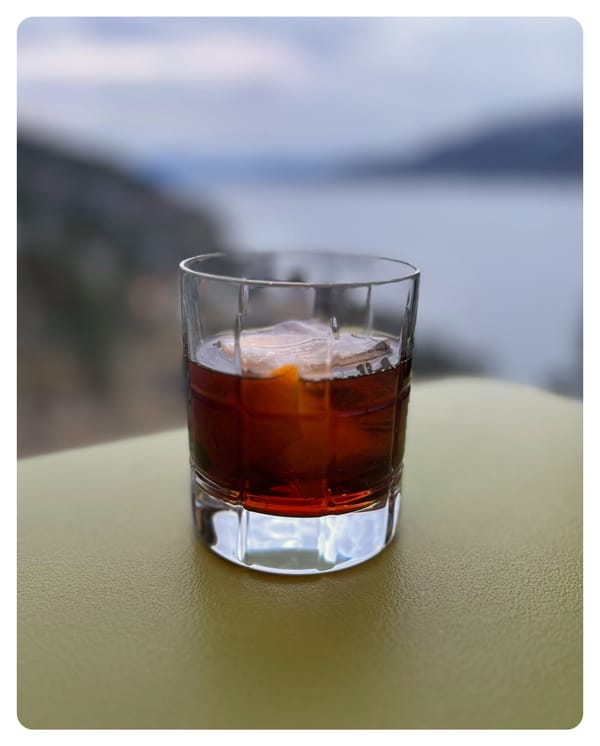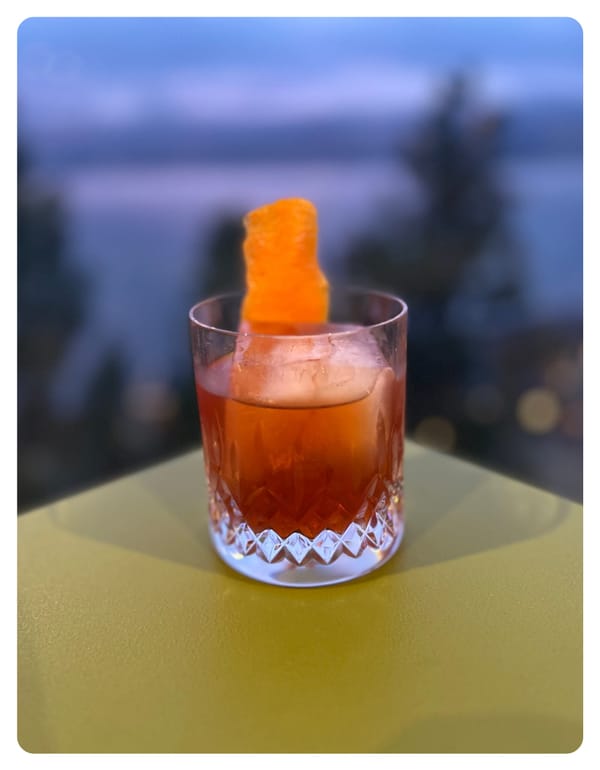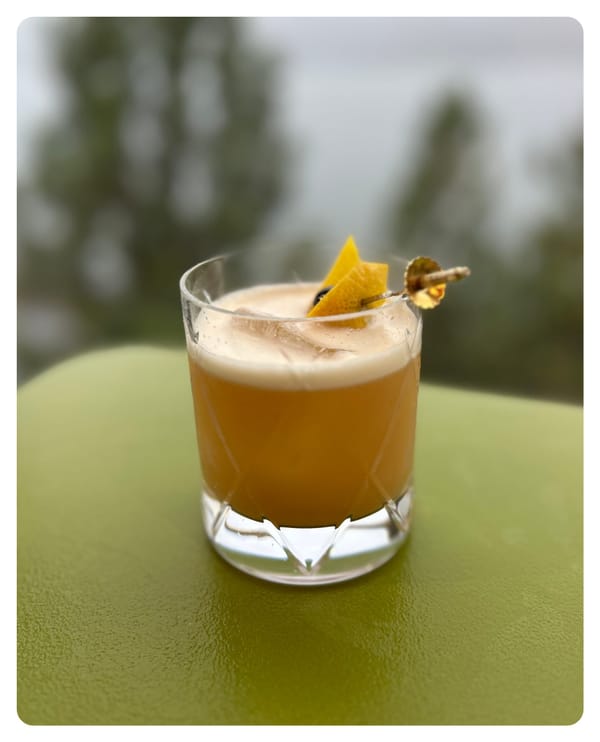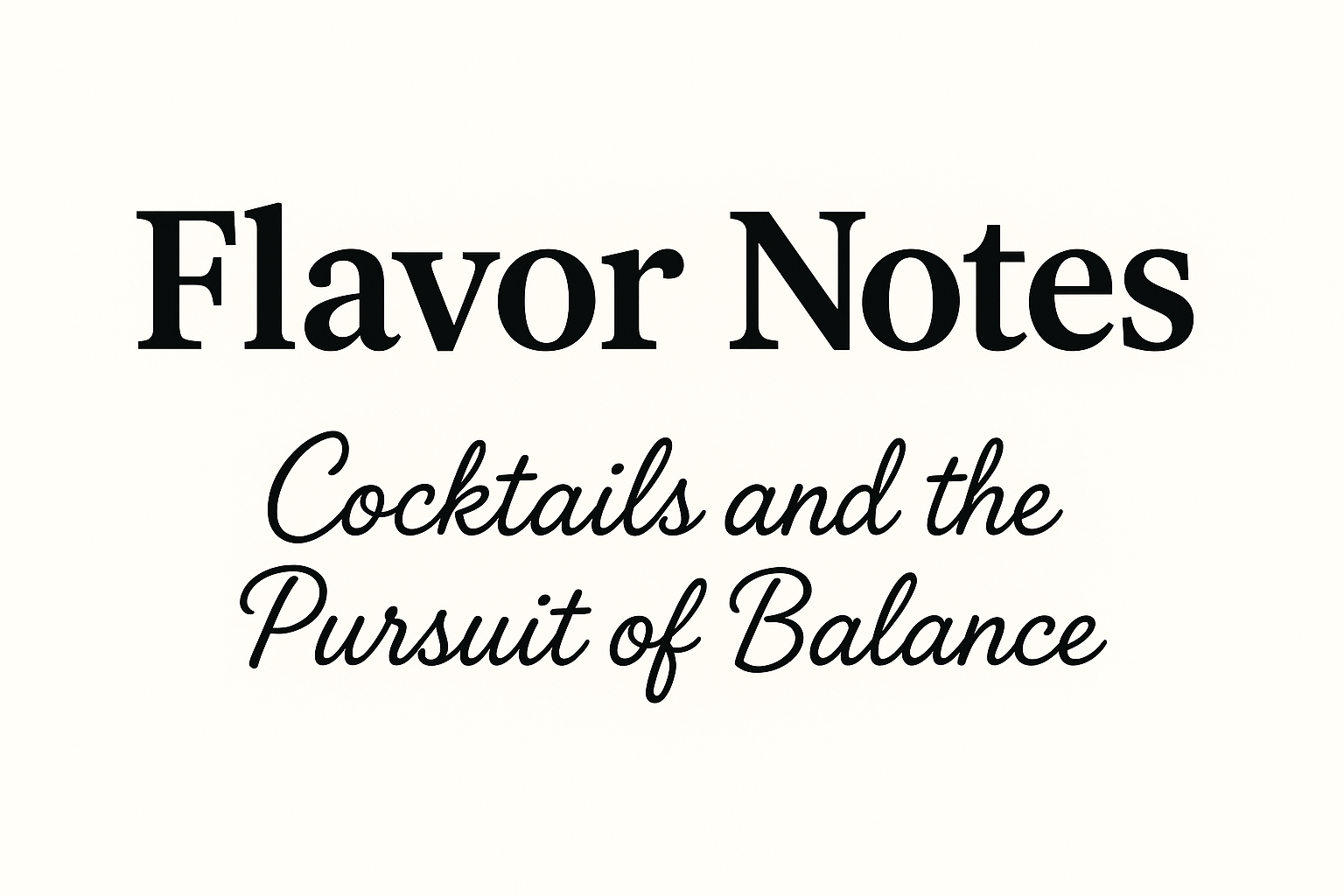
21st Century Negroni
- 1 1⁄2 oz Vermouth di Torino Chinato
- 1 oz London Dry Gin
- 1⁄2 oz Campari
- 1⁄3 oz Bianco Vermouth
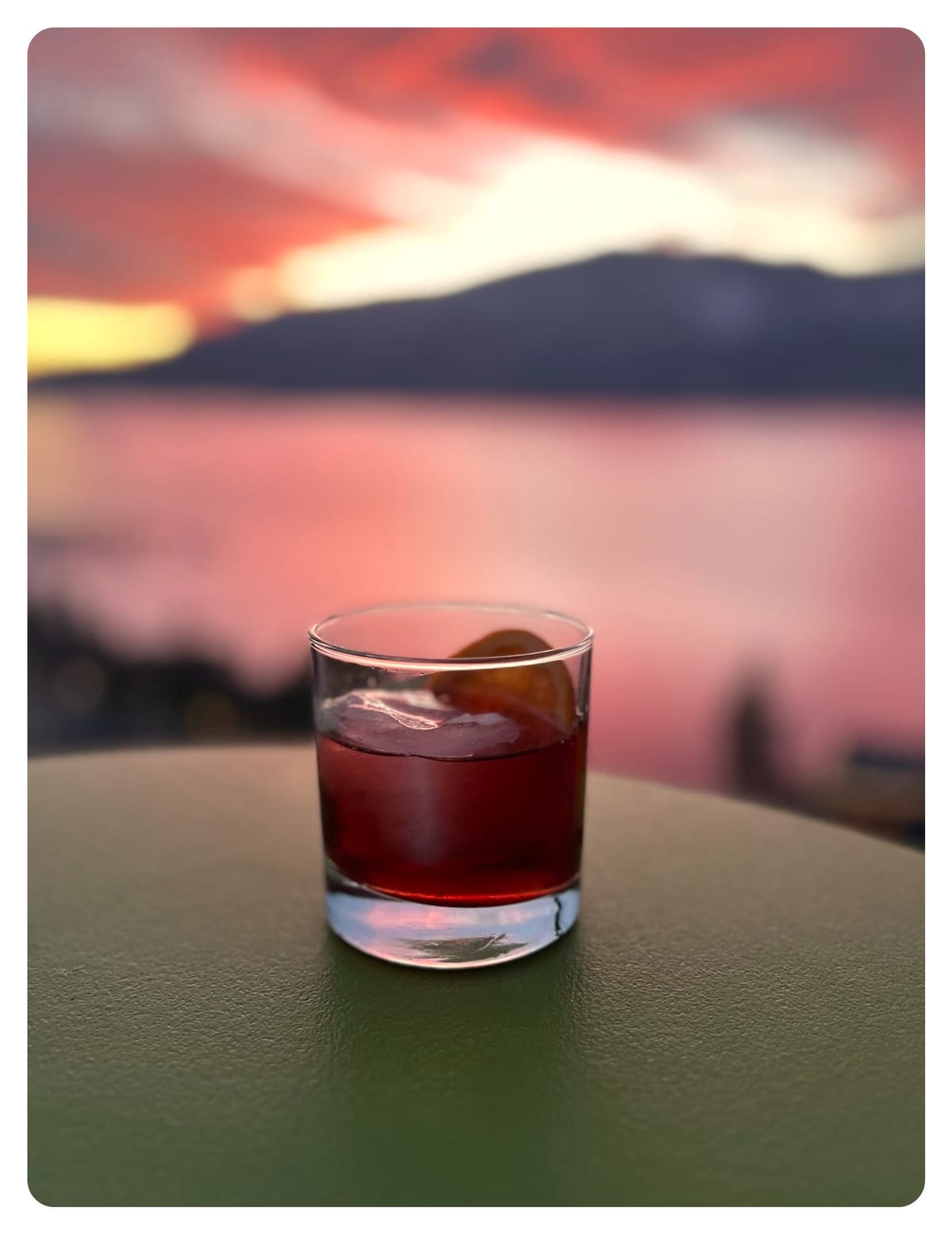
- 2 dash Peychaud's bitters
- Stir ingredients in ice for 20-30 seconds, strain over a large rock of ice in an Old Fashioned glass
- Garnish with a grapefruit zest twist and orange wheel.
Happy Friday, friends–and welcome to 2026! 🎉🥳
I hope you marked the turning of the year in whatever way felt right: celebrating wins, taking stock of losses, and sketching out a few intentions for what comes next.
This year also marks a quieter milestone. With the turn of the calendar, we’ve entered the second quarter of the 21st century. Twenty-five years down. Seventy-five, if we’re lucky, still to come. That felt like an occasion worth acknowledging with a Negroni variation built for reflection.
Meet the 21st Century Negroni.
At first glance, it looks familiar. But a closer inspection reveals its modern leanings. Where the classic Negroni divides itself evenly among gin, Campari, and sweet vermouth, this variation shifts the center of gravity toward aromatized wine—specifically Vermouth di Torino Chinato.
Chinato, a Barolo-based vermouth infused with quinine and botanicals, isn’t a supporting actor here like it was in My Favorite Things a few weeks back. At an ounce and a half, it takes the lead. The bitterness typically carried solely by Campari is split instead between Campari and a bianco vermouth, creating a dual-vermouth structure that favors aromatic depth over blunt bitterness.
That design choice is what earns this drink its name. A heavier vermouth presence reflects a broader 21st-century cocktail sensibility: respect the classic form, but adapt to modern palates that value nuance, balance, and layered complexity.
The addition of Peychaud’s Bitters reinforces that idea. Bright, floral, and lightly anise-forward, Peychaud’s brings a distinctly New Orleans sensibility to the glass. Created in the 1830s by Antoine Amédée Peychaud, these bitters form the backbone of cocktails like the Sazerac, Vieux Carré, and La Louisiane—longtime favorites of mine. Their gentian base and cherry-spice profile add lift and definition without overwhelming the drink.
On the nose, citrus leads—grapefruit and orange oils opening the door. The first sip is vermouth-forward: chinato’s winey richness supported by the softer sweetness of the bianco. Campari arrives mid-palate, its bittersweet orange notes briefly taking center stage before receding again. Throughout, the quinine in both the chinato and the Peychaud’s forms a steady, grounding bitterness that carries the drink from first sip to last.
It’s a cocktail well-suited to quiet contemplation—one that rewards patience and mirrors the complexity of looking back across a quarter-century’s stretch of time.
And what a 25 years it’s been.
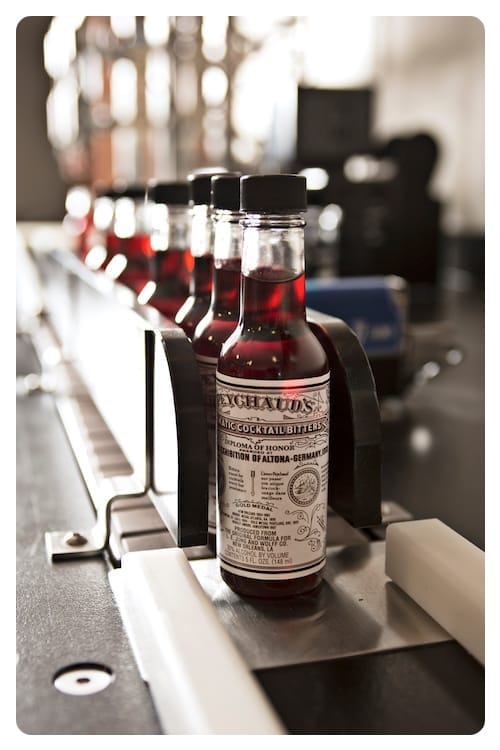
I began the 21st century meeting my future wife while escaping a disappointing graduate school experience and finding my footing in survey and market research in Washington, D.C. Not long after, she moved into the house I owned in Hyattsville, Maryland, and joined me in the long, dusty project of renovating it with the goal of earning a spot on the Hyattsville Historic Homes list.
I turned 30 working a block from the White House. She worked across the Potomac from the Pentagon when it was struck on 9/11. Unsure of what might come next, we both walked miles out of the city before feeling safe enough to board the Metro home. A week later—plans long made—I proposed in Lafayette Square, across from the White House, surrounded by armed guards. That was 2001.
The following year brought marriage, more renovations, and winter trips to Home Depot with two-by-fours strapped into a Volkswagen Cabrio, top down, regardless of the weather. We married in Kelowna, introducing our American friends and family to the Okanagan for the first time. As I’ve since learned, Canada contains multitudes.
Pregnancy followed. Renovations continued. Somewhere there’s a photo of my wife, five months pregnant, balanced on a ladder painting trim. Our daughter arrived in November 2003, and winter stroller walks around D.C.’s monuments became routine.
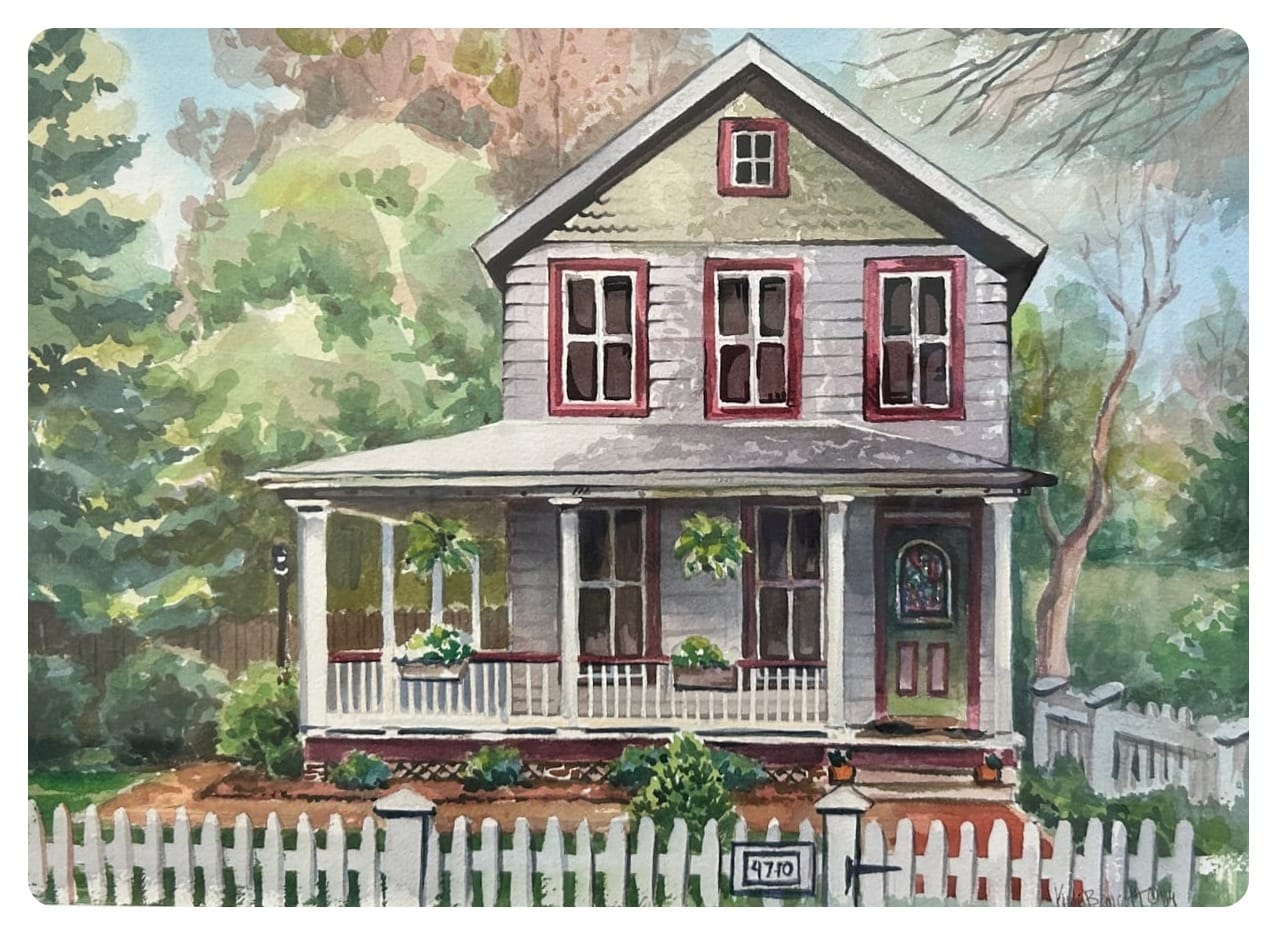
By 2004, proximity to family called us west. Portland and Seattle emerged as geographic compromises between grandparents. Portland answered first. We earned our Historic Home designation, sold the house, and relocated to Portland’s West Hills—very gratefully assisted by a college friend who remains, to this day, “my other brother, Daren.”
What followed didn’t arrive neatly. It came as a rush.
West Hills to Happy Valley. Daycare. MAX and bus commutes. 5Ks and 10Ks runs. A steep learning curve at a new employer. Rain. Preschool. Promotions. Holiday drives to Kelowna. An acquisition by a Detroit firm. Move to NE Portland. Elementary school. New neighbors. Charity Hood to Coast team leadership. Pee-wee soccer and T-ball. One marathon. The loss of my wife’s dog at 15. Swim meets. Bicycling. School fundraising leadership. More furry canine family members. Experiments in triathlon. My first layoff. Entrepreneurship. Move to SW Portland. Middle school. My first tech job; my first capricious tech layoff. Breast Cancer. High school. Depression. More rain. ADHD struggles. School of Rock performances. Busted ankle.
Then COVID.
Peloton rides. Cocktail culture. Remote work. Vaccinations. Health held—mostly.
High school graduation with honors. College starts and stops. Layoffs from whole research industries laid waste. And eventually, a decision that had been quietly forming for years: to return home to Kelowna.
We executed on that decision six months ago.
A quarter-century can hold a lifetime’s worth of living. Enough joy and fear and uncertainty to turn hair gray. Just as 9/11 pushed me to get on with living in early adulthood, the current climate in the U.S. pushed us to protect our family and future. For me, 2026 is about doing just that—fully, intentionally, here in Kelowna, British Columbia.
So I raise this 21st Century Negroni to you and to the next quarter-century—may we all find brighter days ahead.
To 2026. Cheers! 🗓️🍁🥃